
News Centre
News Type
Send your inquiry
PU Polyurethane Rod: Industrial Roller Material Guide
Why PU Polyurethane Rod Outlasts Rubber
A conveyor line running around the clock through a stamping plant puts enormous stress on every roller. Natural rubber covers survive perhaps six months before tearing or hardening. Steel rollers handle the load but damage the steel parts sliding across them. Moreover, they corrode when lubricants splash. In practice, a PU polyurethane rod cover outlasts rubber by three to five times in these conditions. Meanwhile, the material stays gentle enough to protect polished surfaces.
Polyurethane sits between rubber and plastic in the engineering material hierarchy. Also, it stretches further than most thermoplastics. Furthermore, it resists tear and abrasion far better than natural rubber. In fact, stock shapes come in sheets, rods, and tubes. Hardness ranges from soft Shore A 70 to rigid Shore D 80. For most industrial roller applications, engineers settle on Shore A 85 to 95. This balances rebound elasticity with load-bearing capacity. NAGOMER supplies PU stock in standard dimensions for machining custom parts.
Hardness and Load Trade-Offs
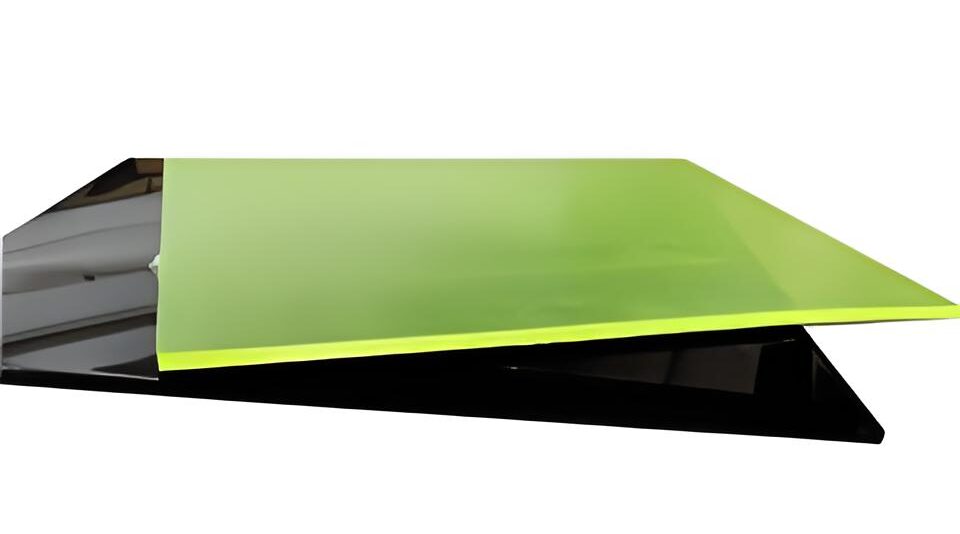
Selecting PU hardness comes down to the contact mechanics of the specific application. Soft grades in the Shore A 70 to 80 range deform under load. They absorb impact energy, which suits bumpers, vibration pads, and coupling sleeves. Conversely, hard grades in the Shore A 90 to 95 range carry higher loads with less deformation. These make the standard for drive rollers, idler wheels, and press pads. Above Shore D 70, the material behaves more like a hard plastic and loses much of its elastic advantage.
Load-bearing capacity also depends on the support structure beneath the PU cover. A thin PU layer bonded to a steel core performs very differently from solid PU rod carrying the entire load. For heavy press brakes and crane buffers, fabricators machine the PU from solid stock. For lighter conveyor applications, a 10 to 20 mm PU cover over a steel core provides the best balance. In addition, rebound elasticity affects how quickly a roller returns to shape after a load cycle. High-rebound grades recover 60 to 70 percent of impact energy within milliseconds.
Polyester vs Polyether Chemistry
The two common PU chemistries behave very differently in wet environments. Polyester-based PU offers higher mechanical strength and better abrasion resistance. However, it hydrolyzes in hot water and humid conditions. Steam-cleaned food lines and marine applications often degrade polyester PU within months. Polyether-based PU sacrifices some mechanical strength for dramatically better hydrolysis resistance. As a result, it becomes the default for any application involving water exposure.
In practice, this trade-off drives most grade selections. Paper mills, food processing lines, and outdoor conveyor systems specify polyether PU for this reason. Dry industrial environments like stamping lines and foundry shake-outs handle polyester PU well. For these settings, abrasion resistance dominates the failure mode. For applications involving both water and abrasion, specialty grades with hydrostability additives extend service life into the year-plus range. NAGOMER supplies both polyester and polyether PU rod stock to match the chemistry to the service environment.
Common Industrial Applications
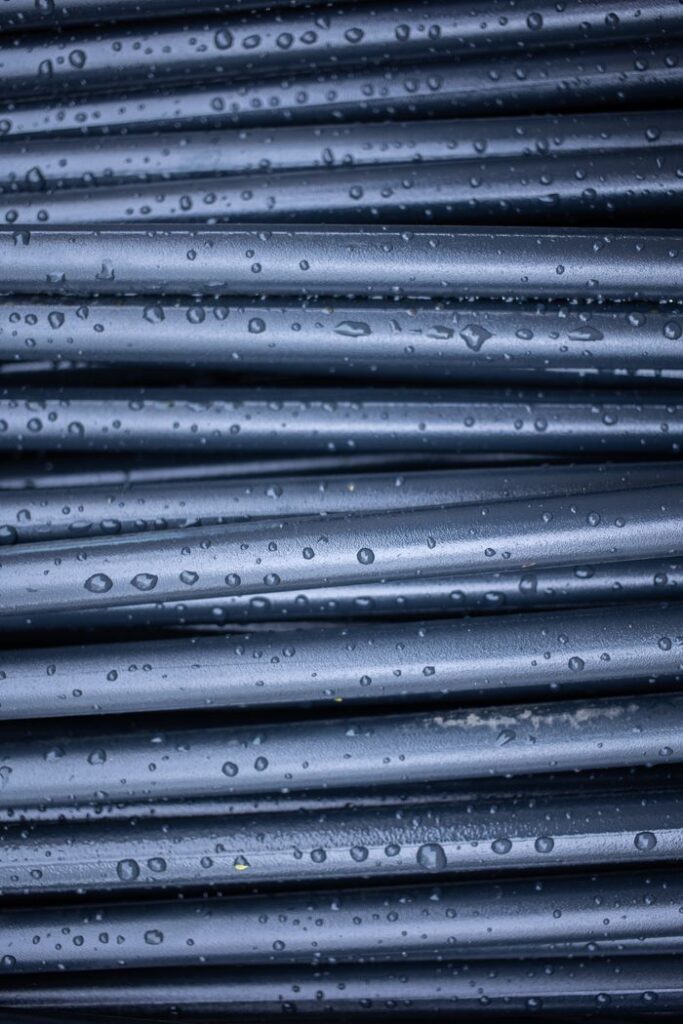
Conveyor idler rollers represent the largest single use of PU stock shapes in industrial settings. PU covers grip belts without slipping, dampen vibration, and resist the oil exposure common in stamping plants. Warehouse conveyors, packaging lines, and assembly plant belts all rely on PU-covered rollers for quiet operation. Similarly, driven rollers in printing presses use PU covers for the grip and shock absorption that bare metal cannot provide.
Beyond rollers, PU serves in die springs, sheet metal forming pads, chute liners, and bumpers. Die springs made from PU rod stock replace steel springs in progressive stamping dies. The elastic recovery and damping reduce vibration and noise. Forming pads cushion draw die operations in automotive stamping. Moreover, chute and hopper liners in mining use PU sheets bonded to steel. The low friction surface prevents material buildup while absorbing impact from falling rocks. Each application uses the same fundamental property set, tuned through hardness selection.
Machining PU Stock Shapes
Cutting PU polyurethane rod stock requires sharp tools and moderate cutting speeds. The elasticity generates heat that softens the cut surface. Bandsaw cutting works well for rough sizing. CNC turning and milling produce finished parts when cutting parameters stay below 500 surface feet per minute. Waterjet cutting handles PU sheets up to 50 mm thick without the heat-affected zone from laser or plasma. Thus, coolant helps maintain dimensional stability during machining.
Bonding PU to metal substrates typically uses a two-part polyurethane adhesive. Surface preparation matters because solvent wiping removes mold release and contamination. Light abrasion improves mechanical interlock. For roller covering, fabricators wrap PU sheets or extruded PU around the steel core, then cure in a heated press. The bond strength depends on the adhesive chemistry and the surface preparation. Properly prepared bonds exceed the tear strength of the PU itself. NAGOMER cuts PU polyurethane rod and sheet stock to length or shape on request.
NAGOMER supplies PU polyurethane rod and sheet stock in Shore A 70 to 95 hardness, both polyester and polyether chemistry. Contact info@nagomer.com for grade selection guidance and custom cut blanks.