
News Centre
News Type
Send your inquiry

PTFE Chemical Resistance: Gaskets, Seals, and Linings
When Every Other Material Fails
Chemical processing plants handle media that destroys most engineering materials. Concentrated hydrochloric acid at 80 degrees Celsius, caustic soda at 50 percent concentration, hydrofluoric acid in pickling baths, and mixed solvent streams all attack metals and conventional plastics. When corrosion rates exceed 1 mm per year in steel, the maintenance cycle becomes unsustainable. This is where PTFE chemical resistance becomes not just an advantage but a necessity for continuous plant operation.
The carbon-fluorine bond energy of 485 kJ per mole makes the PTFE backbone practically unbreakable by most reagents. Only molten alkali metals, elemental fluorine, and a few fluorinating agents at extreme temperatures can attack it. For engineers, this means a single gasket or lining material handles the full spectrum of acids, bases, solvents, and oxidizers without measurable degradation. However, PTFE has one well-known weakness: it creeps under load, even at room temperature. Therefore, designing with PTFE chemical resistance means accounting for both chemical inertness and mechanical constraints simultaneously.
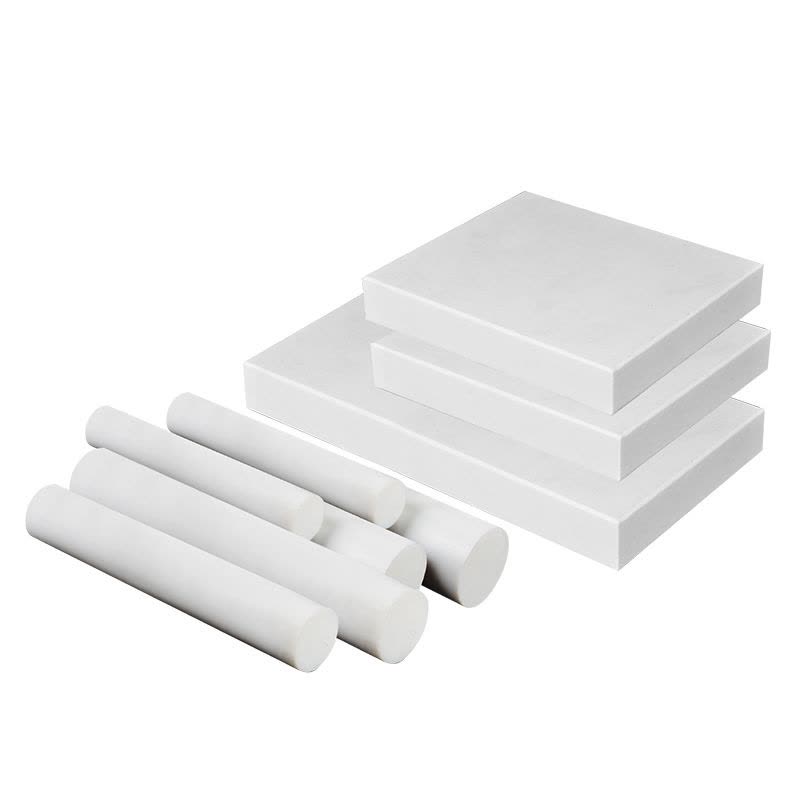
Gaskets and Seals: The Primary PTFE Application
Gaskets represent the most common use of PTFE chemical resistance in processing equipment. Full-face gaskets for EN 1092-1 flanges, ring gaskets for ASME B16.5 flanges, and custom profiles for heat exchangers all rely on PTFE to prevent leaks in aggressive media. Expanded PTFE offers better creep resistance than skived sheet, while maintaining full chemical inertness across the entire pH range. NAGOMER supplies PTFE sheets and rods for machining gaskets and seals in standard and custom dimensions.
In valve applications, PTFE seats handle media where elastomers degrade within weeks. Ball valve seats, diaphragm valve liners, and plug valve sleeves all use PTFE as the primary sealing element. However, designers must address cold flow in their calculations. Spring-loaded PTFE seals or backup rings made from stiffer materials like PPS maintain sealing force over extended service periods. For example, a ball valve handling concentrated hydrochloric acid at 80 degrees Celsius typically uses a PTFE seat with a PPS backup ring. This combination prevents PTFE extrusion under pressure while preserving full chemical compatibility.
Lining Steel Vessels Against Corrosion
When a vessel must contain highly corrosive chemicals, steel construction provides structural strength while a PTFE lining provides chemical protection. Glass-lined steel is the traditional choice, but PTFE linings offer better thermal shock resistance and field repairability. Lining thickness typically ranges from 2 to 5 mm, applied by isostatic molding or paste extrusion. The bonding layer between steel and PTFE uses a porous PTFE sheet that allows mechanical interlock during sintering.
PTFE-lined pipes, fittings, and vessels serve in chlor-alkali plants, pharmaceutical reactors, and acid distribution systems. The lining prevents metal ion contamination of process fluids, which is critical in pharmaceutical and electronic grade chemical production. For instance, a hydrofluoric acid storage tank lined with PTFE operates safely for decades, whereas unlined steel corrodes through within months. Moreover, the non-stick surface prevents product buildup in polymerization reactors, reducing cleaning downtime and improving batch-to-batch consistency across production campaigns.
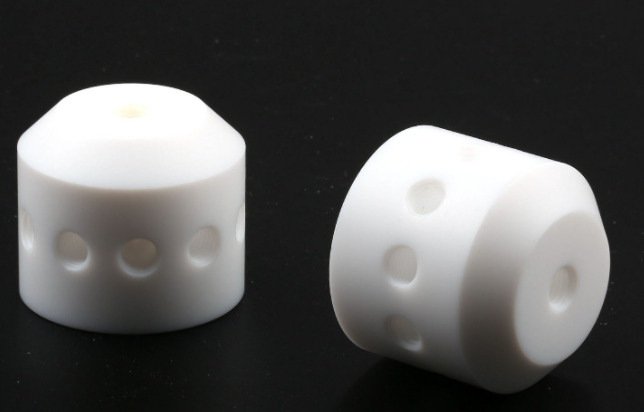
Filled PTFE: Trading Purity for Strength
To address cold flow, compounders add fillers that improve mechanical properties while sacrificing some chemical inertness. Glass fiber at 15 to 25 percent loading improves creep resistance and wear performance while handling most acids and bases. Carbon filler adds thermal conductivity and reduces static buildup, which matters in combustible environments. Bronze filler maximizes wear resistance for dynamic seals but compromises chemical compatibility since bronze reacts with certain acids.
The trade-off between fillers and chemical resistance requires careful evaluation. Glass-filled PTFE handles sulfuric acid and caustic soda well but fails in hydrofluoric acid, since the glass fibers contain silica that HF dissolves. Carbon-filled PTFE offers broader compatibility but is unsuitable for strong oxidizing agents like aqua regia. Therefore, for applications involving unknown or variable chemical mixtures, unfilled PTFE remains the safest choice despite its creep limitations. Engineers should verify each filled grade against the specific chemical environment before specifying it for sealing applications.
Matching PTFE Chemical Resistance to Service Conditions
Selecting the right PTFE grade starts with the chemical environment. For concentrated acids and strong oxidizers, unfilled PTFE provides maximum resistance. For dynamic seals and bearings, glass-filled or carbon-filled grades extend service life significantly. In food and pharmaceutical applications, FDA-compliant unfilled PTFE meets 21 CFR 177.1550 requirements for repeated food contact. Temperature also affects performance in practice. While the polymer itself remains stable to 260 degrees Celsius, practical sealing applications are typically limited to 200 degrees or below due to creep.
Cryogenic applications benefit from PTFE flexibility at low temperatures, where most other plastics become brittle and crack. LNG valve seats and liquid oxygen line gaskets routinely use PTFE because it maintains sealing force at minus 200 degrees. NAGOMER supplies PTFE in sheets, rods, and tubes for chemical processing applications, with each grade carrying full compliance documentation. The material’s long service life reduces replacement frequency and maintenance costs in chemical plants, making it the standard choice for equipment operating in corrosive environments across the process industries.
NAGOMER supplies PTFE sheets, rods, and tubes in unfilled, glass-filled, and carbon-filled grades for gaskets, seals, and vessel linings. Contact info@nagomer.com for chemical compatibility data and grade recommendations.