
News Centre
News Type
Send your inquiry
PPS Polyphenylene Sulfide Complete Technical Guide: Chemical Resistance and Thermal Properties
Complete technical guide to PPS (Polyphenylene Sulfide) engineering plastic. Covers chemical resistance, thermal properties, molding considerations, and comparison with PEEK and PEI.
Introduction
Polyphenylene sulfide (PPS) is a semi-crystalline high-performance thermoplastic with exceptional chemical resistance and inherent flame resistance. It bridges the gap between standard engineering plastics (POM, PA, PC) and premium polymers (PEEK, PEI).
PPS Material Fundamentals
PPS key properties: (1) Continuous service temperature: 220°C; (2) Melting point: 280°C; (3) Density: 1.36 g/cm3 (unfilled); (4) Tensile strength: 70-80 MPa (unfilled), up to 180 MPa (60% GF); (5) Elongation at break: 1.5-3% (brittle unless modified).
Chemical Resistance: PPS vs Other Engineering Plastics
PPS has outstanding chemical resistance: (1) Excellent resistance to acids (including concentrated sulfuric and hydrochloric); (2) Excellent resistance to alkalis (including sodium hydroxide); (3) Excellent resistance to organic solvents, fuels, and oils; (4) Limited resistance to oxidizing agents (nitric acid, concentrated chlorine). PPS outperforms PA, POM, and PC in chemical resistance; comparable to PEEK in most chemicals except hot acids.
Thermal Properties and Flame Resistance
PPS is inherently flame resistant (UL94 V-0 without additives). This makes it ideal for electrical and electronics applications with fire safety requirements. Continuous service at 220°C; short-term to 260°C. Dimensional stability is excellent—water absorption <0.05%.
Molding and Processing Considerations
PPS molding considerations: (1) High melt temperature (280-320°C) requires high-temperature tooling; (2) Natural mold shrinkage: 0.006-0.008 mm/mm (unfilled), less with GF reinforcement; (3) Pre-drying required: 150°C for 3-4 hours; (4) Mold temperature: 135-165°C for optimal crystallinity.
PPS vs PEEK vs PEI: When to Choose Which
PPS vs PEEK: PPS costs 40-60% less;lower continuous service temperature (220°C vs 260°C); more brittle (lower impact strength); similar chemical resistance. Choose PPS for cost-sensitive high-temperature/chemical applications. PPS vs PEI: PPS has better chemical resistance and flame resistance; PEI has better impact strength and is transparent (natural grade). Choose PPS for chemical processing; PEI for aesthetic/transparent applications.
Conclusion
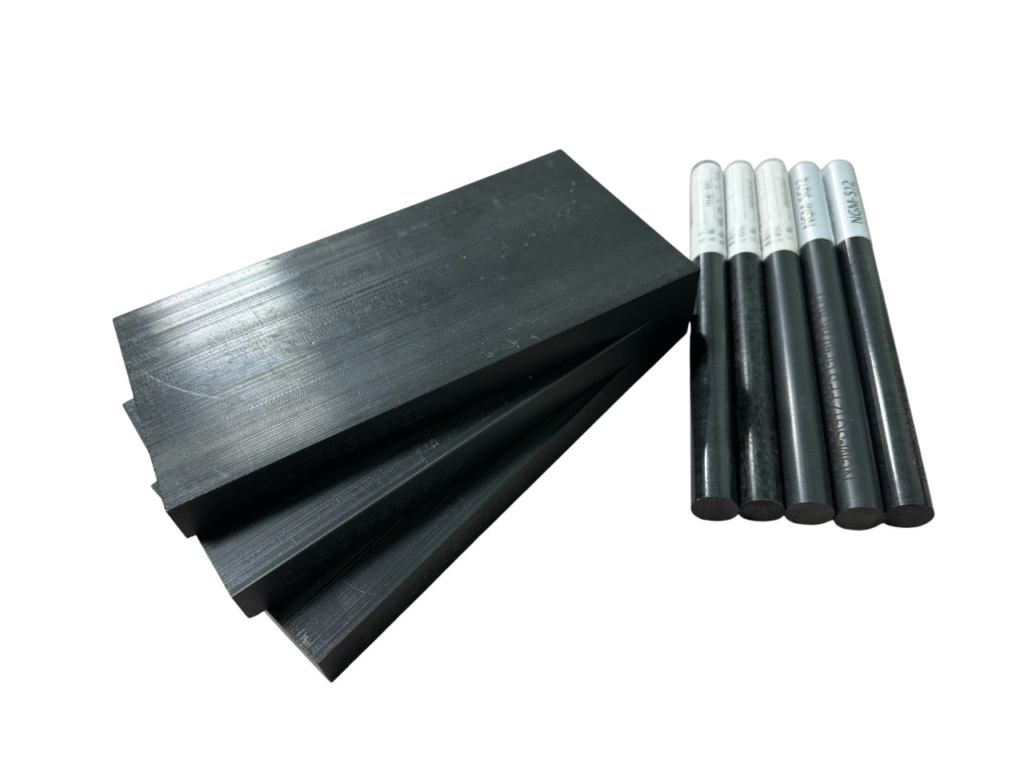
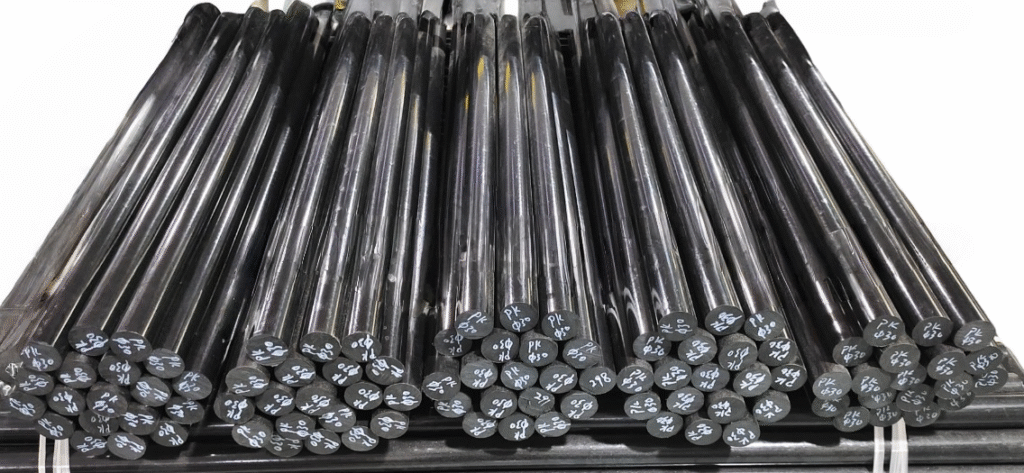
NAGOMER supplies PPS in standard (S12N/B), ESD-safe (S6B), and glass-reinforced (SG12B with 30% GF) grades. Our technical team can assist with material selection, molding parameter recommendations, and machined component supply from PPS sheets and rods.
Contact NAGOMER today for a free sample and technical datasheet.