
News Centre
News Type
Send your inquiry

POM CNC Machining Complete Guide: Tolerances, Surface Finish, and Best Practices
Why POM is the Machinist’s Favorite Engineering Plastic
POM (polyoxymethylene), widely known by the brand names Delrin and Acetal, is often considered the ideal engineering plastic for CNC machining. Its combination of dimensional stability, low moisture absorption, excellent machinability, and good mechanical properties makes it a go-to material for precision components across industries.
POM machines more like brass than most plastics. It produces clean, chip-breaking cuts rather than stringy ribbons. It holds tight tolerances that many other plastics cannot achieve. And it does all this without requiring specialized tooling or coolant systems.
For manufacturers producing everything from gears and bearings to medical device components and automotive parts, understanding the nuances of POM machining is essential to achieving quality, consistency, and efficiency. This comprehensive guide covers everything from basic setup to advanced optimization techniques.
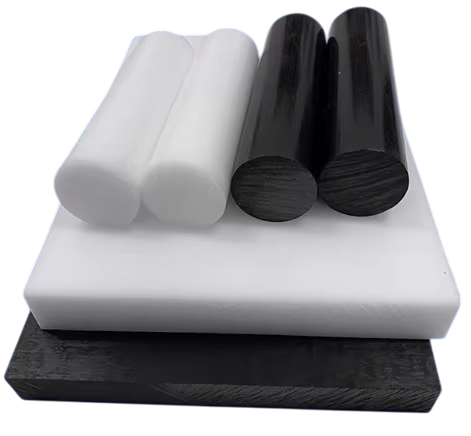
POM Material Grades and Machining Characteristics
Two main types of POM are commercially available, each with distinct machining characteristics:
POM-C (Copolymer): The most commonly machined grade. Offers excellent dimensional stability, lower centerline porosity, and better chemical resistance than homopolymer. Recommended for most precision machining applications. NAGOMER M12N/B grade.
POM-H (Homopolymer): Slightly higher mechanical strength and hardness, but more susceptible to centerline porosity and thermal degradation during machining. Requires more careful process control. NAGOMER M12H grade.
Specialty grades include ESD POM (M6B/M6W, surface resistivity 10^6-10^8), conductive POM (M2B, 10^2-10^5), glass-filled POM (30% GF), and PTFE-filled POM (MF12). Each requires specific machining parameter adjustments covered in the following sections.
Recommended Cutting Parameters for POM
Optimal cutting parameters depend on the operation type and tool material. General recommendations:
Turning: Speed 300-500 m/min (carbide), feed 0.1-0.3 mm/rev, depth of cut 0.5-5.0 mm. Use positive rake angles (5-10 degrees) and generous clearance angles (8-12 degrees) to prevent rubbing.
Milling: Speed 200-400 m/min (carbide), feed 0.05-0.2 mm/tooth. Use climb milling whenever possible to produce the best surface finish and reduce burr formation.
Drilling: Speed 50-100 m/min, feed 0.05-0.2 mm/rev. Use parabolic flute drills for deep holes. Peck drilling is recommended for holes deeper than 3x diameter.
Critical note: POM is sensitive to heat buildup. Excessive cutting temperatures can cause thermal expansion during machining (leading to out-of-tolerance parts after cooling) and surface degradation. Use sharp tools, adequate chip clearance, and compressed air cooling for best results.
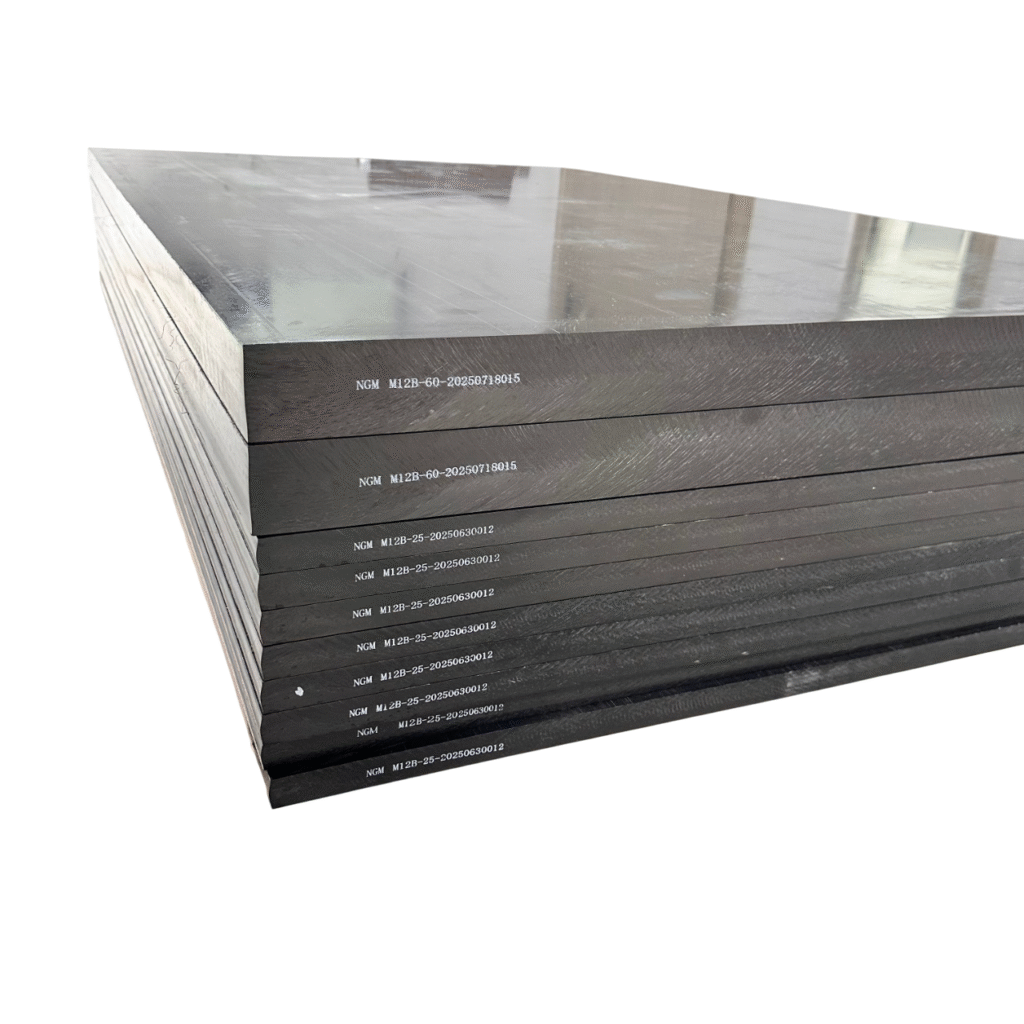
Achievable Tolerances and Dimensional Stability
With proper machining practices, POM can achieve exceptional tolerances:
Standard tolerance: +/-0.05 mm achievable in most shops with good practice. Precision tolerance: +/-0.025 mm achievable with careful process control and temperature management. High precision: +/-0.01 mm possible but requires climate-controlled environment and stress-relieved material.
Key factors affecting dimensional accuracy include thermal expansion (POM CTE is approximately 11 x 10^-5/K, meaning a 100mm part changes 0.11mm per 10C temperature change), moisture absorption (POM absorbs very little moisture compared to nylon, which is a key advantage), and residual stress release during machining.
Annealing before final machining is strongly recommended for precision components. Heat material to 160C, hold for 1 hour per 25mm of thickness, then slow cool at 15-25C per hour. This stress-relieving step dramatically improves dimensional stability.
Surface Finish Optimization and Defect Prevention
POM naturally produces good surface finishes when machined correctly. Key optimization strategies:
Tool sharpness: This is the most critical factor. Dull tools cause tearing rather than cutting, producing poor surface finish. Use new or freshly sharpened tools and monitor tool wear.
Chip evacuation: Ensure chips are cleared from the cutting zone. Recutting chips can mar the surface finish. Compressed air is often sufficient; avoid coolant unless necessary for chip evacuation.
Common defects and solutions: Burrs (use sharp tools, climb milling, and deburring passes), surface smearing (reduce cutting speed, ensure adequate cooling), dimensional drift (anneal material, control shop temperature), and internal voids (use POM-C rather than POM-H, inspect incoming material).
NAGOMER supplies premium POM sheets and rods optimized for CNC machining. Visit nagomer.com for material datasheets, free samples, and technical support.