
News Centre
News Type
Send your inquiry
POM-C vs POM-H: Comprehensive Comparison of Acetal Engineering Plastics
The Workhorse of Engineering Plastics
POM (polyoxymethylene), commonly known as acetal, is one of the most widely used engineering plastics in the world. Its combination of low friction, excellent dimensional stability, fatigue resistance, and ease of machining makes it the go-to material for gears, bearings, bushings, valves, and precision components across virtually every industry.
What many engineers don’t realize is that “acetal” refers to two distinct polymer chemistries with meaningfully different properties: POM-C (copolymer) and POM-H (homopolymer). Choosing the wrong one can lead to premature component failure, especially in chemically aggressive or high-temperature environments.
Chemistry and Structure: Why the Difference Matters
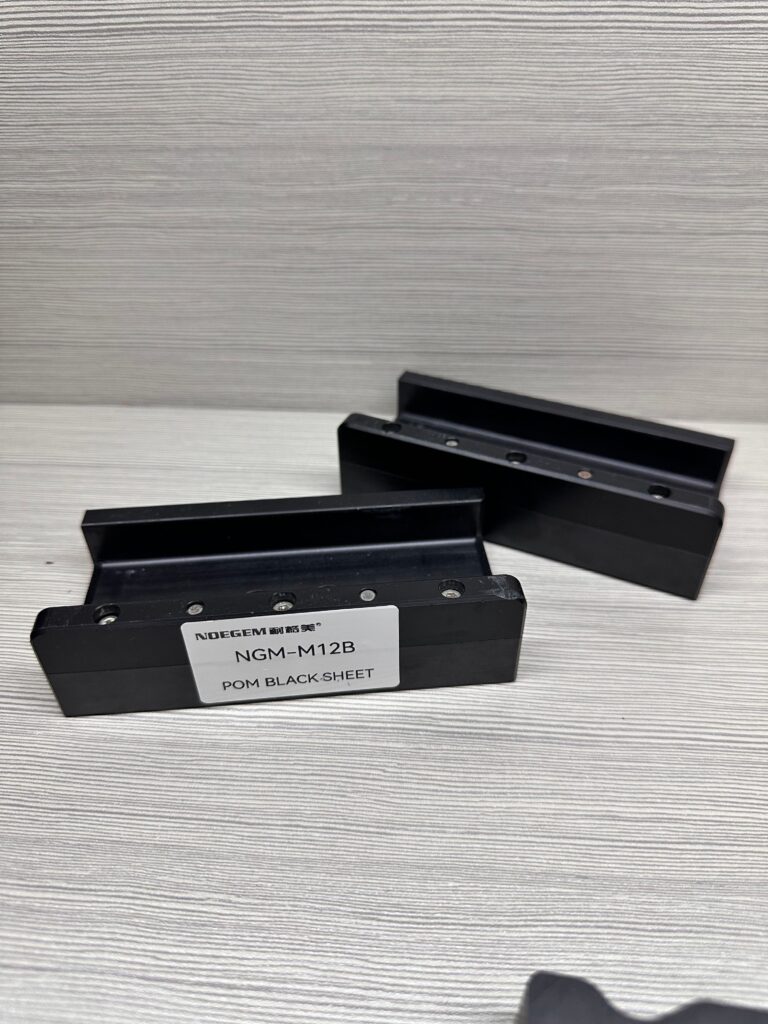
POM-C (NAGOMER M12N/B): Produced by copolymerizing trioxane with small amounts of comonomer. The comonomer creates C-C bonds at regular intervals along the polymer chain, giving POM-C superior chemical resistance and long-term thermal stability.
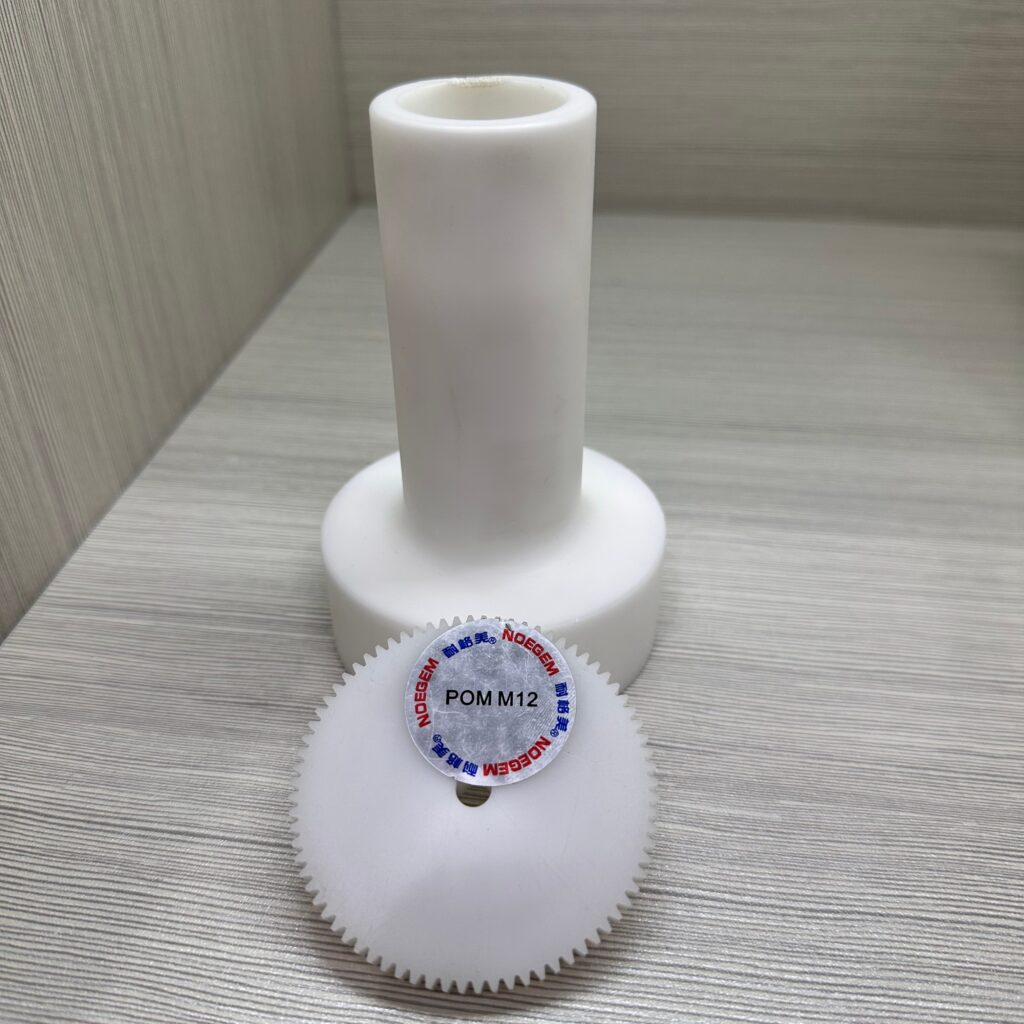
POM-H (NAGOMER M12H): Produced by polymerizing trioxane alone, resulting in a chain composed entirely of C-O bonds. This gives POM-H higher crystallinity, translating to higher mechanical strength and stiffness — but the all-C-O backbone is more susceptible to chemical attack.
Mechanical Properties Comparison
POM-H has a slight mechanical advantage in strength and stiffness, while POM-C offers better elongation and ductility. For most mechanical applications, the differences are modest enough that either material performs adequately.
Property | POM-C (Copolymer) | POM-H (Homopolymer) | Advantage |
Tensile strength | 65-70 MPa | 68-72 MPa | POM-H (slight) |
Flexural modulus | 2,600-2,800 MPa | 2,800-3,100 MPa | POM-H |
Elongation at break | 25-40% | 20-35% | POM-C |
Impact strength | 6-8 kJ/m² | 6-9 kJ/m² | Comparable |
Hardness (Rockwell M) | 84-88 | 90-94 | POM-H |
Thermal and Chemical Performance: The Decisive Difference
Thermal stability: POM-C‘s C-C bond structure provides significantly better long-term thermal stability. POM-C maintains properties during prolonged exposure to 100-120°C, while POM-H degrades more rapidly. POM-C‘s continuous use temperature is ~100°C vs POM-H‘s ~90°C.
Chemical resistance: POM-C‘s C-C bonds resist hydrolysis and chemical attack, giving superior resistance to hot water and steam, strong acids and bases, fuels, and cleaning chemicals. POM-H is not recommended for applications involving hot water, acidic/basic environments, or aggressive cleaning chemicals.
Application Selection Guide
Choose POM-C (NAGOMER M12N/B) for: Components exposed to water, moisture, or steam; applications involving chemical exposure; food processing and medical components; outdoor applications; long-term thermal stability above 90°C; most general-purpose applications.
Choose POM-H (NAGOMER M12H) for: Applications requiring maximum mechanical strength and stiffness; precision gears where highest hardness is needed; room-temperature dry environments where mechanical performance is the primary criterion.
Rule of thumb: When in doubt, choose POM-C. Its superior chemical resistance and thermal stability make it the safer general-purpose choice. The mechanical performance gap is small, and POM-C’s versatility across environments more than compensates.
NAGOMER offers a comprehensive POM portfolio including POM-C, POM-H, ESD, NFP zero-powder, conductive, and PTFE-filled grades. Contact info@nagomer.com for technical datasheets and material samples.