
News Centre
News Type
Send your inquiry

Plastic Fasteners, Screws & Threads: Design Guide for Engineering Plastics
When to Use Plastic Fasteners
· Chemical exposure where metal fasteners would corrode or contaminate
· Electrical isolation — PEEK and PTFE screws prevent galvanic corrosion and short circuits
· Weight reduction — plastic screws are roughly one-fifth the weight of steel
· Non-marring assemblies where metal contact would damage finished parts
· ESD-controlled areas where dissipative fasteners prevent charge build-up
· MRI and RF environments where metal fasteners are unacceptable
Thread Design in Plastics
Parameter | Metal | Engineering Plastic |
Thread engagement length | 1–1.5 × diameter | 2–2.5 × diameter |
Driving torque | Reference | 30–50% of metal torque |
Thread flank angle | 60° | Often 30° (buttress) for moulded threads |
Pilot hole clearance | Tight | Generous — plastics expand more |
Reusability | High | Limited — threads wear on repeated assembly |
In plastics, thread strength comes from engagement length and root diameter, not from tightening torque. Over-torquing is the single most common failure — it strips the thread or cracks the boss rather than tightening the joint.
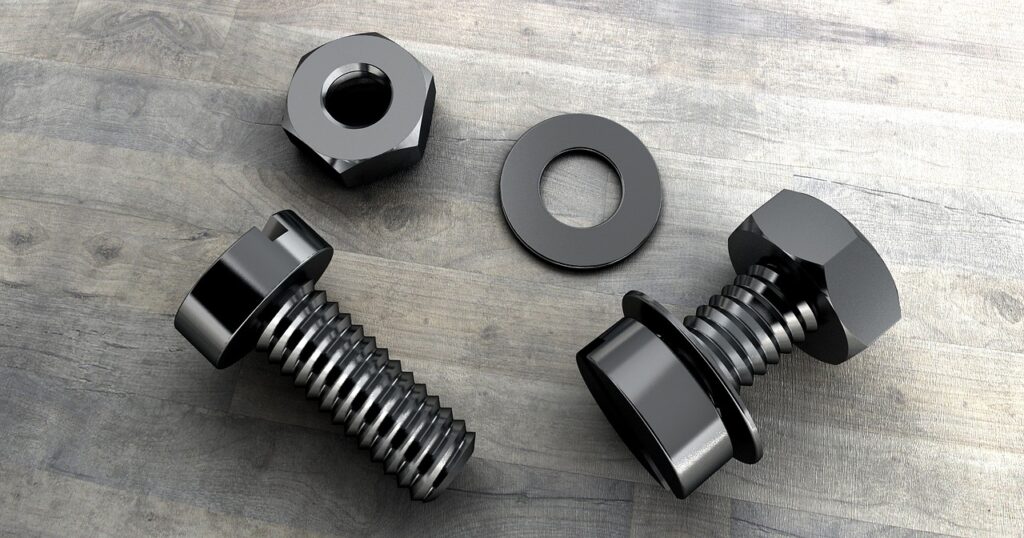
Designing Bosses and Threaded Inserts
· Keep boss wall thickness at 0.5–0.6 × the screw diameter to avoid sink and hoop stress
· Add a generous radius at the boss root — sharp corners crack under assembly load
· Include a lead-in chamfer to guide the screw and prevent cross-threading
· Consider brass or stainless inserts where repeated disassembly is required
· Use thread-forming screws only in ductile grades; brittle materials need machine screws
Materials for Plastic Fasteners
PEEK screws deliver the highest strength and temperature capability and are favoured for semiconductor and medical equipment. PVDF fasteners suit chemical and high-purity water systems. Nylon screws offer excellent toughness at low cost but absorb moisture and lose preload over time. PPS and PEI fill the middle ground for elevated temperatures. NAGOMER machines fasteners and threaded parts to drawing with material certification.
One closing note on the assembly line: torque control matters far more with plastics than with metals, and a driver with an adjustable clutch set to the tested value prevents the majority of field failures. Where operators cannot reliably judge a snug fit, use thread-forming screws with a designed stop, or design the joint so that a bottomed screw signals completion. Both approaches trade a little design effort for a great deal of assembly reliability.
Related reading: POM Plastic Sheet Properties, Engineering Plastics for Food & Beverage Processing, and ESD Plastic Materials Guide.
FAQ
Q1: Why do plastic threads strip so easily?
Plastic shear strength is roughly one-tenth that of steel, so the thread shears before the joint is tight. Use longer engagement (2–2.5× diameter) and lower torque rather than tightening harder.
Q2: What torque should I use with plastic screws?
Typically 30–50% of the equivalent metal torque, and always based on the weaker of the two materials. When in doubt, test to failure on sample parts and set the driver to 50% of that value.
Q3: Are plastic screws strong enough for structural joints?
For moderate loads, yes — PEEK screws reach tensile strengths comparable to aluminium fasteners. For heavy structural duty, use metal fasteners with insulating washers instead.
Q4: Can plastic fasteners be reused?
Reusability is limited: repeated assembly wears the threads. Plan on replacing fasteners after a few cycles, or switch to threaded inserts in the plastic part.
Q5: Do plastic screws need thread-locking compound?
Usually not for moulded threads, but a compatible low-strength thread locker can help in high-vibration applications. Verify chemical compatibility with the plastic first.
Need PEEK, PVDF, or nylon fasteners and threaded components? Contact NAGOMER for machined parts to drawing with full material certification.
────────────────────────────────────────
NAGOMER — Professional Engineering Plastics Solutions
www.nagomer.com | info@nagomer.com