
News Centre
News Type
Send your inquiry
PETP Plastic Material: Precision Machining and Insulation
Dimensional Stability That Rivals Metal
PETP plastic material, also known as PET-P or by trade names like Ertalyte, earns its reputation through exceptional dimensional stability. The semicrystalline polyethylene terephthalate structure absorbs only 0.1 percent moisture at equilibrium. This compares to 2.5 to 3.5 percent for nylon 66. Low moisture absorption means machined parts maintain their dimensions in humid environments where nylon components would swell and bind. For precision machinery components, this stability is often the deciding factor in material selection.
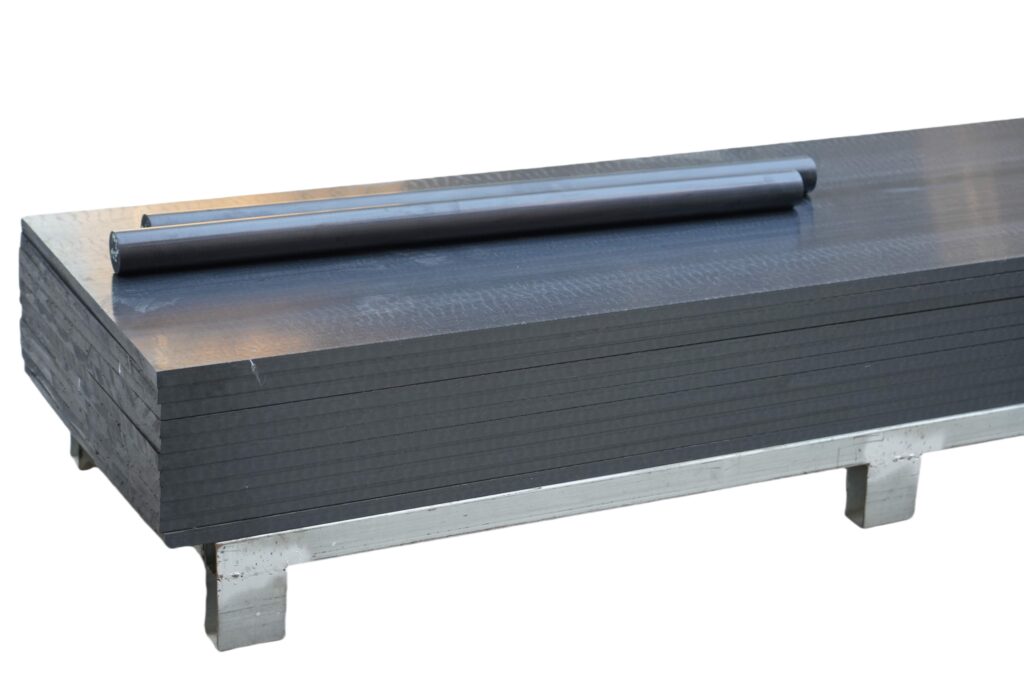
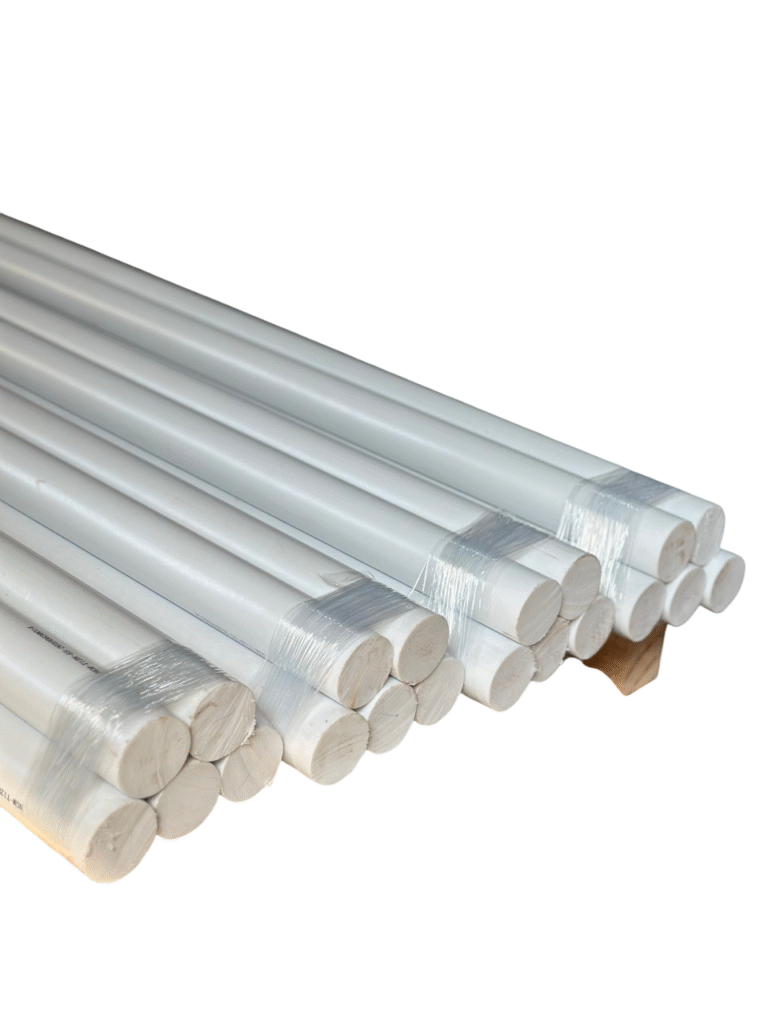
The low coefficient of thermal expansion, approximately 70 ppm per degree Celsius, further enhances dimensional stability across temperature changes. In addition, PETP plastic material exhibits low creep under sustained load, maintaining tolerances over years of service. These properties make it particularly suitable for gauges, fixtures, and measurement equipment components where dimensional accuracy directly affects product quality. NAGOMER supplies PETP in sheets and rods for precision machining applications. Moreover, the material’s natural off-white color helps operators identify contamination in clean manufacturing environments, simplifying quality control procedures.
PETP Plastic Material in Wear Applications
PETP excels in sliding wear applications. Its hardness of 120 to 130 on the Rockwell M scale exceeds both POM at 90 and PA6 at 110, providing better resistance to abrasive wear. The material also has a low friction coefficient of 0.18 to 0.25 against steel, which reduces heat generation in sliding contacts. Consequently, PETP is specified for gears, bushings, cam followers, and guide rails where wear life directly impacts maintenance intervals.
For instance, textile machinery guide rails made from PETP outlast POM equivalents by 50 to 100 percent in high-speed yarn processing applications. The material’s stiffness, with flexural modulus of 2,400 to 3,000 MPa, prevents deflection under side loads that would cause POM components to deform. However, PETP is not as impact-resistant as POM or nylon, so it should not be specified for applications involving repeated impact loading. For combined wear and impact requirements, POM or PA6 typically provide better overall performance.
Electrical Insulation Properties
PETP plastic material provides excellent electrical insulation for low and medium voltage applications. Its dielectric strength of 15 to 20 kV per millimeter makes it suitable for insulators, terminal blocks, and switchgear components. Volume resistivity exceeds 10 to the 15th ohm-centimeters. The low dielectric constant of 3.0 to 3.2 remains stable across frequency ranges, preventing signal distortion in electronic applications.
Furthermore, the material’s tracking resistance exceeds 600 volts on the comparative tracking index. This qualifies it for electrical equipment standards including IEC 60664 and UL 746A. Unlike nylon, whose electrical properties degrade with moisture absorption, PETP maintains consistent insulation values regardless of ambient humidity. This consistency is critical in outdoor electrical equipment and tropical climate installations where humidity fluctuations would compromise nylon insulators. For high-temperature electrical applications, glass-filled PETP grades extend the heat deflection temperature to 200 degrees Celsius and above. In fact, the material’s arc resistance exceeds 150 seconds, qualifying it for switchgear components that must interrupt fault currents without tracking damage.
Food Contact and FDA Compliance
PETP complies with FDA 21 CFR 177.1630 for food contact applications. This makes it suitable for food processing machinery components. The material’s low moisture absorption prevents bacterial growth in surface pores. Its hardness resists scratching that could harbor contaminants in food contact zones. Typical food industry applications include conveyor guides, star wheels, filling machine components, and cutting surfaces.
In addition, PETP is compatible with standard CIP cleaning chemicals including caustic soda, nitric acid, and peracetic acid at concentrations used in food plant cleaning protocols. The material handles continuous service temperatures up to 100 degrees Celsius, which covers most food processing conditions. For hot-fill applications above 100 degrees, PEEK or PPS food-grade materials provide higher temperature alternatives. However, PETP offers a cost-effective solution for the majority of food processing equipment where extreme temperatures are not encountered.
PETP plastic material machines more like metal than plastic. Its hardness and stiffness allow tight tolerances of plus or minus 0.03 mm without the burring and deformation common in softer plastics. Carbide tooling with standard geometries produces excellent surface finishes. Unlike nylon, PETP does not absorb coolant, so water-soluble coolants can be used for improved chip evacuation and surface quality.
Compared to POM, PETP offers better hardness, lower moisture absorption, and superior dimensional stability. However, POM provides better impact resistance, fatigue resistance, and lower friction coefficient. Therefore, the choice between the two depends on whether the application prioritizes precision and wear resistance or impact and fatigue performance. Moreover, PETP costs roughly 20 to 30 percent less than PEEK while delivering 80 percent of its mechanical performance for room-temperature applications. For cost-sensitive precision parts that do not require high-temperature resistance, PETP often provides the optimal balance of performance and value. In fact, many precision equipment manufacturers specify PETP over POM specifically for its superior hardness and moisture stability in critical measurement applications.
NAGOMER supplies PETP plastic material in sheets and rods for precision machining, electrical insulation, and food contact applications. Contact info@nagomer.com for grade specifications and FDA compliance documentation.