
News Centre
News Type
Send your inquiry
PEEK vs PPS: High Performance Plastic Comparison for Engineering Applications
Detailed comparison of PEEK (Polyetheretherketone) and PPS (Polyphenylene Sulfide) engineering plastics. Compare chemical resistance, thermal properties, mechanical strength, and cost for informed material selection.
Introduction
PEEK and PPS are both high-performance engineering plastics, but they serve different applications. This guide compares their properties to help engineers make informed material selection decisions.
Chemical Structure and Fundamental Properties
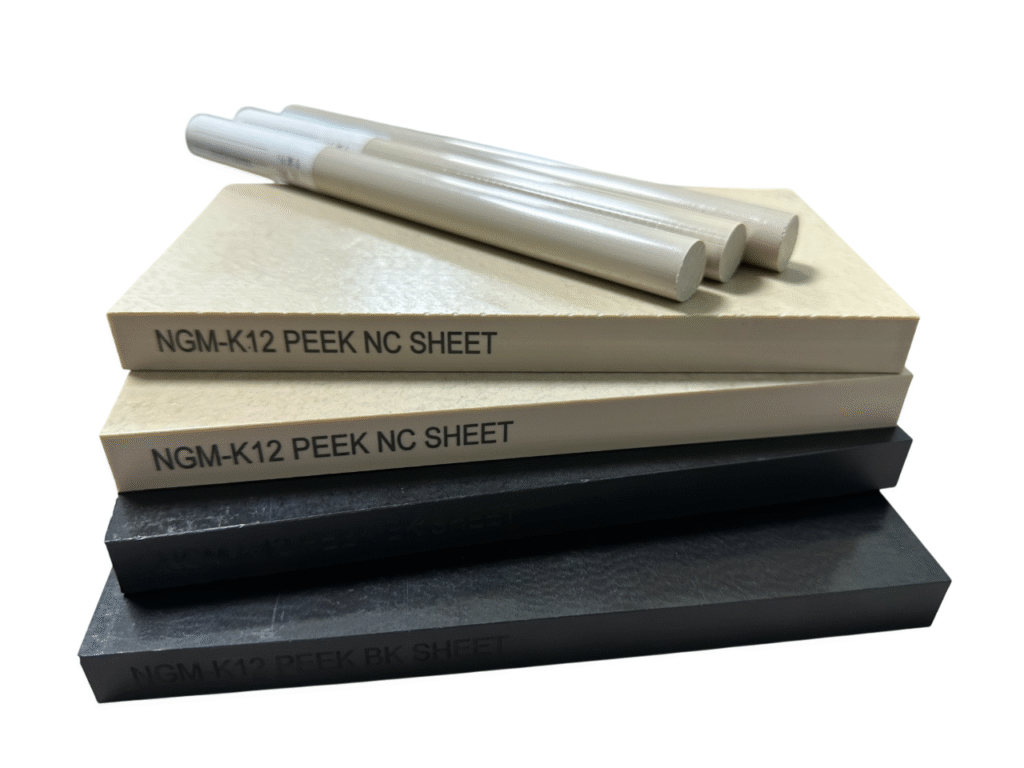
PEEK is a semi-crystalline thermoplastic with a continuous service temperature of 260°C. PPS is also semi-crystalline with a service temperature of 220°C. Both offer excellent chemical resistance, but PEEK maintains toughness at higher temperatures.
Thermal Performance Comparison
PEEK outperforms PPS in continuous high-temperature applications. PEEK retains useful mechanical properties up to 260°C, while PPS begins to degrade above 220°C. For applications above 200°C, PEEK is the clear choice.
Chemical Resistance: PEEK vs PPS
Both materials offer excellent chemical resistance. PEEK has a slight edge in resistance to organic solvents and hot water/steam. PPS has excellent resistance to acids and alkalis. For most chemical processing applications, either material performs well.
Mechanical Properties and Strength
PEEK has higher tensile strength (90-100 MPa vs 70-80 MPa for PPS) and significantly higher impact strength. PPS is more brittle and may crack under impact loading. PEEK‘s toughness makes it suitable for structural applications where PPS would fail.
Cost Comparison and Value Analysis
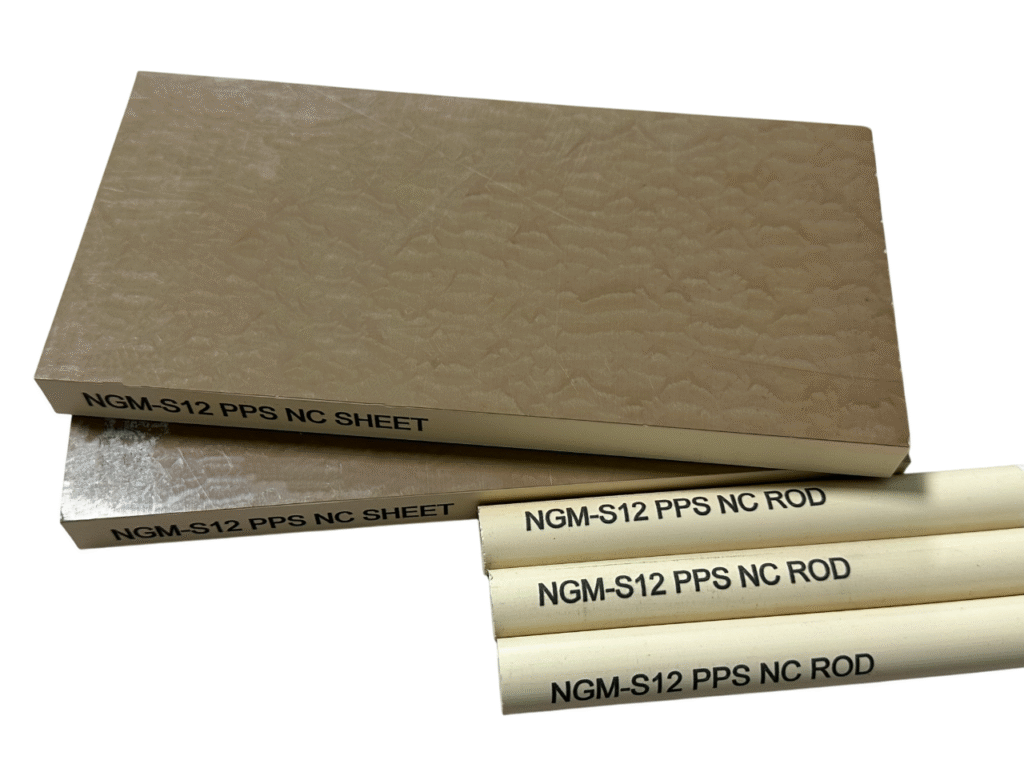
PPS typically costs 40-60% less than PEEK. For applications that don’t require PEEK‘s extreme temperature or impact performance, PPS offers excellent value. NAGOMER offers both materials in standard, ESD, and reinforced grades to match your application requirements and budget.
Conclusion: Choosing the Right Material
Choose PEEK for: (1) Continuous service above 200°C; (2) High impact or fatigue loading; (3) Aerospace and semiconductor applications requiring highest performance. Choose PPS for: (1) Cost-sensitive high-temperature applications; (2) Chemical processing below 200°C; (3) Electrical components requiring inherent flame resistance.
Contact NAGOMER today for a free sample and technical datasheet.