News Centre
News Type
Send your inquiry
PEEK vs PEI vs PPS: Selecting High-Performance Engineering Plastics for Demanding Applications
The High-Performance Thermoplastics Landscape
When engineers need a plastic that survives where metals struggle — at extreme temperatures, in aggressive chemicals, under sustained mechanical load — the conversation narrows to three materials: PEEK, PEI, and PPS. Choosing between them is one of the most consequential material selection decisions in advanced manufacturing.
The price gap is significant: PEEK costs 3-5x more than PPS. Over-specifying wastes money; under-specifying risks failure. This guide provides a head-to-head comparison to help you match material to application with confidence.
Mechanical Properties: Strength, Stiffness, and Toughness
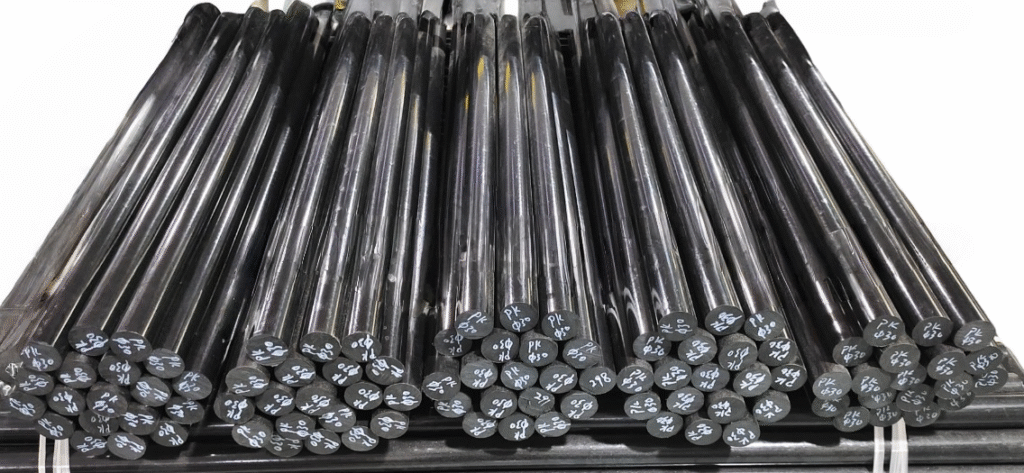
PEEK: PEEK (NAGOMER K12N/B) leads with tensile strength of 90-100 MPa and exceptional toughness, maintaining 30-50% elongation at break even at elevated temperatures. Carbon fiber-reinforced PEEK (NAGOMER KG30B) pushes tensile strength above 150 MPa.
PEI: PEI (NAGOMER I12N/B) matches PEEK in room-temperature strength at 85-105 MPa but is more brittle with 7-12% elongation. Its amorphous structure gives excellent machinability and surface finish.
PPS: PPS (NAGOMER S12N/B) offers 70-85 MPa unfilled, but glass-reinforced PPS (NAGOMER SG12B) reaches 130-150 MPa, making it the stiffness champion for structural applications.
Thermal and Chemical Performance
PEEK is the clear thermal champion with continuous use at 260°C and short-term excursions to 300°C. Glass-filled PPS performs well to 220°C continuous. PEI, despite a high Tg of 217°C, is limited to 170°C continuous use due to its amorphous structure.
Property | PEEK | PEI | PPS |
Continuous use temp | 260°C | 170°C | 200-220°C |
Glass transition (Tg) | 143°C | 217°C | 90°C |
Melting point | 343°C | Amorphous | 280°C |
PPS has the best chemical resistance of any engineering thermoplastic — virtually immune to all chemicals below 200°C, including acids, bases, solvents, and fuels. PEEK offers excellent resistance, surpassed only by PPS and PTFE. PEI has good resistance but is susceptible to stress cracking in polar solvents like acetone and MEK.
Cost and Value Optimization
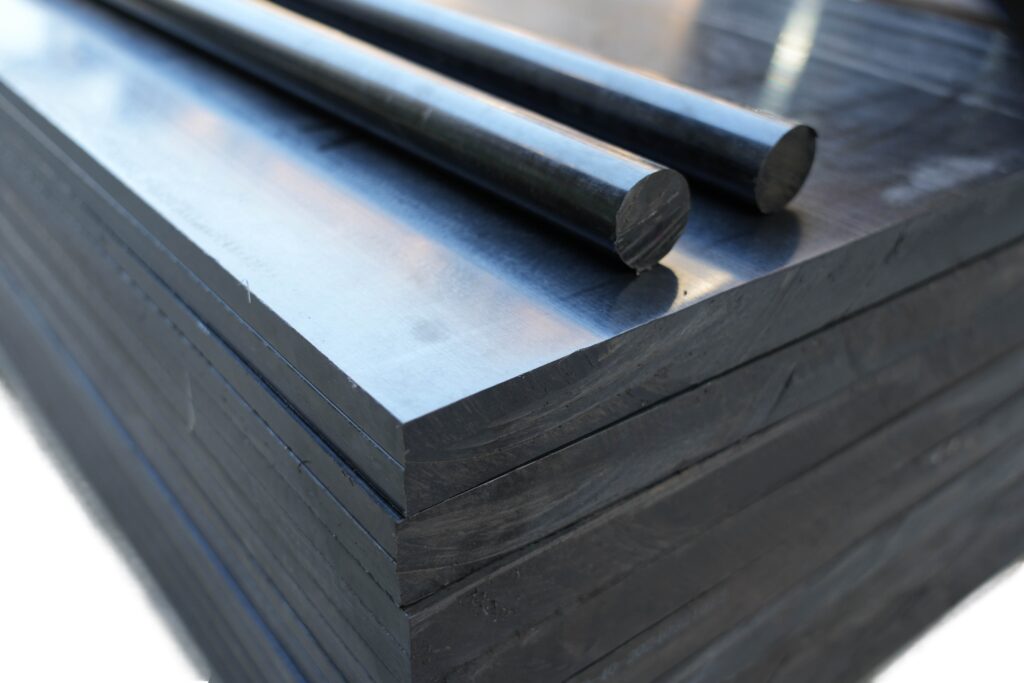
The cost hierarchy is consistent across global markets: PPS is the baseline, PEI costs 1.5-2x more, and PEEK costs 3-5x more than PPS. The key to optimization is choosing the least expensive material that meets all requirements.
Decision framework: Start with PPS. If it meets your mechanical, thermal, and chemical requirements, use it. Move to PEI if you need superior machinability or dimensional precision. Move to PEEK only when you need its unique combination of toughness, temperature capability, and chemical resistance.
Application-Specific Recommendations
Semiconductor manufacturing: ESD PPS (NAGOMER S6B) for wet process tools; ESD PEI (NAGOMER I6B) for test sockets and precision fixtures; ESD PEEK (NAGOMER K6B) for critical wafer contact applications.
Aerospace: PEEK for structural and engine-area components; PEI for interior components requiring flame retardancy; PPS for high-temperature structural applications.
Medical devices: PEEK for implants and reusable surgical instruments; PEI for device housings; PPS for chemical-resistant instrument components.
Oil and gas: PPS for downhole and chemical processing; PEEK for seals and bearings in extreme conditions.
NAGOMER supplies all three high-performance engineering plastics in standard and ESD grades, with full technical support for material selection. Contact info@nagomer.com for application-specific recommendations and material samples.