
News Centre
News Type
Send your inquiry
PEEK vs PEI (ULTEM): Thermal Performance, Strength & Cost Comparison
Comprehensive Property Comparison
Property | PEEK | PEI (ULTEM) | Advantage | |
Thermal | Continuous service temp | 250°C | 170°C | PEEK (+80°C) |
Glass transition (Tg) | 143°C | 217°C | PEI | |
Melting point | 343°C | Amorphous | PEEK | |
HDT (1.8 MPa) | 152°C | 200°C | PEI (+48°C) | |
Mechanical | Tensile strength | 98 MPa | 105 MPa | PEI |
Flexural modulus | 3.6 GPa | 3.3 GPa | PEEK | |
Impact (notched) | 7.5 kJ/m² | 5 kJ/m² | PEEK | |
Wear resistance | Excellent | Fair | PEEK | |
Chemical | Acid resistance | Good | Fair | PEEK |
Base resistance | Good | Fair | PEEK | |
Solvent resistance | Good | Fair | PEEK | |
Fire Safety | UL94 rating | V-0 (1.45mm) | V-0 (0.4mm) | PEI (thinner) |
LOI | 35% | 47% | PEI | |
Physical | Density | 1.32 g/cm³ | 1.27 g/cm³ | PEI (lighter) |
Water absorption 24h | 0.06% | 0.25% | PEEK | |
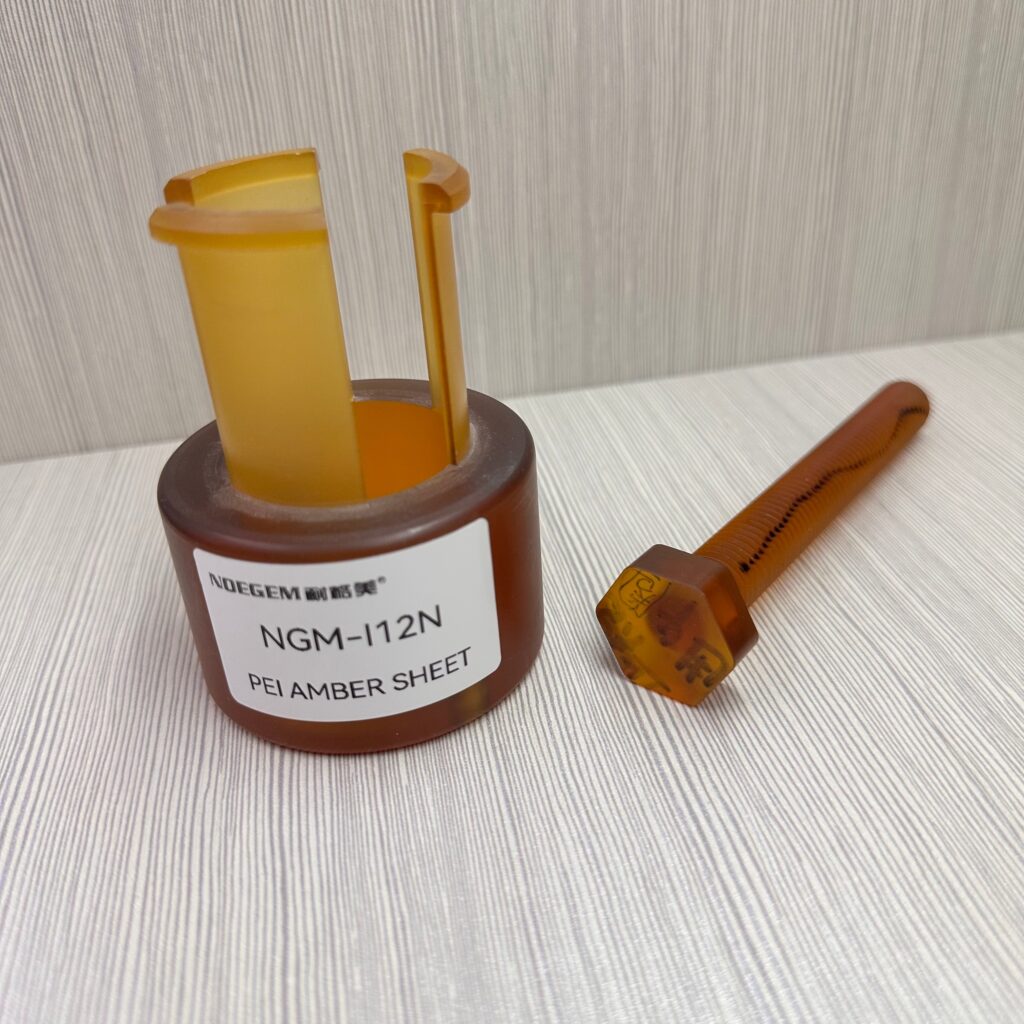
Transparency | Opaque | Amber-transparent | PEI | |
Cost | Price (USD/kg) | $85–110 | $20–35 | PEI (3–4× cheaper) |
When to Choose PEEK
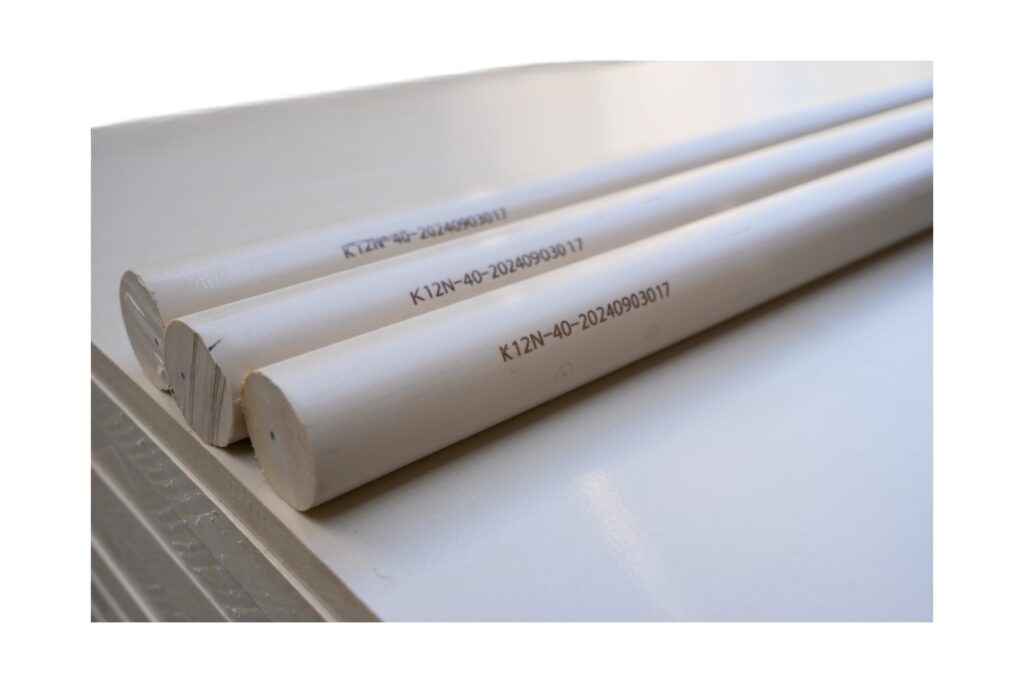
PEEK is the clear winner when your application requires:
Higher Continuous Temperature
PEEK operates at 250°C continuously — 80°C higher than PEI. For applications in hot environments (downhole tools, high-temp chemical processing, semiconductor processing), PEEK is essential.
Superior Chemical Resistance
PEEK resists a broader range of chemicals than PEI, which is attacked by some polar solvents (acetone, MEK, chlorinated solvents). For chemical processing environments, PEEK is the safer choice.
Better Wear and Friction Properties
PEEK‘s excellent wear resistance makes it the preferred bearing and wear material. PEI has poor wear characteristics and is not recommended for sliding or rubbing applications.
Lower Moisture Absorption
PEEK absorbs only 0.06% water at 24h versus PEI‘s 0.25%. For applications requiring maximum dimensional stability in humid conditions, PEEK is superior.
Medical Implant Compliance
PEEK meets USP Class VI and ISO 10993 for implantable devices. PEI is not typically used for implants.
When to Choose PEI
PEI is the better choice when:
Cost is a Primary Factor
At 25–35% of PEEK‘s price, PEI delivers comparable mechanical strength and inherent flame retardancy at a fraction of the cost. For non-extreme-temperature applications, PEI offers better value.
Fire Safety at Minimum Thickness
PEI achieves UL94 V-0 at 0.4mm — PEEK requires 1.45mm. For thin-wall components requiring fire certification, PEI is superior.
Transparency is Required
PEI‘s amber transparency is useful for sight glasses, inspection windows, and optical applications where PEEK‘s opacity is a limitation.
Higher HDT Under Load
PEI‘s HDT of 200°C (vs PEEK‘s 152°C) means PEI maintains stiffness at higher temperatures under load — counterintuitively, PEI is stiffer at 150°C than PEEK due to its higher Tg.
Aerospace Interior Applications
PEI‘s inherent FST compliance, surface finish quality, and lower cost make it the preferred material for aircraft cabin interiors.
Application Selection Matrix
Application | Recommended | Reason |
Aircraft interior panels | PEI | FST + cost + surface |
Downhole seal | PEEK | Temperature + chemicals |
Semiconductor wafer carrier | PEEK | Purity + wear |
Medical implant | PEEK | Biocompatibility |
Electrical connector (high freq) | PEI | Dielectric + cost |
Sight glass | PEI | Transparency |
Bearing bush | PEEK | Wear resistance |
Thin-wall fire-rated part | PEI | V-0 at 0.4mm |
For broader comparisons, see our PEEK vs PTFE guide and Engineering Plastics Overview.
FAQ
Q1: Is PEEK stronger than PEI?
PEI actually has a slightly higher tensile strength (105 MPa vs 98 MPa for PEEK). However, PEEK has higher impact toughness and much better wear resistance. PEEK also maintains its properties at much higher temperatures (250°C vs 170°C continuous service).
Q2: Which is more expensive: PEEK or PEI?
PEEK is significantly more expensive, typically 3–4 times the cost of PEI. PEEK costs $85–110/kg while PEI costs $20–35/kg. PEI offers similar mechanical strength and flame retardancy at a fraction of the cost when temperature requirements are below 170°C.
Q3: Does PEI have better fire resistance than PEEK?
PEI has superior fire resistance metrics. PEI achieves UL94 V-0 at 0.4mm thickness (vs 1.45mm for PEEK) and has a higher limiting oxygen index (47% vs 35%). For thin-wall fire-rated components, PEI is the better choice.
Q4: Can PEI replace PEEK in my application?
PEI can replace PEEK if: your continuous service temperature is below 170°C, you don’t need wear resistance, chemical exposure is mild, and the component is not an implant. PEI offers 60–70% cost savings while maintaining comparable strength and flame retardancy.
Choosing between PEEK and PEI? Contact NAGOMER for expert material advice, or browse our PEEK products and PEI sheets.
NAGOMER — Professional Engineering Plastics Solutions
www.nagomer.com | info@nagomer.com