
News Centre
News Type
Send your inquiry
PEEK Glass-Filled vs Unfilled: When to Use Each Grade
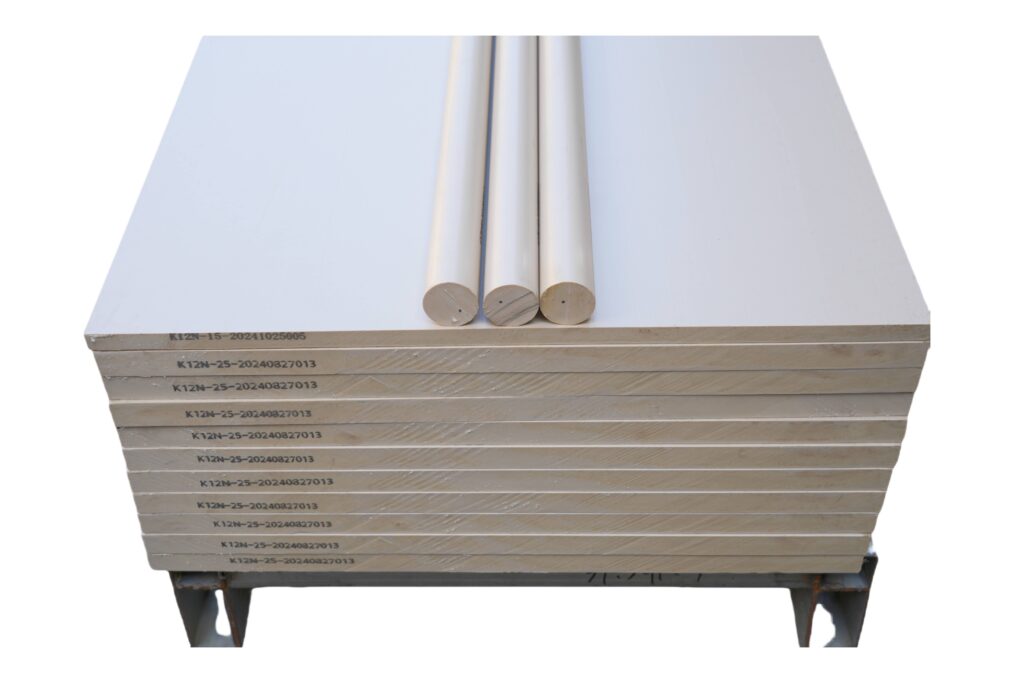
Unfilled PEEK (Natural / Virgin)
Properties
Property | Value |
Tensile strength | 98 MPa |
Flexural modulus | 3.6 GPa |
Impact strength | 7.5 kJ/m² |
Elongation at break | 30% |
Density | 1.32 g/cm³ |
Colour | Natural (cream/tan) |
Surface resistance | 10^16 Ω/sq (insulative) |
Best Applications
Medical devices — FDA, USP Class VI, ISO 10993 compliant
Food contact — FDA 21 CFR 177.2415
Semiconductor — ultra-low metallic contamination
Electrical insulation — highest dielectric strength
Seals and gaskets — best elongation and flexibility
Any application requiring FDA or medical compliance — glass fillers may not be food-grade
Why Choose Unfilled
Regulatory compliance: Only unfilled PEEK meets FDA/USP Class VI
Highest elongation: 30% vs 3% for GF30 — better for sealing applications
Best impact toughness: Highest energy absorption
Electrical insulation: Glass reduces dielectric performance
Colour flexibility: Can be pigmented; filled grades are limited
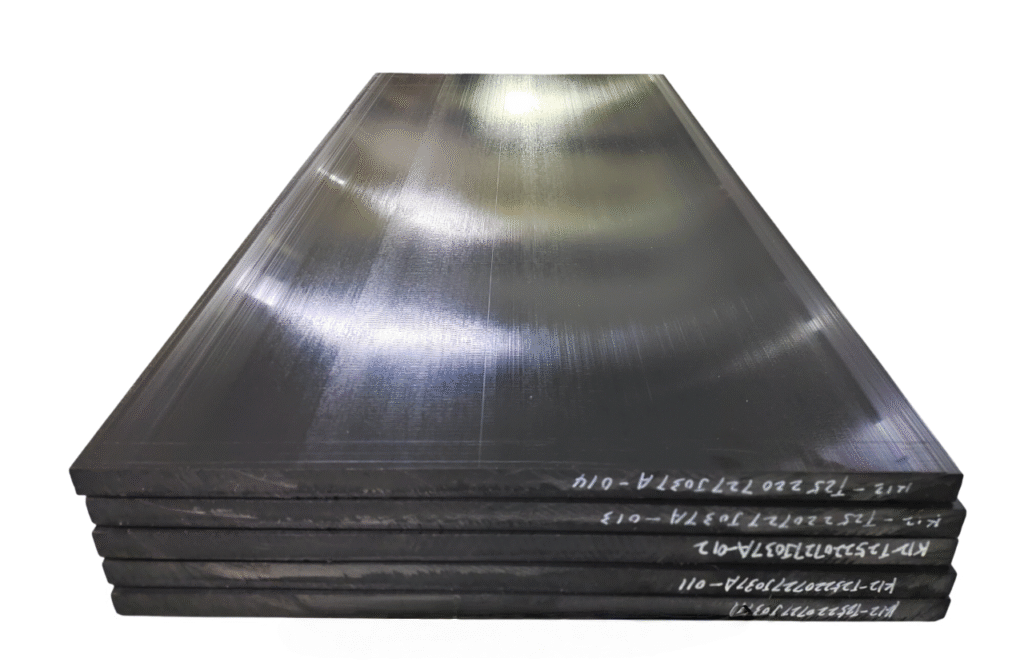
PEEK GF30 (30% Glass-Filled)
Properties
Property | Value | vs Unfilled |
Tensile strength | 180 MPa | +84% |
Flexural modulus | 10 GPa | +178% |
Impact strength | 9 kJ/m² | +20% |
Elongation at break | 3% | -90% |
Density | 1.49 g/cm³ | +13% |
HDT (1.8 MPa) | 315°C | +107% |
Colour | Grey-green | — |
Best Applications
· Structural brackets — 2× stiffer than unfilled
· High-temperature load-bearing — HDT 315°C
· Housings and enclosures — rigidity + temperature
· Automotive components — under-hood structural parts
· Industrial pump components — pressure + temperature
· Aerospace structural parts — weight-critical stiffness
Why Choose GF30
· Maximum stiffness: 10 GPa flexural modulus — 2.8× unfilled
· Higher HDT: 315°C vs 152°C — maintains stiffness at high temperatures
· Better creep resistance: Reduced deformation under sustained load
· Lower cost: Typically 20–25% cheaper than unfilled PEEK
· Higher strength: 180 MPa tensile — nearly double unfilled
Other PEEK Filled Grades
PEEK CF30 (30% Carbon Fibre-Filled)
· Tensile: 220 MPa (highest)
· Flexural modulus: 18 GPa (highest)
· Surface resistance: 10^3–10^5 Ω/sq (conductive — ESD applications)
· Best for: ESD components, maximum strength-to-weight, aerospace structural
PEEK Bearing Grade (PTFE + Graphite + Carbon)
· Lowest friction: 0.15 coefficient
· Best wear resistance: 100× lower wear rate than unfilled
· Best for: Bearing bushes, wear rings, dynamic seals, valve seats
Selection Decision Matrix
Requirement | Recommended Grade |
FDA / medical compliance | Unfilled (natural) |
Food contact | Unfilled (natural) |
Maximum stiffness | PEEK GF30 or CF30 |
Maximum strength | PEEK CF30 |
Bearing / wear application | PEEK bearing grade |
ESD protection | PEEK CF30 |
Electrical insulation | Unfilled |
Sealing / flexibility | Unfilled |
High-temperature structural | PEEK GF30 |
Cost optimization | PEEK GF30 (cheaper than unfilled) |
For more on PEEK grades, see our PEEK Filled Grades Complete Guide. For PEEK properties, read our PEEK Plastic Sheet Guide.
FAQ
Q1: Is glass-filled PEEK FDA compliant?
No, glass-filled PEEK is not FDA compliant for food or medical contact. The glass fibres are not approved food-contact additives. Only unfilled (natural/virgin) PEEK meets FDA 21 CFR 177.2415 and USP Class VI requirements.
Q2: Is PEEK GF30 stronger than unfilled PEEK?
Yes, PEEK GF30 is significantly stronger and stiffer than unfilled PEEK. Tensile strength increases by 84% (180 MPa vs 98 MPa) and flexural modulus increases by 178% (10 GPa vs 3.6 GPa). However, elongation at break decreases from 30% to 3%, making GF30 more brittle.
Q3: Which PEEK grade is best for bearings?
PEEK bearing grade (PTFE + graphite + carbon filled) is the best choice for bearing applications. It offers the lowest friction coefficient (0.15), highest wear resistance (100× lower wear than unfilled), and maintains PEEK‘s temperature and chemical resistance.
Q4: Is glass-filled PEEK cheaper than unfilled PEEK?
Yes, PEEK GF30 is typically 20–25% cheaper than unfilled PEEK. The glass fibre filler costs much less than PEEK resin, so replacing 30% of the material with glass fibres reduces the overall cost per kg.
Need help selecting the right PEEK grade? Contact NAGOMER for grade recommendations, or explore our PEEK products.
NAGOMER — Professional Engineering Plastics Solutions
www.nagomer.com | info@nagomer.com