
News Centre
News Type
Send your inquiry
PEEK 3D Printing vs CNC Machining: When Additive Manufacturing Makes Sense
The PEEK Manufacturing Dilemma
PEEK is one of the most versatile and highest-performing engineering thermoplastics available. However, its very properties that make it so desirable, high melting temperature (343C), high melt viscosity, and tendency to crystallize, also make it challenging to process.
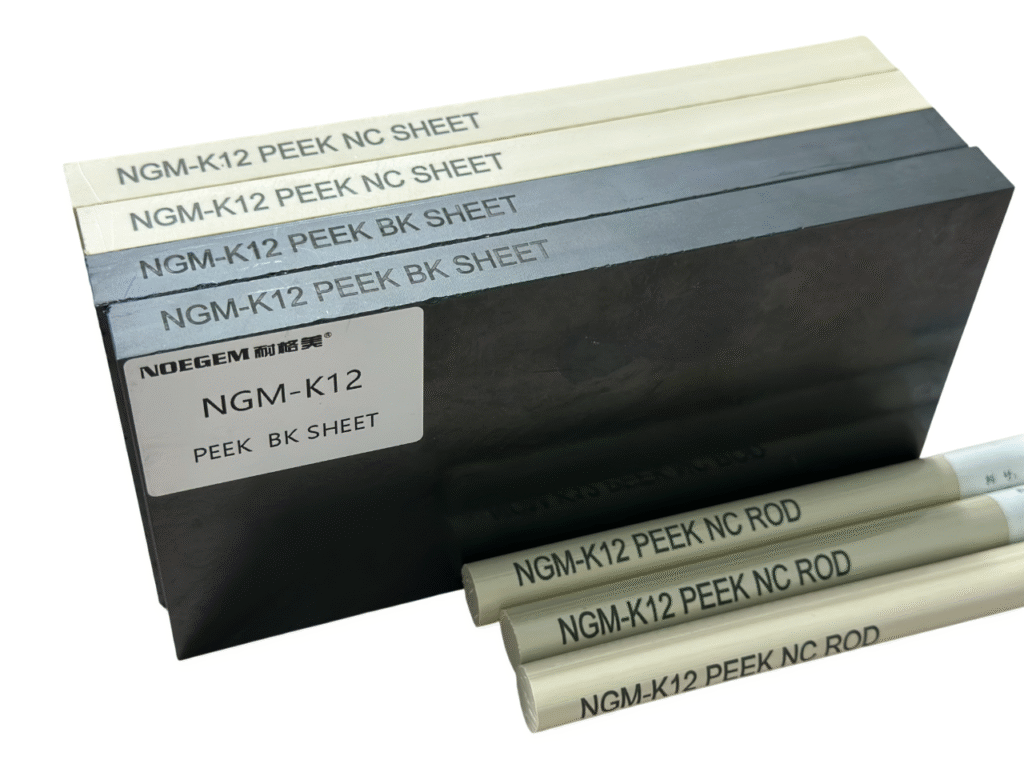
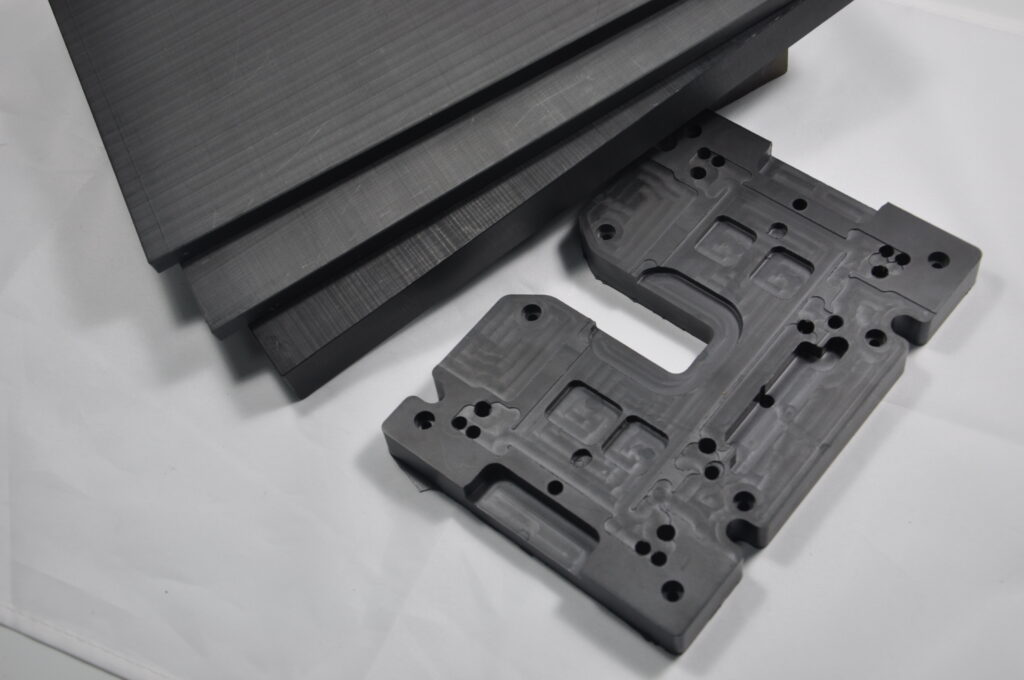
Traditionally, PEEK parts have been manufactured through CNC machining from extruded stock shapes (sheets and rods). This remains the dominant manufacturing method for production parts due to the superior mechanical properties and reliability of machined PEEK.
In recent years, PEEK 3D printing (additive manufacturing) has matured significantly. Both FDM (fused deposition modeling) and SLS (selective laser sintering) technologies are now capable of producing functional PEEK parts. But when does 3D printing make sense, and when should engineers stick with traditional machining? This article provides a detailed comparison to guide your decision.
Mechanical Properties: Machined vs 3D Printed
The mechanical properties of machined PEEK from extruded stock are generally considered the benchmark:
Machined PEEK (from extruded sheet/rod): Tensile strength 90-100 MPa, flexural modulus 3,600-4,100 MPa, elongation at break 20-45%.
FDM 3D printed PEEK: Tensile strength 70-85 MPa (75-90% of machined in X-Y plane, 40-60% in Z direction), flexural modulus 3,000-3,500 MPa. The anisotropy (direction-dependent properties) is a significant consideration.
SLS 3D printed PEEK: Tensile strength 80-95 MPa (85-95% of machined), with less anisotropy than FDM. SLS generally produces parts closer to isotropic properties.
The interlayer adhesion in FDM-printed PEEK is the critical factor limiting mechanical properties. Proper chamber heating (typically 130-180C) is essential to achieve good layer bonding. Even with optimized parameters, Z-direction strength typically reaches only 60-70% of X-Y plane strength.
Cost Analysis: When 3D Printing Wins
The economic case for 3D printing vs machining depends heavily on part geometry and quantity:
Low complexity, moderate quantity: CNC machining is almost always more economical. Material cost for PEEK stock is approximately $100-300/kg, while PEEK filament for 3D printing is $300-600/kg.
High complexity, low quantity: 3D printing can be significantly more economical for complex geometries that would require multiple setups, specialized fixturing, or 5-axis machining. Internal features, undercuts, and organic shapes that are difficult or impossible to machine become feasible with 3D printing.
Prototyping: 3D printing offers dramatically faster turnaround (hours vs days) for prototypes, enabling rapid design iteration. The ability to print overnight without operator attention is a significant advantage.
Production quantities above 100-500 pieces: CNC machining typically wins due to lower material cost and superior mechanical properties.
Design Freedom and Application Suitability
3D printing enables geometries that are impossible with subtractive manufacturing:
Internal cooling channels and conformal cooling: Particularly valuable for tooling and mold inserts where optimized cooling can reduce cycle times by 20-40%.
Lightweight lattice structures: Useful for aerospace and medical implant applications where weight reduction and osseointegration are critical.
Part consolidation: Multiple components can be combined into a single printed part, reducing assembly time and eliminating potential failure points.
However, for applications requiring the highest strength, precision tolerances, or surface finish, machined PEEK remains superior. Critical structural components for aerospace or medical implants should typically be machined from certified extruded stock.
Recommendations for Engineers
Choose CNC machining when: Maximum mechanical properties are required. Tight tolerances (+/-0.05mm or better) are needed. Surface finish is critical. Production quantities exceed 100-500 pieces. Material certification and traceability (from extruded stock) are required for regulatory compliance.
Choose 3D printing when: Part geometry is too complex for machining. Rapid prototyping and design iteration are priorities. Lead time is the primary constraint. Small quantities of custom parts are needed. Weight reduction through lattice structures provides significant value.
NAGOMER supplies PEEK sheets and rods optimized for CNC machining, and we can also advise on material selection for 3D printing applications. Our PEEK materials meet ASTM F2026 for implantable medical devices and are available with full material certification.
NAGOMER supplies premium PEEK sheets and rods for CNC machining. Visit nagomer.com for material specifications and free samples.