
News Centre
News Type
Send your inquiry
PBT Sheet & Rod: Properties, Processing & Applications Guide
Key Properties of PBT
· Melting point: 220–225°C; continuous service temperature 120–140°C
· Moisture uptake just 0.3–0.5% — far lower than PA6 or PA66
· Excellent electrical insulation with high tracking resistance (CTI)
· Good resistance to oils, fuels, and most organic solvents
· Strong dimensional stability across humidity changes
· Fast crystallisation for short moulding cycles and consistent properties
· Available in glass-fibre filled grades for structural duty
PBT vs PA66 vs POM
Property | PBT | PA66 | POM-C |
Moisture uptake (sat.) | 0.3–0.5% | 2.5–3% | 0.2–0.3% |
Continuous temp (°C) | 120–140 | ~120 | ~100 |
Electrical insulation | Excellent | Good (moisture sensitive) | Good |
Toughness | Good | Very high | Good |
Chemical resistance | Good (weak against strong alkali) | Moderate | Moderate |
Typical use | Connectors, housings | Gears, structural parts | Precision mechanics |
PBT sits between polyamide and acetal: more dimensionally stable and electrically superior than PA66, more heat resistant than POM. Where a part must hold tolerance in humid air while insulating live circuits, PBT is often the natural answer.
Processing and Machining Notes
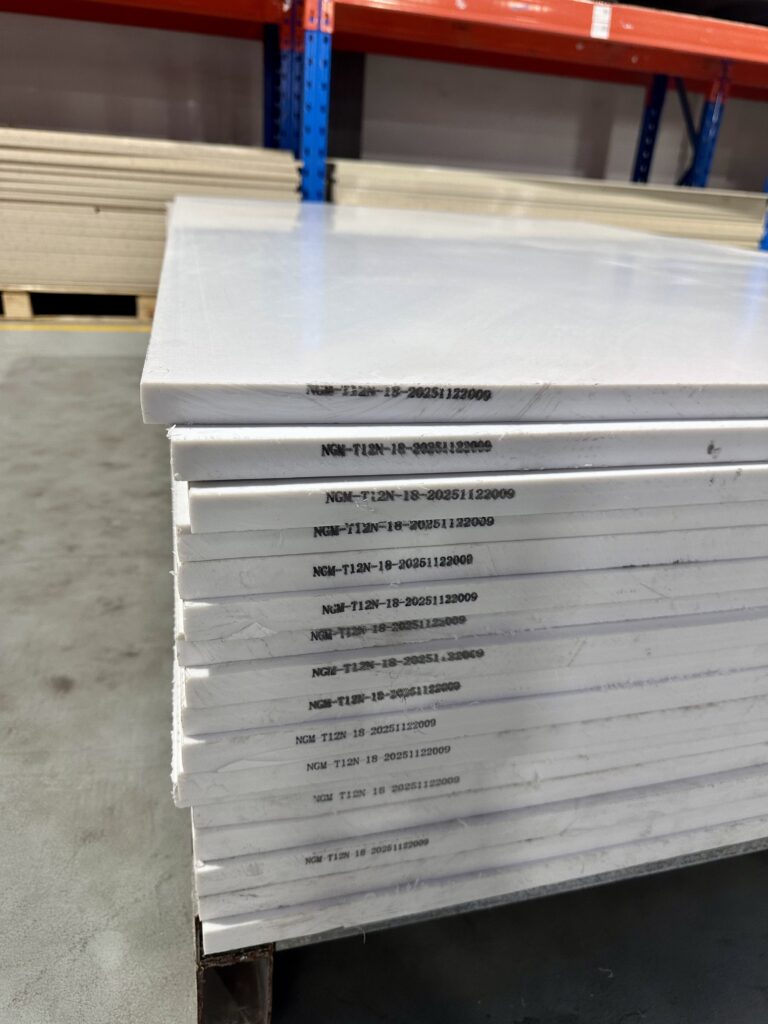
PBT dries quickly and must be dried before melt processing — residual moisture hydrolyses the polyester and destroys molecular weight. For machined parts, use sharp carbide tooling with generous rake angles; PBT cuts cleanly but generates static charge, so dust extraction is worthwhile. Anneal thick sections after rough machining to relieve stress, particularly for parts that will see high temperature in service. Filled grades machine more abrasively and shorten tool life, so budget for carbide or diamond tooling where glass content is high.
Common Applications
· Electrical — connectors, terminal blocks, switch housings, coil formers
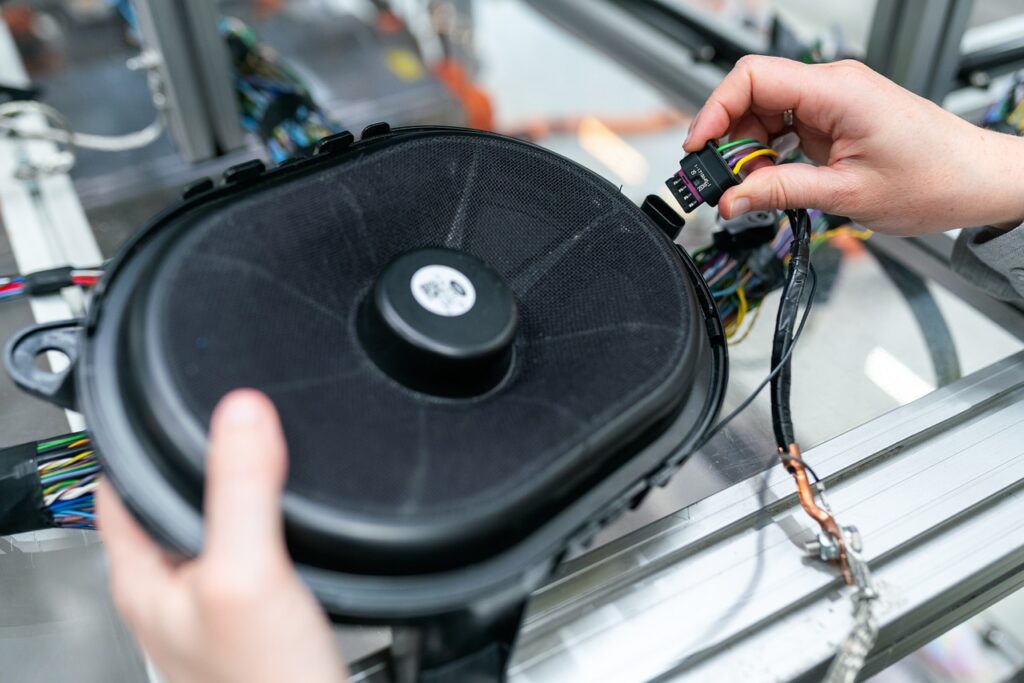
· Automotive — sensor bodies, ignition components, window and mirror mechanisms
· Appliance — handles, motor housings, pump components
· Industrial — pump impellers, valve bodies, precision insulators
· Consumer — automotive trim clips, hardware, and mechanical components
When Not to Choose PBT
PBT has clear limits. Hot water and steam hydrolyse the polyester backbone, so it is unsuitable for repeated steam sterilisation or continuous hot-water contact — use PPS, PEEK, or PSU instead. Strong alkalis attack it within hours of immersion at temperature, and unfilled grades are notch sensitive, meaning sharp internal corners can crack under impact. Where toughness at low temperature is the priority, polyamide remains the better choice; where chemical resistance to acids and bases is needed, PVDF or PTFE will serve you better. Specifying PBT for the right application, rather than the nearest one, is what makes it such a dependable material in the applications where it belongs.
Related reading: POM vs PA66 comparison, Engineering Plastics: A Complete Material Overview, and Engineering Plastic Certifications Explained.
FAQ
Q1: Is PBT better than nylon for electrical parts?
For moisture-sensitive electrical duty, usually yes — PBT absorbs far less water, so insulation resistance and dimensions stay stable in humid environments. Nylon wins where toughness matters more.
Q2: Does PBT absorb water?
Only 0.3–0.5% at saturation, roughly one-sixth of polyamide. That is why PBT parts hold tolerance through seasonal humidity changes.
Q3: Can PBT be used in hot water?
No. Hot water and steam hydrolyse PBT, degrading its mechanical properties. Use PPS, PEEK, or sulfone polymers for hot wet service.
Q4: What is glass-filled PBT used for?
Structural electrical parts: connectors, housings, and brackets that need higher stiffness, better creep resistance, and improved temperature performance.
Q5: Is PBT the same as PET?
Both are thermoplastic polyesters, but PBT crystallises much faster, giving shorter moulding cycles and better dimensional consistency. PET is more common in fibres, films, and bottles.
Need PBT components for electrical or automotive duty? Contact NAGOMER for stock shapes and machined parts to drawing.
────────────────────────────────────────
NAGOMER — Professional Engineering Plastics Solutions
www.nagomer.com | info@nagomer.com