
News Centre
News Type
Send your inquiry
PA6 vs PA66: Nylon Material Selection Guide for Engineering Applications
Comprehensive comparison of PA6 (Nylon 6) and PA66 (Nylon 66) engineering plastics. Covers mechanical properties, thermal performance, chemical resistance, moisture absorption, and application selection criteria.
Introduction
PA6 (Nylon 6) and PA66 (Nylon 66) are the two most widely used polyamide engineering plastics. While they share many properties, key differences determine which material is optimal for specific applications.
Chemical Structure and Fundamental Differences
PA6 is produced by caprolactam polymerization. PA66 is produced by condensation of hexamethylene diamine and adipic acid. The different chemical structures result in PA66 having higher crystallinity, which affects mechanical properties and processing characteristics.
Mechanical Properties Comparison
PA66 has approximately 15-20% higher tensile strength and modulus versus PA6 at dry-as-molded condition. However, PA6 retains more strength after moisture conditioning. Impact strength is similar, though PA6 has slightly better low-temperature impact resistance.
Thermal Performance: Continuous Service Temperature
PA66 offers a continuous service temperature of 100-120°C versus 90-110°C for PA6. For applications above 120°C, heat-stabilized grades of both materials are available, extending service temperature to 150-180°C with glass fiber reinforcement.
Moisture Absorption and its Effects
Both PA6 and PA66 absorb moisture, which plasticizes the material and reduces mechanical properties. PA66 absorbs slightly less moisture (approximately 6-8% vs 7-9% for PA6 at saturation). Both materials require design adjustments for moisture-induced dimensional changes.
Chemical Resistance: PA6 vs PA66
PA66 has marginally better chemical resistance to acids, alcohols, and alkalis. PA6 has slightly better resistance to weak acids and some organic solvents. Neither material is suitable for strong acids or oxidizing agents.
Application Selection Criteria: When to Choose Which
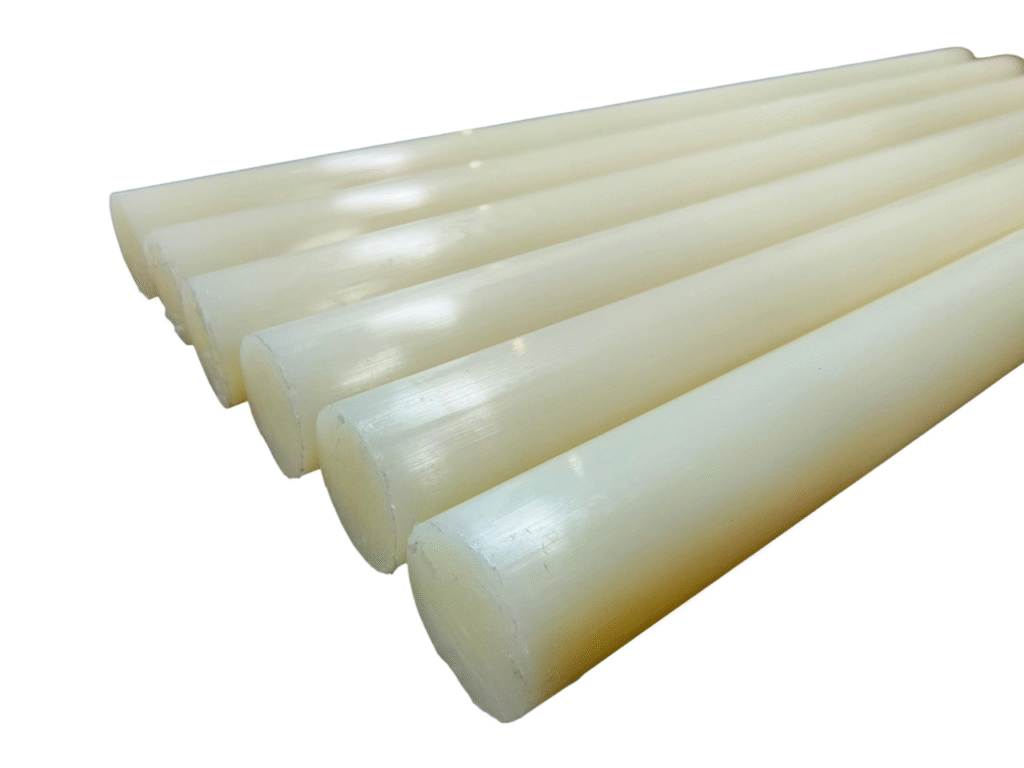
Choose PA66 for: (1) Higher temperature applications (>120°C continuous); (2) Applications requiring maximum tensile strength; (3) Better dimensional stability (lower moisture absorption); (4) Automotive under-hood components. Choose PA6 for: (1) Better processability and surface finish; (2) Lower cost (typically 10-15% less than PA66); (3) Better impact resistance after moisture conditioning; (4) Applications with less demanding thermal requirements.
Conclusion
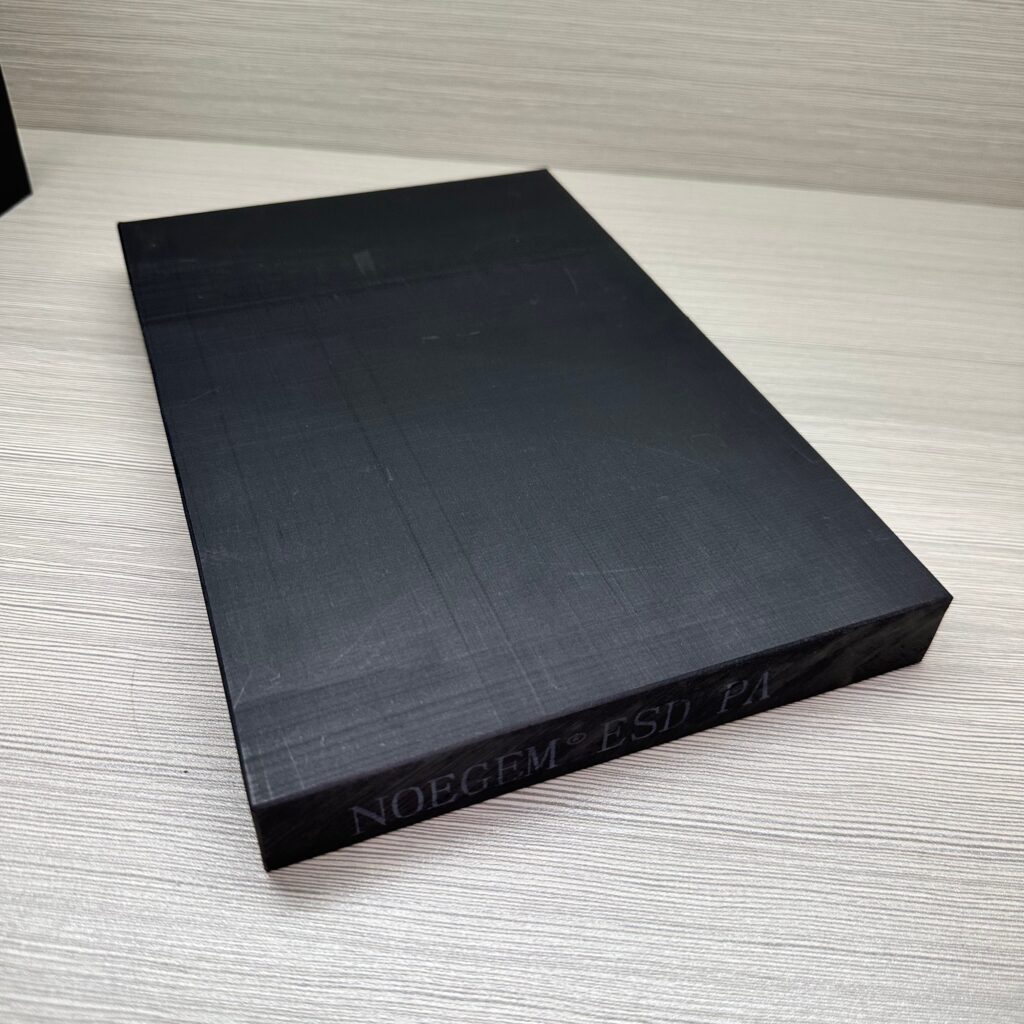
NAGOMER supplies both PA6 and PA66 in standard, ESD-safe, and glass-fiber-reinforced grades. Our technical team can assist with material selection based on your specific application requirements including service temperature, mechanical loads, chemical exposure, and cost targets.
Contact NAGOMER today for a free sample and technical datasheet.