
News Centre
News Type
Send your inquiry
HDPE Chemical Resistance: Tank and Lining Material Guide
Why HDPE Chemical Resistance Suits Industrial Service
Chemical storage and process vessels must hold aggressive liquids without degrading. The container also needs to be weldable for fabrication. Stainless steel handles many chemicals but costs several times more than HDPE. Moreover, certain acids attack stainless grades. HDPE chemical resistance covers a broader range of media at a fraction of the cost.
Water treatment plants, agricultural chemical storage, and mining operations rely on HDPE tank construction. The material handles sulfuric acid up to 70 percent concentration at room temperature. It also handles sodium hydroxide, potassium hydroxide, and most mineral acids. However, strong oxidizing agents and certain organic solvents attack HDPE. Understanding the chemical compatibility chart prevents failures. NAGOMER supplies HDPE sheet and rod for chemical tank fabrication.
In addition, the lightweight nature of HDPE simplifies field installation. A typical HDPE tank weighs one-tenth the equivalent steel tank. As a result, transportation and handling costs drop significantly. Furthermore, the flexibility of HDPE absorbs impact and ground movement without cracking. For seismically active regions, this flexibility prevents catastrophic tank failure. Therefore, this material provides practical benefits beyond just material compatibility in industrial chemical service applications.
Compatible and Incompatible Chemicals
The HDPE chemical resistance chart shows good performance with most acids, bases, and salt solutions. Sulfuric acid at concentrations below 80 percent shows minimal attack. Hydrochloric acid at all common concentrations performs well. Nitric acid works up to about 25 percent concentration. Above that, oxidation attacks the polymer. Sodium and potassium hydroxides work at all concentrations up to about 60 degrees Celsius.
Organic solvents present more risk. Aliphatic hydrocarbons like hexane and mineral oil cause swelling. Aromatic hydrocarbons like benzene and toluene cause more severe swelling and stress cracking. Chlorinated solvents like methylene chloride and chloroform attack HDPE aggressively. Strong oxidizing agents including concentrated nitric acid, chromic acid, and halogens damage the polymer chain. Furthermore, hydrocarbon fuel and oil resistance depends on temperature. At room temperature, swelling stays manageable. Above 50 degrees Celsius, permeation rates climb significantly. Material selection must account for both chemical identity and operating temperature.
Meanwhile, environmental stress cracking resistance matters for many chemical service applications. HDPE resists stress cracking in most aqueous solutions. However, certain surfactants and detergents accelerate crack growth under stress. For tank installations with bolted flanges or welded attachments, the residual stress near joints can trigger cracking in aggressive environments. In such cases, stress-relieved HDPE grades provide better performance. NAGOMER provides HDPE grades with documented environmental stress cracking resistance data for tank designers and chemical engineers evaluating material compatibility for their specific chemical service applications.
Temperature Limits in Chemical Service
HDPE chemical resistance decreases as temperature rises. The maximum service temperature in chemical service depends on the specific medium. For water and dilute aqueous solutions, HDPE works to about 60 degrees Celsius continuously. For stronger oxidizing acids, the limit drops to 40 degrees Celsius. For non-aggressive solutions like sodium chloride brine, the limit extends to 80 degrees Celsius.
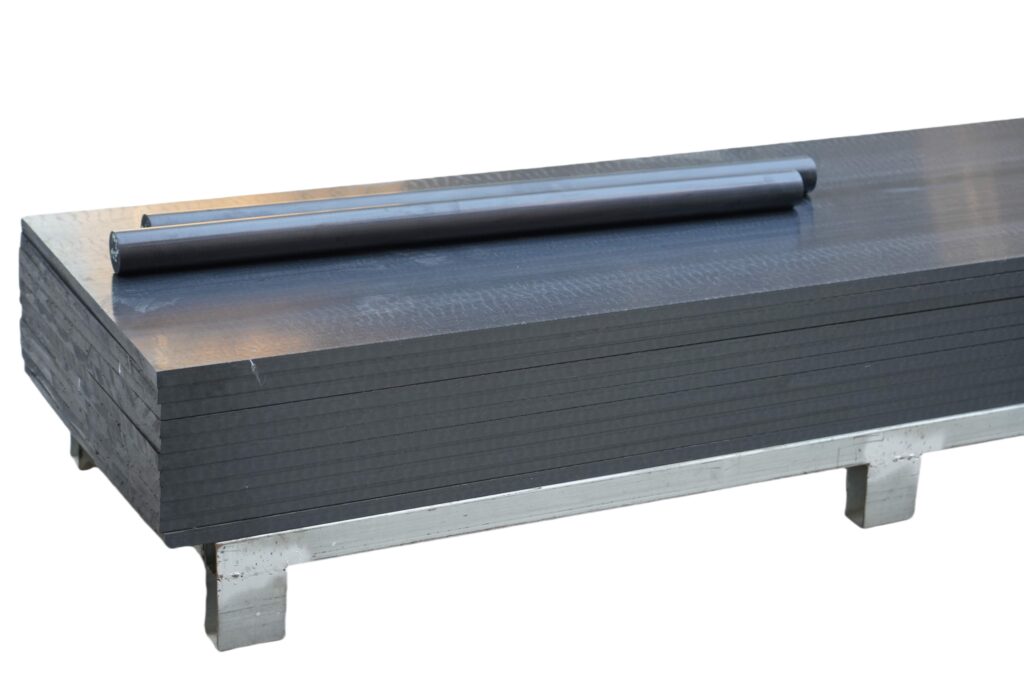
These temperature limits reflect the polymer’s glass transition behavior. Above 80 degrees Celsius, the amorphous regions of HDPE soften. The material loses stiffness and the chemical resistance drops sharply. For chemical service above this temperature, PP or higher-performance thermoplastics become necessary. NAGOMER stocks HDPE sheet from 3 to 25 mm and rod stock up to 200 mm diameter for chemical service fabrication.
In addition, thermal cycling affects long-term performance. Repeated heating and cooling creates expansion stress that may initiate cracking at weld seams. For outdoor tanks exposed to seasonal temperature swings, the design must allow for thermal movement. Furthermore, the thermal conductivity of HDPE is low. Heating a thick-walled HDPE tank to operating temperature takes hours. Cooling follows the same slow curve. Process engineers must account for these thermal response times in batch operation planning. As a result, the material in elevated temperature service requires careful engineering of both material grade selection and tank geometry.
Welding and Fabrication Methods
HDPE tank fabrication relies on hot gas welding and extrusion welding. The sheet edges are beveled and heated with a hot nitrogen stream. Molten filler rod is added to build up the weld. Properly executed welds reach 90 percent of parent material strength. For butt fusion welding, sheet ends are heated against a hot plate and pressed together. This produces the strongest joints in chemical tank applications.
Extrusion welding uses a small extruder to deposit molten HDPE into a prepared joint. The method works well for thick sections and field repairs. For thin sheet under 6 mm, hot gas welding with a speed nozzle provides adequate joints. In any case, weld inspection matters. Visual inspection, pressure testing, and spark testing detect defects. Welds in chemical service must reach the same quality standard as the parent material. NAGOMER provides HDPE welding rod and technical guidance for fabricators.
Furthermore, socket fusion and electrofusion fittings provide reliable connections for pipe and small tank components. Socket fusion heats the inside of a fitting and the outside of the pipe simultaneously. The two surfaces melt and join under pressure. Electrofusion uses embedded heating elements in the fitting. Electric current heats the elements and melts the surrounding material. Both methods produce consistent joints for chemical service. Therefore, the welding method selection depends on joint geometry, sheet thickness, and field versus shop fabrication conditions for HDPE chemical resistance tank construction.
Application Examples and Case Studies
A municipal water treatment plant replaced corroded steel clarifier covers with HDPE. The covers handle chlorine dioxide solution at 30 degrees Celsius. After eight years of service, the HDPE shows no visible degradation. The plant saved 60 percent on material cost compared to fiberglass alternatives. Moreover, the lighter weight simplified installation on the existing support structure.
An agricultural chemical distributor installed HDPE bulk storage tanks for liquid fertilizer. The tanks handle ammonium nitrate solution at ambient temperature. The HDPE chemical resistance proved adequate for the service. A mining operation uses HDPE-lined steel tanks for sulfuric acid storage at 50 percent concentration. The HDPE lining provides a secondary barrier in case the steel outer shell develops a leak. This double-containment design meets environmental regulations in many jurisdictions. NAGOMER works with fabricators and end users to specify HDPE grades for these chemical service applications.
In addition, the semiconductor industry uses HDPE for wet bench and chemical delivery systems. Ultra-pure water and process chemicals flow through HDPE piping and components. The low extractable levels of HDPE meet semiconductor purity requirements. Furthermore, electroplating shops rely on HDPE tanks for acid and cyanide solutions. The material handles the corrosive plating chemistry without contamination. Therefore, this polymer serves a wide range of industries from water treatment to advanced electronics manufacturing applications worldwide.
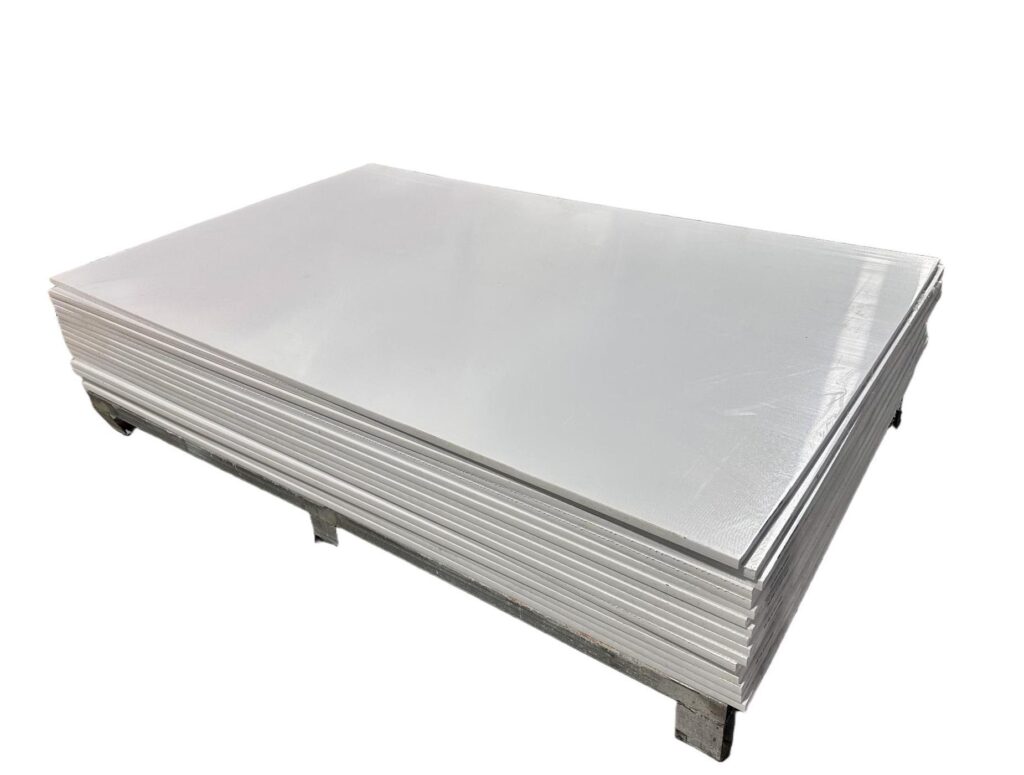
NAGOMER supplies HDPE sheet, rod, and welding rod for chemical tank fabrication. Contact info@nagomer.com for chemical compatibility data and welding procedure guidance.