
News Centre
News Type
Send your inquiry
ESD Materials Selection Guide for Electronics Manufacturing
ESD Control Standards
Key Standards
Standard | Scope | Resistance Range |
ANSI/ESD S20.20 | ESD control program | 10^6–10^9 Ω (groundable) |
IEC 61340-5-1 | ESD protection program | 10^6–10^9 Ω (groundable) |
ANSI/ESD STM11.11 | Surface resistance test | — |
ANSI/ESD STM11.12 | Volume resistance test | — |
IEC 61340-2-3 | Charge decay test | < 2 seconds |
EPA Zone Requirements
Zone Type | Surface Resistance (Ω/sq) | Material Category |
Work surfaces | 10^6–10^9 | Static dissipative |
Floor | 10^6–10^9 | Static dissipative |
Shelving/storage | 10^6–10^9 | Static dissipative |
Wafer handlers | 10^6–10^9 | Static dissipative |
Packaging | 10^4–10^6 | Conductive to dissipative |
Grounding paths | < 10^6 | Conductive |
ESD Material Selection by Application
1. Workstation Surfaces & Benches
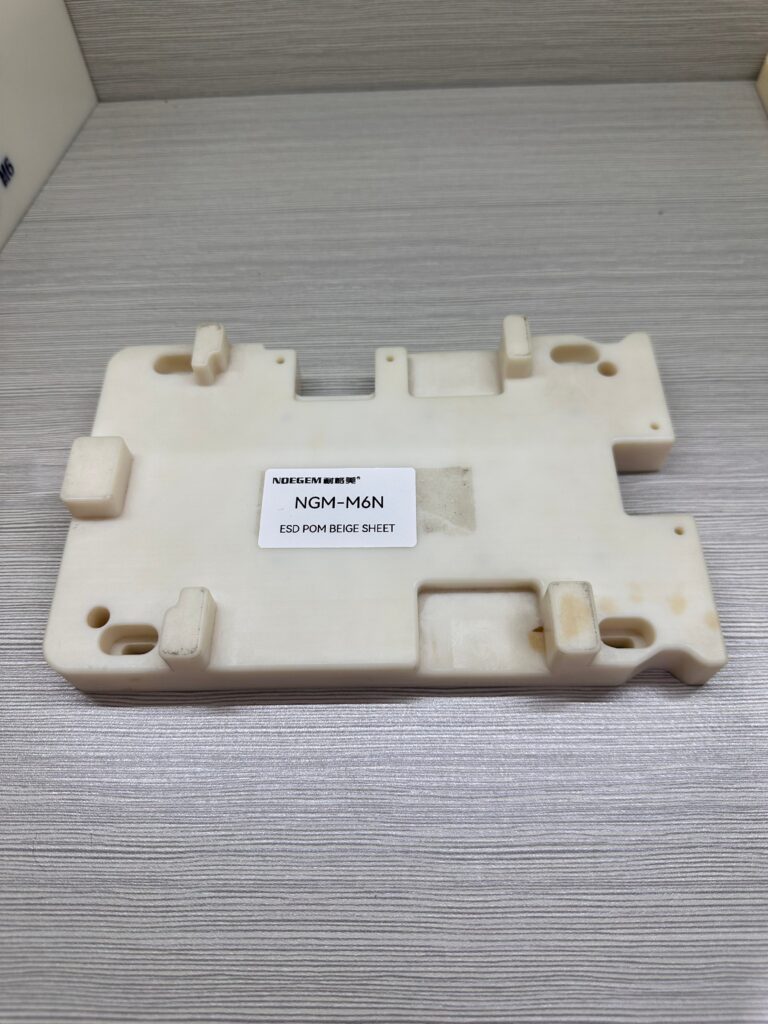
Recommended: ESD POM or ESD Laminate
· ESD POM provides machined work surfaces, tool holders, and jig plates
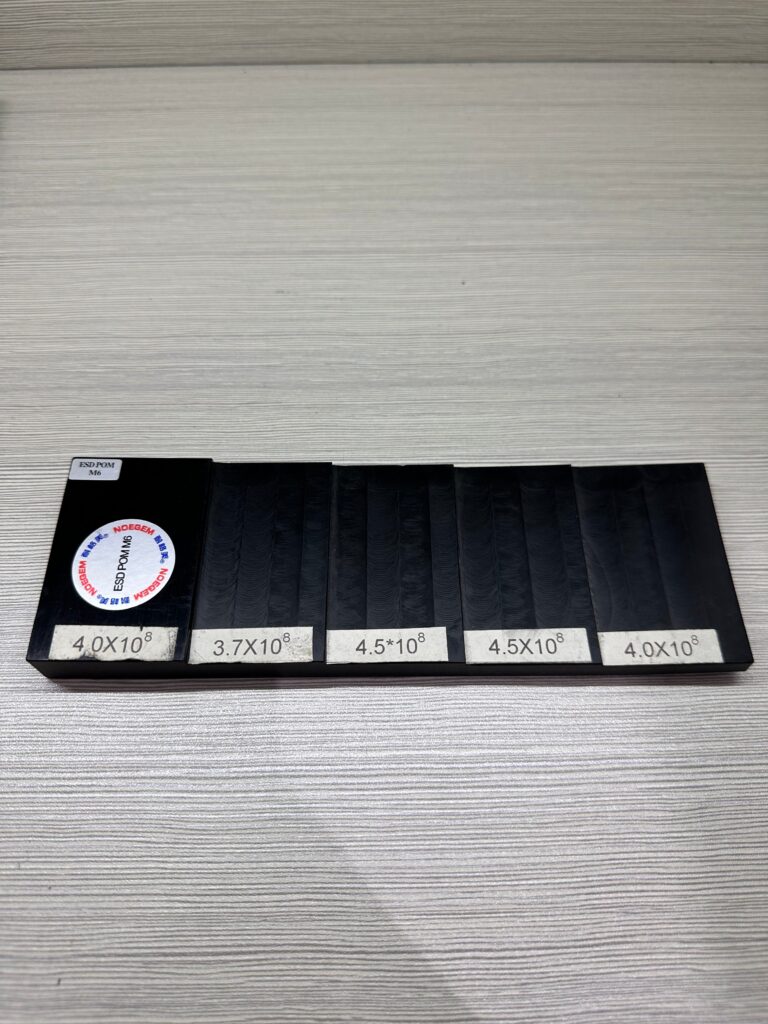
· Surface resistance: 10^6–10^9 Ω/sq
· Chemical resistant (cleaning solvents)
· Durable — withstands 5+ years of daily use
· Cost: moderate
2. PCB Assembly & SMT Line Components
Recommended: ESD POM
· Pick-and-place nozzle holders
· Conveyor guide rails
· Stencil cleaning frames
· Reflow oven chain guides
· ESD-safe component trays
· Cost-effective for large volume fixtures
3. Test & Inspection Equipment
Recommended: ESD PEEK or ESD PEI
· Test socket bodies (PEEK for high-temp, PEI for standard)
· Probe card insulators
· Burn-in board spacers
· Handler interface plates
· Higher cost justified by precision and durability
4. Wafer & Device Handling
Recommended: ESD POM (general), PEEK (process areas)
· Wafer carriers: ESD POM (transport), PEEK (process)
· IC trays: ESD POM (cost-effective)
· Device shipping tubes: ESD PVC or ESD PS
· FOUP internal components: PEEK/PPS
5. Cleanroom Infrastructure
Recommended: ESD POM panels and components
· Workstation tops
· Storage shelving
· Cart components
· Chair armrests
· Door handle covers
Cost-Performance Matrix
Material | Cost Index | Temp Limit | Best Application |
ESD POM | 1.0 | 90°C | 80% of EPA applications |
ESD PEI | 3.0 | 170°C | Test equipment, fire-rated |
ESD PEEK | 10.0 | 250°C | Process areas, CMP |
ESD PTFE (carbon) | 2.0 | 260°C | Chemical exposure |
ESD PVC (conductive) | 0.5 | 60°C | Packaging, low-cost |
Implementation Checklist
When implementing ESD materials in your EPA:
· [ ] Map all EPA zones and their resistance requirements
· [ ] Select materials per ANSI/ESD S20.20 or IEC 61340-5-1
· [ ] Verify surface resistance on all incoming materials (10^6–10^9 Ω/sq)
· [ ] Ground all dissipative surfaces to common point ground
· [ ] Test resistance periodically (every 6 months minimum)
· [ ] Replace materials when resistance drifts beyond spec
· [ ] Document material certifications and test records
· [ ] Train operators on ESD material handling
For ESD material comparison, see our ESD Plastic Materials guide. For ESD POM details, read ESD POM vs Standard POM.
FAQ
Q1: What surface resistance is required for EPA work surfaces?
Per ANSI/ESD S20.20 and IEC 61340-5-1, EPA work surfaces must have a surface resistance between 10^6 and 10^9 ohms per square. This static-dissipative range provides controlled charge dissipation while preventing sparks that could damage sensitive electronics.
Q2: Which ESD material is best for PCB assembly lines?
ESD POM is the most cost-effective and widely used ESD material for PCB assembly line components. It provides adequate surface resistance (10^6–10^9 ohms/sq), good wear resistance, and easy machinability for conveyor rails, fixture plates, and component trays.
Q3: How often should ESD materials be tested?
ESD materials should be surface-resistance tested at least every 6 months, and more frequently for high-wear components. Materials that drift beyond the 10^6–10^9 ohm/sq range should be replaced. ANSI/ESD S20.20 requires a compliance verification plan with defined test intervals.
Q4: Can standard plastics be made ESD-safe with coatings?
Yes, surface coatings (anti-static sprays, topical treatments) can temporarily make standard plastics ESD-safe. However, these wear off with use, cleaning, and handling. For permanent ESD protection, use inherently dissipative materials like ESD POM or ESD PEEK with carbon-based additives.
Need ESD materials for your electronics manufacturing? Contact NAGOMER for EPA-compliant materials, or explore our ESD products and POM sheets.
NAGOMER — Professional Engineering Plastics Solutions
www.nagomer.com | info@nagomer.com