
News Centre
News Type
Send your inquiry
The EV Battery Thermal Challenge
Electric vehicle adoption is accelerating globally, with EV sales projected to exceed 30 million units annually by 2030. At the heart of every EV is the battery pack, and at the heart of battery pack design is thermal management.
Lithium-ion batteries operate optimally within a narrow temperature window of 15C to 35C. Temperatures above 45C accelerate degradation, while temperatures below 0C reduce available capacity. More critically, thermal runaway events can lead to catastrophic battery fires. Effective thermal management is not just a performance issue but a safety imperative.
Engineering plastics are playing an increasingly central role in EV battery thermal management systems. Their combination of electrical insulation, thermal stability, chemical resistance, and design flexibility makes them ideal for the demanding environment inside a battery pack. This article examines the key materials and applications.
PPS for Battery Cooling Plate Manifolds
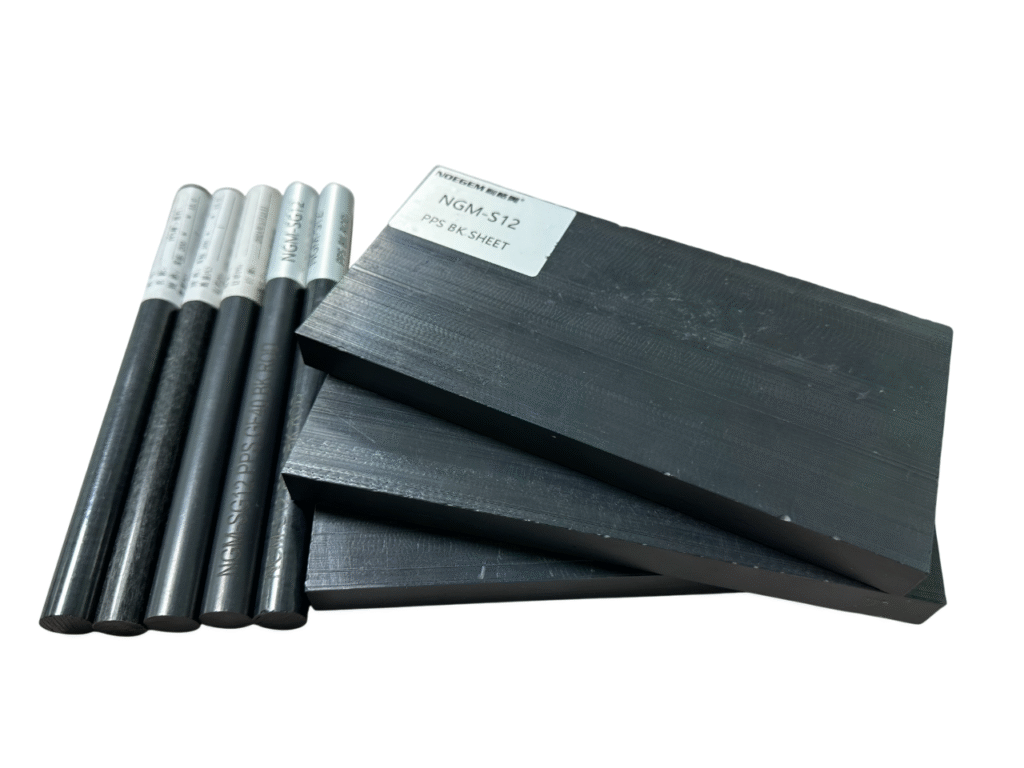
Polyphenylene sulfide (PPS) has become a preferred material for battery cooling plate components in many EV designs. Its key advantages include:
Excellent chemical resistance to glycol-based coolants, eliminating concerns about degradation or leaching. High heat deflection temperature (260C) far exceeding the maximum coolant temperature. Inherent flame retardancy (UL94 V-0) providing additional safety margin. Good dimensional stability enabling precision sealing surfaces.
NAGOMER‘s PPS SG12B (30% glass fiber reinforced) is specifically formulated for demanding thermal management applications. The glass fiber reinforcement reduces the already low coefficient of thermal expansion and improves creep resistance at elevated temperatures, ensuring reliable sealing over the vehicle’s lifetime.
Compared to metal alternatives, PPS cooling components offer weight reduction of approximately 40%, contributing to overall vehicle efficiency. They also eliminate galvanic corrosion concerns associated with dissimilar metals in coolant circuits.
PEEK for High-Voltage Insulation Components
PEEK has emerged as the premium choice for critical electrical insulation in EV battery systems, particularly in 800V architectures becoming standard in next-generation EVs:
Dielectric strength of 19 kV/mm provides robust insulation even under high-voltage conditions. Tracking resistance (CTI 150V) prevents surface conduction paths from forming. Exceptional thermal stability to 260C continuous service. Outstanding chemical resistance to battery electrolytes and cooling fluids.
Specific applications include busbar insulators and supports, high-voltage connector housings, cell-to-module insulation sheets, and power electronics mounting hardware.
NAGOMER‘s PEEK K12N grade is widely used in automotive electrical insulation applications, with full IATF 16949 support documentation available for automotive customers.
PEI for Battery Cell Holders and Spacers
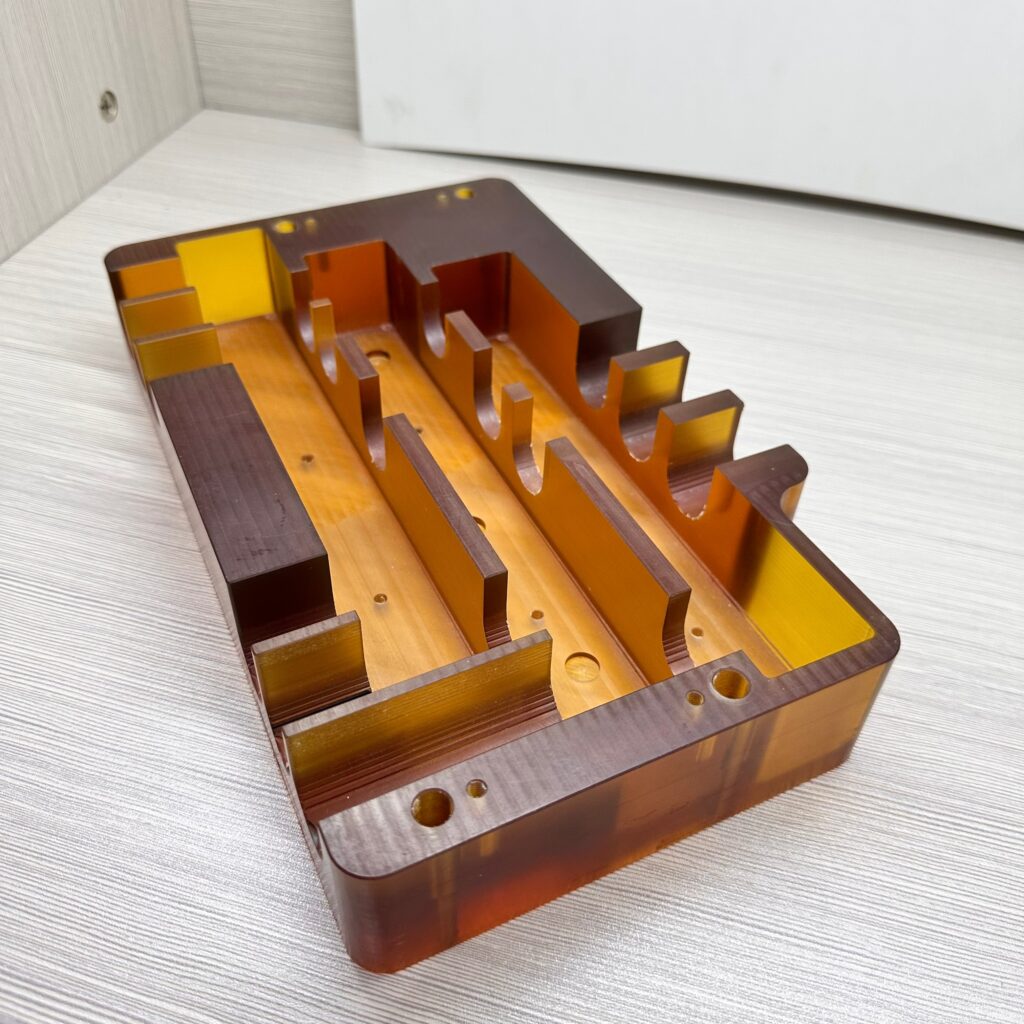
PEI (polyetherimide) serves critical structural and insulation functions within the battery module:
Battery cell holders that maintain precise cell spacing for thermal management airflow. Module spacers providing both electrical insulation and mechanical support. Compression pads and end plates that accommodate cell swelling during charge/discharge cycles. Wire management and cable routing components with UL94 V-0 flame retardancy.
PEI‘s balance of high strength (105 MPa tensile), thermal stability (Tg 217C), and excellent processability makes it ideal for these demanding structural applications. Its low smoke and toxicity characteristics also provide an additional safety benefit in the event of a thermal event.
Material Selection Decision Framework
For EV battery thermal management applications, the material selection depends on the specific requirements:
For direct coolant contact at moderate temperatures (below 200C) – PPS SG12B offers the best cost-performance balance. For critical high-voltage insulation above 400V – PEEK K12N provides the highest safety margin. For structural components requiring UL94 V-0 with good machinability – PEI I12N is recommended. For ESD-sensitive battery assembly environments – ESD versions of PEEK, PEI, or PPS are available.
NAGOMER provides full technical support for material selection, including application-specific testing and prototyping support. Our engineering team can help you select the optimal material for your specific EV battery design requirements.
Need engineering plastics for EV battery applications? Contact NAGOMER at info@nagomer.com for technical consultation and material samples. Visit nagomer.com for complete product datasheets.