
News Centre
News Type
Send your inquiry
Engineering Plastic Rod vs Sheet: Which Form Factor to Choose?
Understanding Stock Shapes
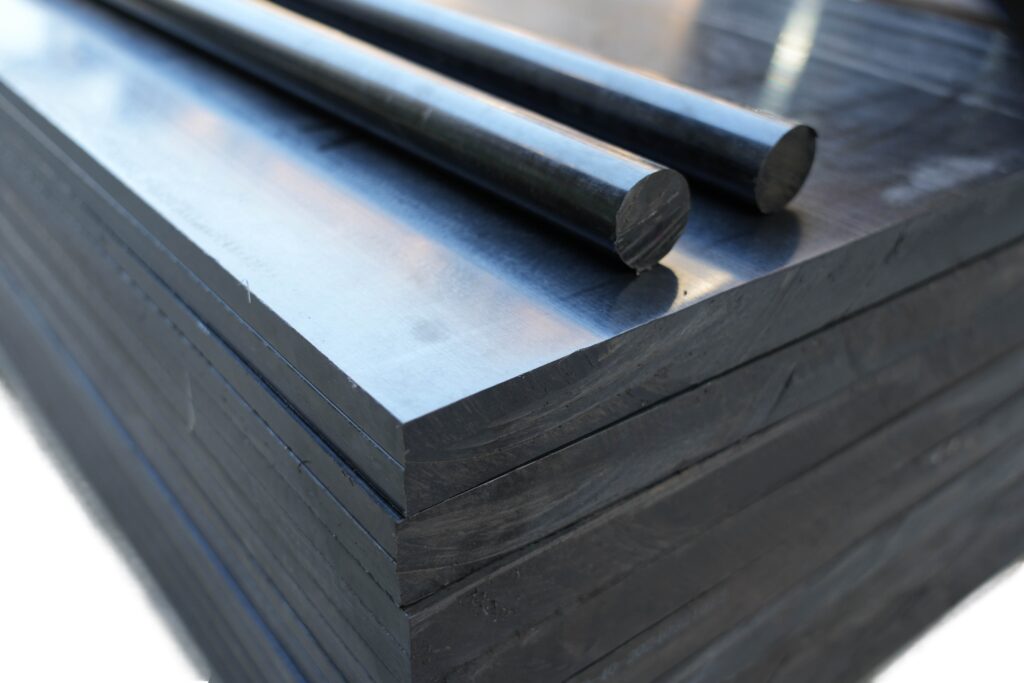
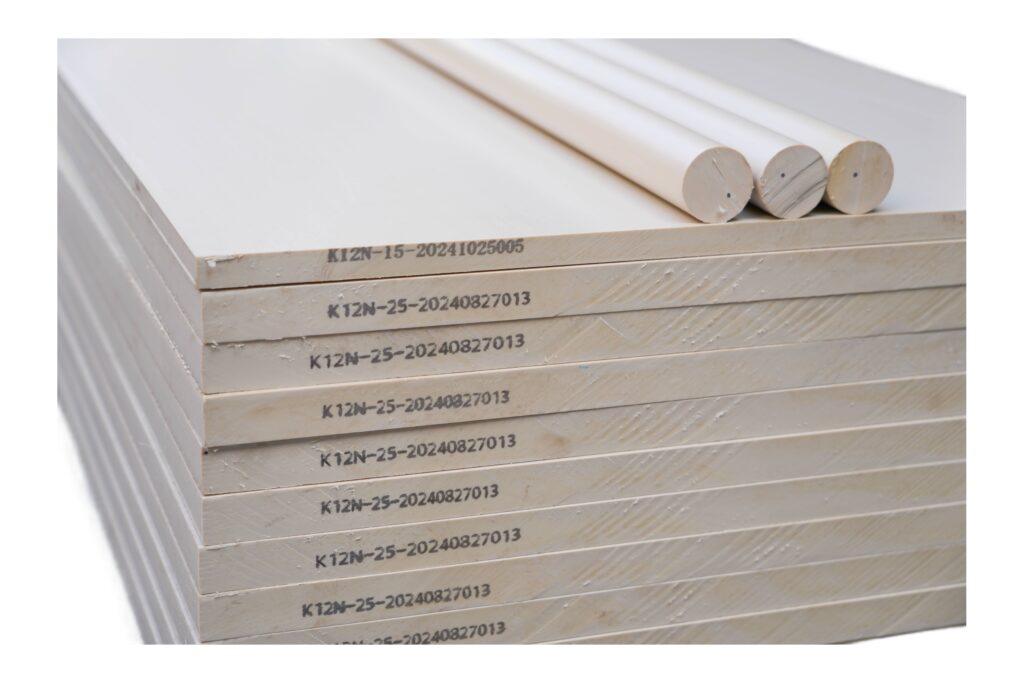
Rod (Round Bar)
· Available diameters: 6mm–200mm (larger on request)
· Standard lengths: 1000mm, 2000mm, 3000mm
· Best for: Turned parts, cylindrical components, bushings, pins, spacers
· Machining process: CNC turning, milling from round stock
Sheet (Plate)
· Available thicknesses: 1mm–100mm
· Standard sizes: 1000×2000mm, 1220×2440mm
· Best for: Flat parts, plates, housings, covers, structural panels
· Machining process: CNC milling, waterjet cutting, routing
Tube (Hollow Bar)
· Available OD/ID: Various combinations
· Best for: Ring parts, sleeves, cylinders
· Advantage: Eliminates boring operation, saves material
Selection Criteria
1. Part Geometry
Part Type | Recommended Form | Reason |
Cylindrical (bush, pin, spacer) | Rod | Direct turning, minimal waste |
Flat plate or panel | Sheet | Direct milling, full material utilisation |
Ring or sleeve | Tube | Eliminates center boring |
Housing or enclosure | Sheet | Multiple faces from same blank |
Gear or wheel | Rod | Circular blank, minimal stock removal |
Bracket or mount | Sheet | Flat base with milled features |
2. Material Cost & Yield
Rod typically costs 5–15% more per kg than sheet of the same material because:
· Rod production is slower (compression moulding vs extrusion)
· Smaller production volumes per cycle
· Higher quality control requirements for round stock
However, material yield often favours rod for turned parts:
· Rod to turned part: 60–80% material utilisation
· Sheet to turned part: 30–50% material utilisation (corners wasted)
Net cost = material cost × yield factor
3. Machining Time
Form Factor | Operation | Time Impact |
Rod (turning) | Facing, turning, boring | Fastest for round parts |
Sheet (milling) | Facing, profiling, pocketing | Fastest for flat parts |
Rod (milling) | Squaring, then milling | Slowest — extra material removal |
Sheet (turning) | Cut rounds, then turn | Moderate — adds cutting step |
4. Material Availability
Material | Rod Availability | Sheet Availability |
PEEK | ✓ (6–200mm) | ✓ (1–100mm) |
POM | ✓ (6–200mm) | ✓ (2–100mm) |
PPS GF40 | ✓ (10–150mm) | ✓ (5–80mm) |
PEI | ✓ (6–150mm) | ✓ (2–50mm) |
PA66 | ✓ (6–200mm) | ✓ (2–80mm) |
PTFE | ✓ (6–250mm) | ✓ (1–100mm) |
ESD POM | ✓ (6–100mm) | ✓ (5–50mm) |
5. Quality Considerations
· Rod has uniform properties in all directions (isotropic for round sections)
· Sheet may have directionally dependent properties (especially filled grades)
· Rod typically has lower internal stress in the radial direction
· Sheet may have surface skin with different properties from core
Decision Framework
Is your part primarily cylindrical/round?
YES → Use ROD stock
If part has a large central bore → Consider TUBE stock
NO → Is your part primarily flat/plate-like?
YES → Use SHEET stock
NO (complex/mixed geometry)
Choose based on:
· Largest dimension orientation
· Material cost (sheet is cheaper per kg)
· Machining strategy
· Tolerance requirements
For POM rod sourcing, see our POM Rod Supplier Guide. For PEEK rod specs, read our Natural PEEK Rod NGM-S12B guide.
FAQ
Q1: Is rod or sheet cheaper for engineering plastics?
Sheet is typically 5–15% cheaper per kg than rod of the same material. However, for turned parts, rod stock has higher material yield (60–80%) versus sheet (30–50%), so the net cost per finished part may be lower with rod despite the higher per-kg price.
Q2: When should I use tube instead of rod?
Use tube stock when your part has a central bore larger than 50% of the outer diameter. Tube eliminates the boring operation and saves significant material and machining time for ring, sleeve, and bushing components.
Q3: Can I machine a round part from sheet stock?
Yes, you can cut round blanks from sheet stock and then turn them. However, this adds a cutting step and wastes corner material, making it less efficient than using rod stock. Only do this when rod stock is unavailable in the required diameter.
Q4: What standard sheet sizes are available?
Standard engineering plastic sheet sizes are 1000×2000mm and 1220×2440mm. Thicknesses range from 1mm to 100mm depending on material. NAGOMER also offers custom-cut pieces and pre-cut blanks to reduce customer waste.
Need help choosing the right stock shape? Contact NAGOMER for stock availability and custom cutting, or explore our PEEK rods and PEEK sheets.
NAGOMER — Professional Engineering Plastics Solutions
www.nagomer.com | info@nagomer.com