
News Centre
News Type
Send your inquiry
Cable Drag Chain: PA66 Material and Sizing Guide
What a Cable Drag Chain Must Endure
Every automated machine that moves has cables that must flex millions of times. A cable drag chain guides those cables through a defined path so they never kink, pinch, or rub against sharp edges. The chain links themselves face bending stress, sliding wear, and the machine environment. For decades, PA66 has been the backbone of this product category. It combines impact strength, fatigue resistance, and chemical tolerance in one injection-molded link.
In addition, preload affects chain sag in vertical runs. A chain that hangs vertically should carry enough tension to stay straight. However, too much preload adds friction and wear at the pivot. Manufacturers specify preload together with the chain length.
A drag chain fails in one of two ways. The link breaks under repeated flexing, or the chain wears where it slides against the machine frame. PA66 resists both mechanisms better than most alternatives. In addition, the material survives oils, cutting fluids, and solvents commonly found on factory floors. Designers who specify a cable drag chain made of PA66 typically see service life measured in tens of millions of cycles.
Material Grades: Standard, Reinforced, and Flame-Retardant PA66
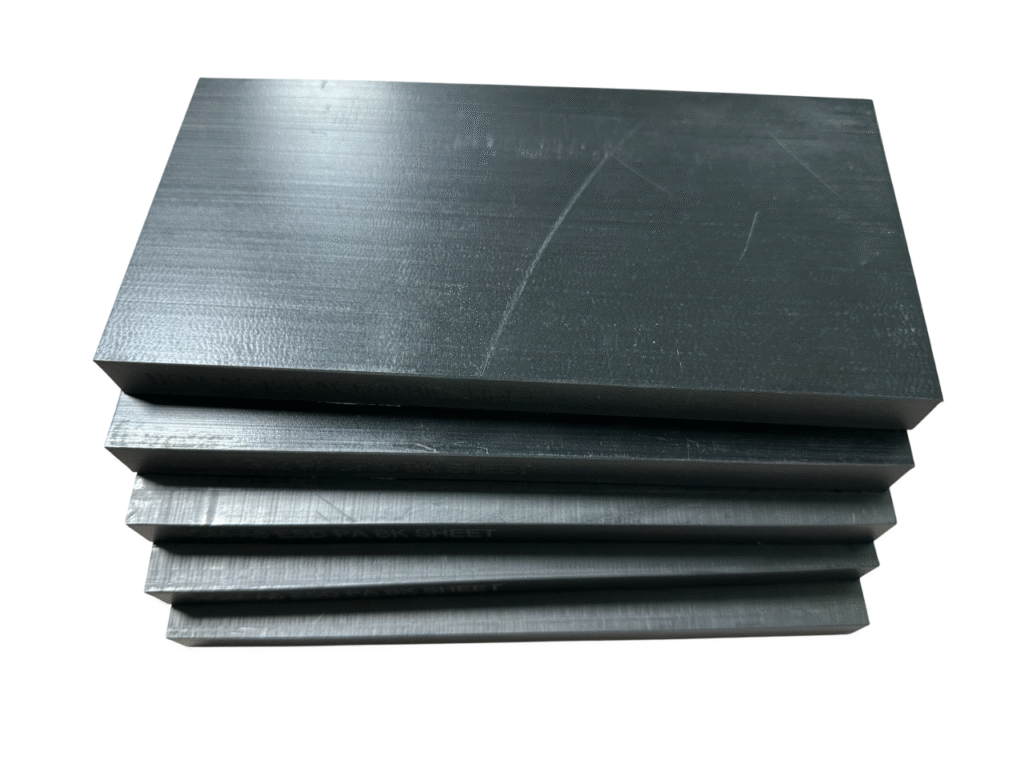
Standard PA66 links handle most general automation duty. However, long unsupported spans require stiffer material. Glass-reinforced PA66 with 25 to 30 percent fiber raises flexural modulus above 7,000 MPa, letting the chain bridge wider gaps without sagging. For vertical or long-travel applications, reinforced links keep the chain geometry stable. Therefore, most quality drag chain systems use a reinforced grade in the link body.
In addition, the operating temperature of the machine sets a ceiling on link life. Moreover, standard PA66 grades serve most indoor automation that runs below 80 degrees Celsius.
Furthermore, noise level often reveals chain condition. A smooth-running chain produces a steady hum, while worn links click. Therefore, acoustic monitoring helps maintenance teams catch problems early. This simple check prevents unexpected downtime.
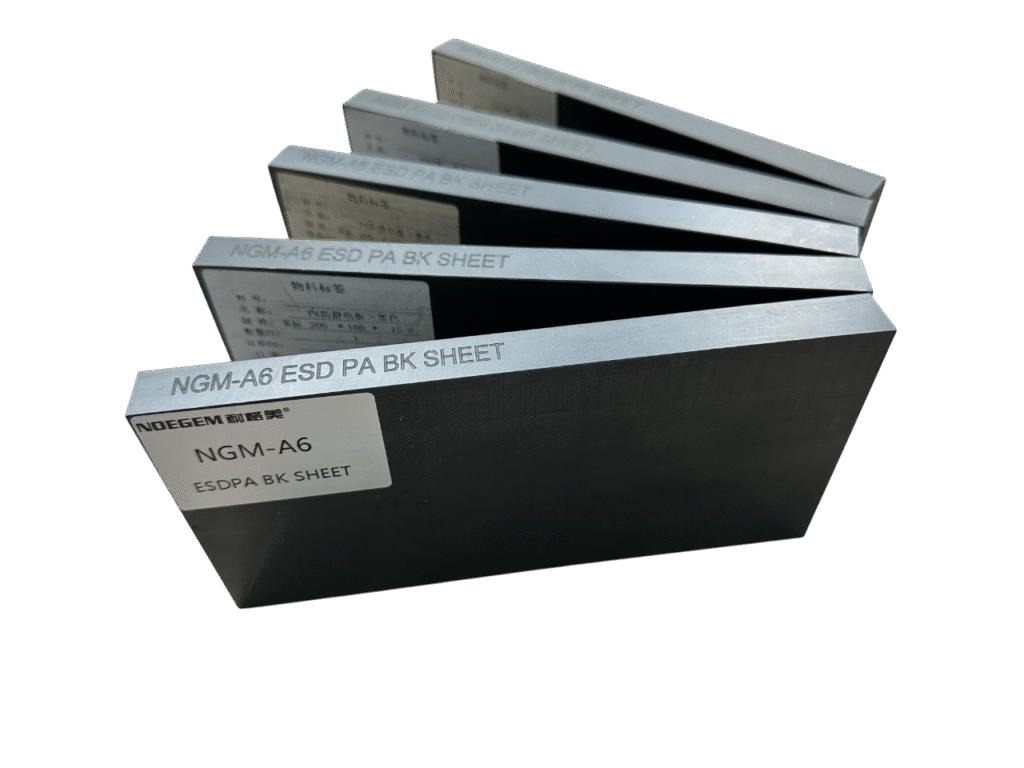
Flame-retardant PA66 matters in cleanrooms and electronics plants. These grades meet UL94 V-0 while keeping mechanical strength. Meanwhile, impact-modified PA66 improves low-temperature toughness for refrigerated or outdoor gantries. In every case, the chain material should be tested against the specific cable bundle weight. NAGOMER supplies PA66 sheet and rod for machined chain links and wear pads used in custom high-load carriages.
Sizing Rules: Bending Radius and Travel
The bending radius is the first number an engineer chooses. It must exceed the minimum bend radius of the stiffest cable in the bundle. As a rule, the chain radius equals about six to eight times the cable diameter. Inside height then determines how cables sit without overlapping. Inside width should add about 10 percent clearance beyond the total bundle width so cables can move freely while flexing.
Unsupported length controls the second half of sizing. A chain that rides in a trough can be long, but a fully unsupported chain span must be short. The safe unsupported length depends on link stiffness, cable weight, and travel speed. Accelerations above 5 m/s squared multiply the dynamic load on every link. Furthermore, high-speed systems need separators between cables to prevent friction and premature failure. Sizing software from chain makers handles these calculations, yet the starting point is always accurate material data for PA66.
Design Details That Extend Chain Life
Small details determine whether a cable drag chain lasts five years or one year. Radius stops, for example, limit how far the chain bends at each end, protecting cables from over-bending. Glide shoes and wear plates protect the lower run when the chain slides along a channel. Additionally, strain relief at both fixed and moving ends prevents tensile force from pulling on the cable terminations. Every connection point should allow the chain to flex without torsion.
Link tolerances matter as much as material choice. A loose pivot accelerates wear and produces noise. Tight, well-fitted PA66 links distribute load across the pivot and keep the chain tracking straight. In dirty environments, closed tubes shield cables from chips and dust. In contrast, open links simplify inspection and cable replacement. Machine builders select the geometry first, then confirm the PA66 grade handles the operating temperature and chemical exposure.
Meanwhile, the cable type also influences link geometry. For example, heavy power cables and fine sensor wires need different internal spacing inside one drag chain.
Sourcing PA66 Drag Chain Components
Standard drag chains are commodity parts, but custom automation often needs special widths, lengths, or link features. For those projects, machining links from PA66 plate offers flexibility without mold cost. NAGOMER supplies PA66 sheet and rod in natural, black, reinforced, and flame-retardant versions. Customers cut, drill, and assemble custom carriages, wear strips, and link prototypes from certified material.
As a result, selecting PA66 starts with travel length and cable mass. The engineer then verifies bending radius and unsupported span. In addition, NAGOMER‘s rod and sheet let builders fabricate custom wear parts quickly. Consistent material data completes the picture.
Consistency protects the end user. Batch-to-batch variation in viscosity or moisture content changes link stiffness and life. NAGOMER stocks PA66 from established polymer producers and documents lot traceability. Therefore, engineers can rely on the mechanical values used in their sizing calculation. NAGOMER Engineering Plastics, nagomer.com, serves machine builders and retrofitters who need dependable PA66 material for cable drag chain systems worldwide.
Building a custom cable drag chain system? NAGOMER supplies PA66 sheet, rod, and machined components. Write to info@nagomer.com for specifications.