
News Centre
News Type
Send your inquiry
Acetal Gears: Design Guide for POM Drive Components
Why Acetal Gears Keep Winning in Drive Design
Acetal gears appear in countless mechanisms where metal gears create too much noise, weight, or cost. Designers select them for office machines, automotive actuators, medical pumps, and packaging equipment. The material delivers low friction without external lubrication. In addition, its fatigue strength suits repeated tooth loading better than most thermoplastics. Engineers who replace a steel pinion with acetal gears often cut system cost by half while reducing audible whine.
Furthermore, the tooth root carries the highest stress in any gear set. Designers should calculate bending stress at the root before choosing a module. In addition, a larger pressure angle spreads the load and lowers contact stress. These choices matter more than the brand of acetal resin.
The key advantage is the combination of stiffness and sliding behaviour. A gear tooth must resist bending and wear at the same time. POM offers a tensile modulus near 2,600 MPa and a low coefficient of friction against steel. Furthermore, the polymer absorbs little moisture, so tooth geometry stays stable across humidity changes. Parts machined from POM rod maintain tighter pitch accuracy than many molded gears produced in short runs.
POM-C or POM-H: Which Acetal Grade Fits the Gear?
Manufacturers offer two families of acetal gear stock. POM-C, the copolymer, resists hot water and mild chemicals better and leaves fewer centerline voids in thick rod. POM-H, the homopolymer, delivers higher strength, stiffness, and surface hardness. For heavily loaded gears running dry, POM-H often extends service life. However, POM-H is more sensitive to processing and to alkaline environments. Most machined gear applications above 20 mm section use POM-C because internal voids stay low.
Meanwhile, operating temperature changes the allowable torque. A gear rated at 25 degrees Celsius may need derating at 60 degrees. Moreover, continuous duty generates more heat than intermittent motion. Engineers should test the actual duty cycle rather than assuming catalog values apply.
Temperature and environment decide the rest. Continuous service for both grades sits near 100 degrees Celsius, with short peaks to 120 degrees. For gears exposed to steam or food washdown, POM-C is the safer option. In contrast, dry indoor drives can exploit the extra stiffness of POM-H. NAGOMER supplies both POM-C and POM-H sheet and rod, so a manufacturer can qualify either grade from the same source.
Machining Gear Blanks from POM Sheet and Rod
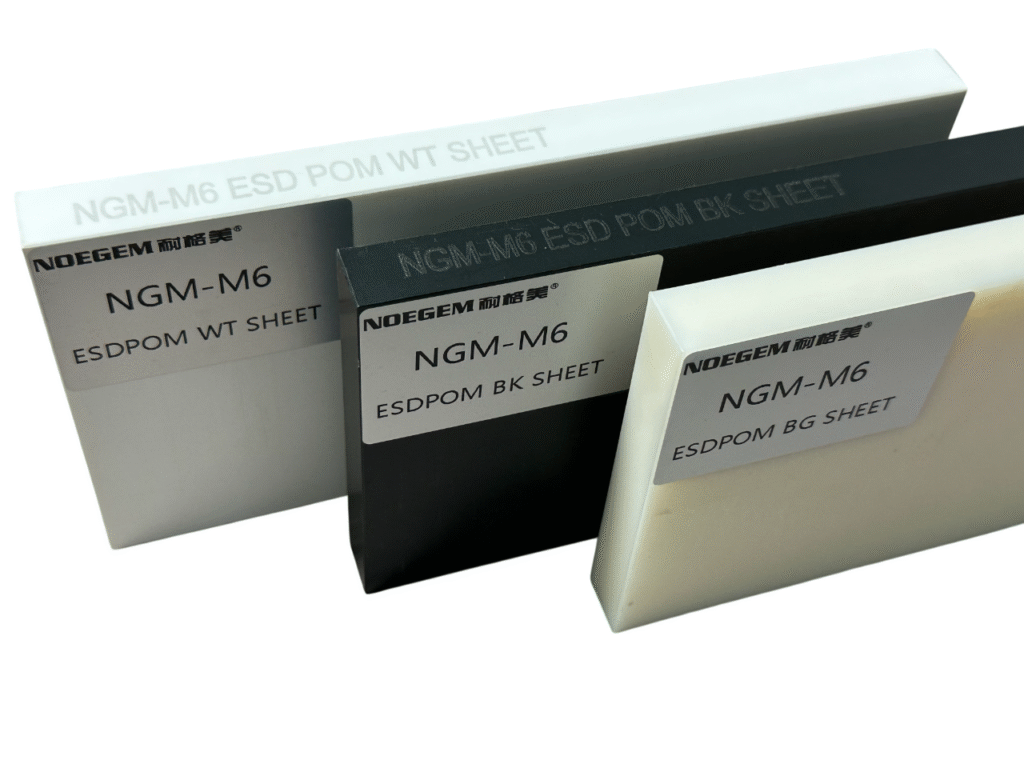
Acetal gears machined from stock need sharp tooling and controlled feeds. POM cuts cleanly on a CNC lathe or mill, and it holds fine tolerances without coolant in most cases. Therefore, producers of prototype and medium-volume gears avoid the cost of injection molds entirely. A machined acetal gear with a 1.5 module can hold tooth-to-tooth error below 0.03 mm when the blank is stress-relieved first.
Tooth quality depends on the blank, not just the cutter. Rod stock should come from a supplier that controls diameter ovality and internal stress. Furthermore, annealing at 140 to 150 degrees Celsius relieves residual stress before profile cutting. For face gears or internal splines, EDM wire cutting offers another route. In every case, sharp corners should be avoided; a small root radius reduces stress concentration and extends gear life dramatically.
Lubrication, Wear, and Long-Term Performance
Acetal gears often run completely dry, which simplifies design and eliminates oil leaks. The polymer’s natural slip against steel and against itself keeps the friction coefficient around 0.2 to 0.35. However, dry running generates heat at high pitch-line speeds. Above roughly 1 m/s sliding speed, designers should add grease or switch to an internally lubricated grade. Filled acetal with PTFE or oil reduces wear rate by an order of magnitude in abrasive environments.
Long-term performance also depends on allowable backlash. POM creeps less than nylon but more than metal, so engineers compensate by opening the center distance slightly. Furthermore, periodic grease replenishment matters more than the initial fill. For gears in intermittent service, such as actuators and adjusters, acetal outlasts many competing plastics. The wear particles are soft and do not damage surrounding bearings, an important benefit in sealed gearboxes.
Where Machined Acetal Gears Deliver the Most Value
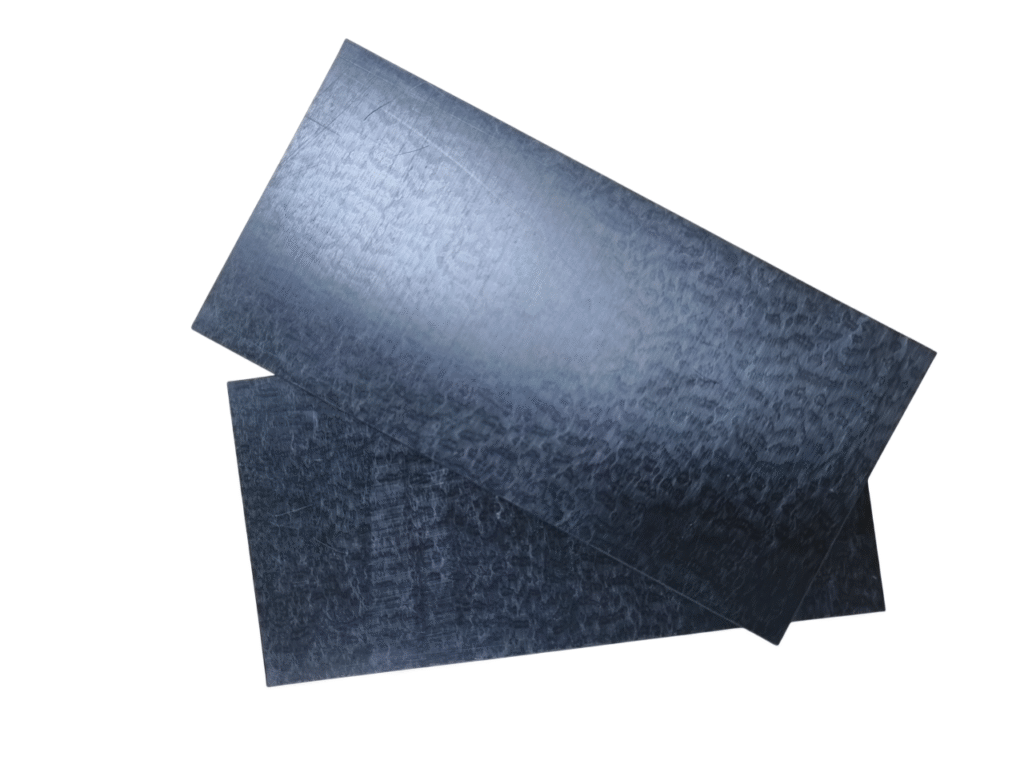
Low-volume and custom gear trains are where acetal gears shine. Elevator door operators, robotic joints, vending machines, and laboratory instrumentation all use machined POM gears. In each case, the quantities are too low for molding, yet the duty requires engineering plastic performance. A machined blank also allows quick design iteration; changing tooth count needs only a new CNC program.
As a result, many gear manufacturers keep a small stock of POM blanks on hand. Quick delivery of raw rod shortens the prototyping cycle. In addition, a reliable supplier documents each lot for traceability. NAGOMER serves these teams with consistent acetal stock.
Choosing a reliable stock supplier matters for consistency. NAGOMER supplies acetal gears blanks in POM-C and POM-H, in sheet and rod form, with controlled diameter and low internal stress. Customers machine their own profiles or request cut-to-size blanks. For more demanding loads, the same factory offers PEEK and other high-performance materials. NAGOMER Engineering Plastics, nagomer.com, supports gear manufacturers worldwide with grade selection and certified stock.
Need acetal gears blanks in POM-C or POM-H? Contact NAGOMER at info@nagomer.com for certified sheet and rod stock with custom cutting services.