
News Centre
News Type
Send your inquiry
Polycarbonate LED Lighting: Lens and Diffuser Material Guide
Why Polycarbonate LED Lighting Leads the Market
LED fixtures generate heat at the junction. They also need a cover that passes light efficiently. In fact, the cover must protect the diode from impact and moisture. Polycarbonate LED lighting covers balance these three demands better than glass or acrylic in most cases. Moreover, the impact strength matters in industrial, outdoor, and automotive settings where breakage creates safety hazards.
Light transmission reaches 88 to 92 percent in clear grades. In contrast, glass reaches about 90 percent but weighs more and shatters on impact. Acrylic transmits slightly more light but cracks at lower stress. Furthermore, polycarbonate maintains its properties across a wider temperature range. For high-power LED arrays that run at 80 to 100 degrees Celsius at the heatsink, the cover material must hold optical clarity. NAGOMER supplies clear and frosted PC sheet and rod stock for fixture manufacturers.
In addition, the molding flexibility of PC supports complex shapes that acrylic cannot match. Injection-molded PC covers integrate mounting features, light-directing optics, and thermal management surfaces in single pieces. The flow characteristics of the resin allow thin walls down to 1 mm with consistent thickness. Furthermore, secondary operations like ultrasonic welding and adhesive bonding work well on PC covers. These joining methods allow the cover to seal to the fixture housing without fasteners that complicate assembly. As a result, polycarbonate LED lighting covers dominate the high-end fixture market.
Optical Grades and Light Diffusion
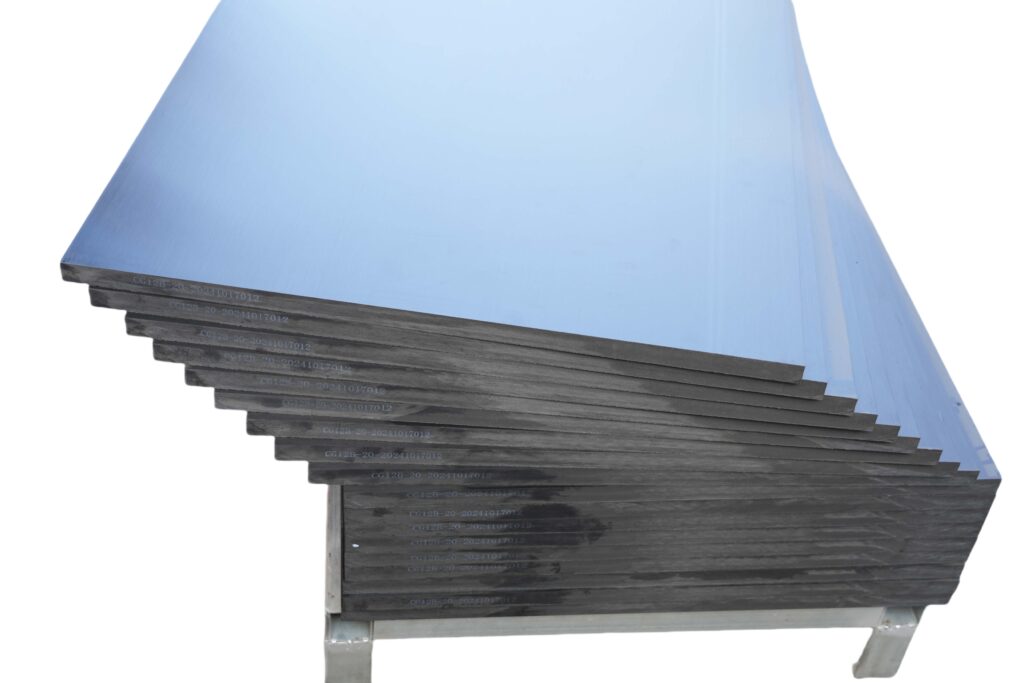
Clear PC grades work for spotlights, downlights, and task lighting where sharp light direction matters. Diffuser grades contain light-scattering additives that spread the output. The additives are typically organic or glass particles compounded into the resin at 0.5 to 3 percent by weight. Light transmission drops to 75 to 85 percent in these grades. However, the harsh hotspot from individual diodes disappears. The trade-off between brightness and uniformity depends on the application.
For commercial and architectural lighting, frosted PC creates the smooth wash effect. In contrast, retail displays often need clear PC to highlight product features. Meanwhile, medical lighting and photography lighting require the absolute minimum diffusion. Opal grades with higher additive loadings provide privacy screening while passing enough light for room illumination. The grade selection ties directly to the desired visual effect. NAGOMER supplies PC in clear, opal, and custom diffuser formulations.
Furthermore, the beam angle and color rendering depend on cover selection. Narrow-beam spotlights use clear covers to maintain tight focus. Wide-beam floodlights use heavy diffusers to spread light evenly. In addition, the cover thickness affects the light distribution. Thicker covers at 3 to 5 mm provide more uniform diffusion than thin covers at 1 to 2 mm. However, thicker covers absorb more light. The specific application drives the balance between diffusion and transmission efficiency in polycarbonate LED lighting systems.
Heat and UV Resistance Trade-Offs
LEDs run cooler than incandescent bulbs, but the driver electronics and heat sinks still push the housing temperature into the 60 to 90 degree Celsius range. Standard PC grades hold their properties to about 115 degrees Celsius continuous. Thus, most LED fixtures stay within the safe range. High-power industrial LED arrays may need higher heat resistance. For these applications, NAGOMER supplies high-heat PC grades rated to 130 degrees Celsius continuous.
Outdoor fixtures face a different challenge. UV radiation yellows standard PC over time. The yellowing reduces light transmission and shifts the color temperature. UV-stabilized grades contain absorbers in the outer layer. These extend service life in direct sun exposure to five years or more. Co-extruded sheet with a UV-resistant cap layer provides even longer protection. This construction dominates street lighting, parking lot fixtures, and stadium lighting.
Furthermore, the operating environment affects cover selection. Coastal areas with salt spray require additional protective measures. Industrial areas with chemical exposure need covers that resist specific atmospheres. Meanwhile, indoor fixtures in conditioned spaces face minimal environmental stress. The cost difference between standard and UV-stabilized grades is significant. Therefore, the application environment should drive the grade selection for polycarbonate LED lighting covers.
Machining and Forming PC Covers
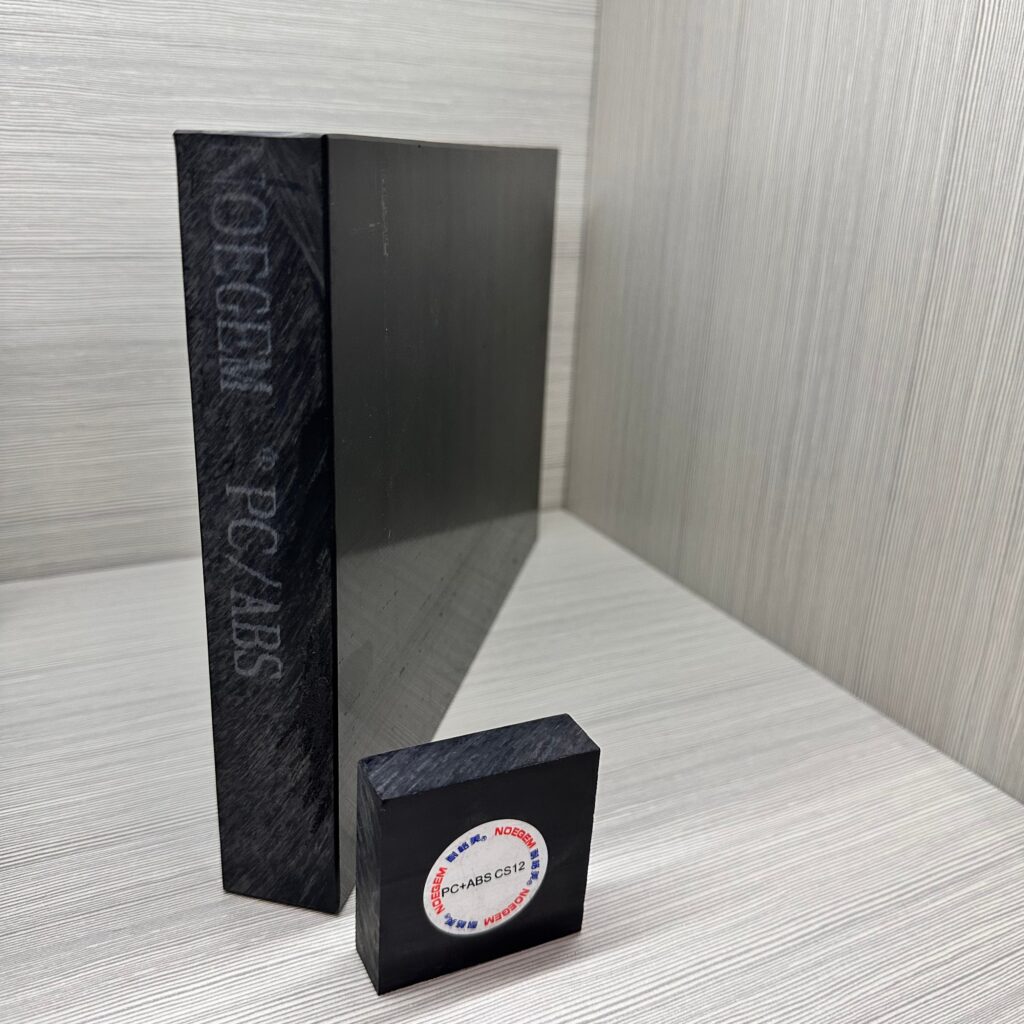
Polycarbonate machines cleanly with sharp tools and moderate cutting speeds. Router bits and CNC mills produce smooth edges in sheets up to 12 mm thick. For thicker sections, bandsaw cutting followed by edge finishing works well. Moreover, drilled holes need support backing to prevent chipping on exit. Coolant prevents heat buildup that otherwise causes stress cracking near the cut edge.
Thermoforming opens more design options. Heated PC sheet vacuum-forms into complex shapes at 160 to 180 degrees Celsius. The formed parts retain optical clarity when cooled properly. Mold design must allow even heat distribution. Sharp corners create stress concentrations that crack under thermal cycling. For prototyping, laser cutting produces intricate shapes without tooling investment. NAGOMER cuts PC sheet and rod to custom sizes for fixture prototyping runs.
In addition, injection molding of PC produces high-volume covers with consistent dimensions. The mold design must account for PC shrinkage of 0.5 to 0.7 percent. Proper gate location and runner design prevent flow lines and weld marks. Furthermore, molded-in color eliminates secondary painting operations. NAGOMER works with molders and fixture manufacturers on material selection and processing parameters for polycarbonate LED lighting covers.
Common Application Examples
Street lighting covers use UV-stabilized opal PC at 3 to 5 mm thickness. The material passes enough light while diffusing individual diode patterns. Industrial high-bay fixtures use clear PC at 2 to 4 mm for maximum lumen output. Commercial downlights often use 1 to 2 mm clear PC for recessed applications. Meanwhile, automotive interior and exterior lighting uses injection-molded PC for complex three-dimensional shapes.
The marine and pool lighting market uses PC for its impact resistance and clarity. Underwater fixtures experience pressure and impact during cleaning. Glass would shatter. Acrylic cracks more easily than PC. For hazardous location fixtures in chemical plants, PC provides good chemical resistance to many solvents. However, ketones and aromatic hydrocarbons attack PC. In those cases, alternative materials or protective coatings become necessary. NAGOMER provides grade selection guidance for environments involving chemical exposure.
Furthermore, explosion-proof lighting in oil and gas facilities uses polycarbonate LED lighting covers that meet ATEX and IECEx requirements. The impact resistance of PC helps maintain the enclosure integrity during impact events. In contrast, glass covers would shatter and compromise the explosion-proof rating. The PC covers also resist the temperature cycling common in outdoor installations. NAGOMER supplies ATEX-rated PC covers for hazardous area lighting manufacturers worldwide.
NAGOMER supplies polycarbonate LED lighting covers, lenses, and diffusers in clear, opal, and UV-stabilized grades. Contact info@nagomer.com for grade selection and custom cut blanks.