News Centre
News Type
Send your inquiry
PEEK Recycling & Sustainability: Environmental Impact of Engineering Plastics
Is PEEK Recyclable?
Yes — PEEK is thermoplastic, meaning it can be melted and reprocessed. Unlike thermoset plastics (which cannot be remelted), PEEK‘s polymer chains can be re-melted and re-formed multiple times. However, practical recycling of PEEK presents several challenges:
Technical Feasibility
PEEK‘s high melting point (343°C) requires specialized reprocessing equipment. Each reprocessing cycle causes some chain scission (molecular degradation), reducing mechanical properties by approximately 5-10% per cycle. For non-critical applications, reprocessed PEEK can be used for 2-3 cycles.
Collection and Sorting
PEEK is used in relatively small volumes compared to commodity plastics. The economics of collection, sorting, and reprocessing are challenging because PEEK scrap is dispersed across many end-user facilities in small quantities.
Contamination Concerns
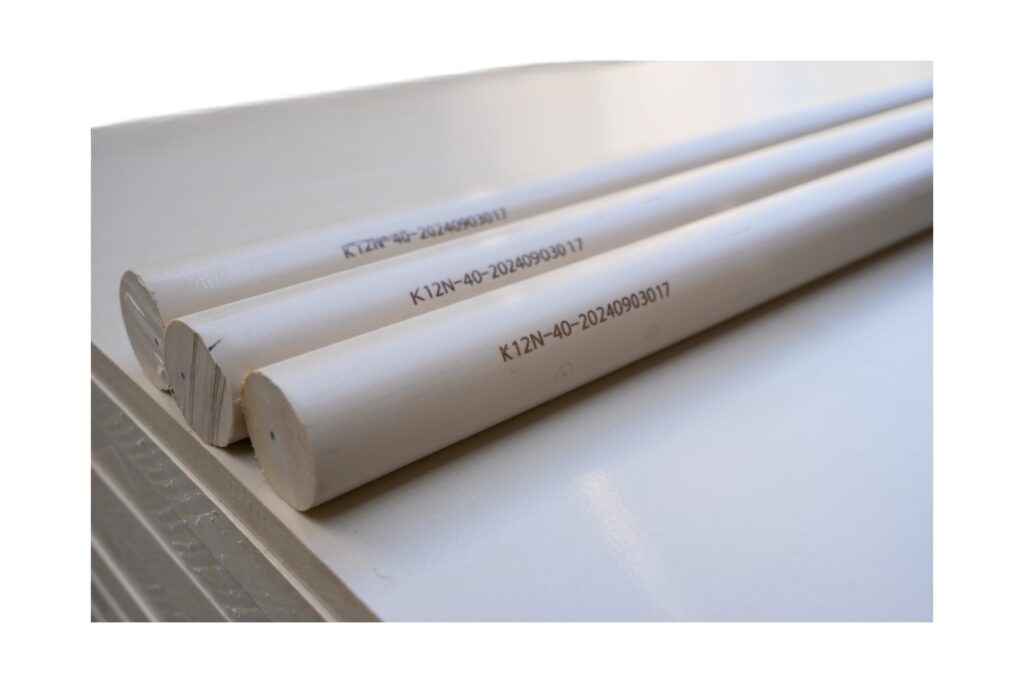
Machined PEEK scrap often contains cutting fluids, oils, or other contaminants. Clean, uncontaminated PEEK scrap — such as offcuts from sheet and rod stock — is the most recyclable form.
Recycling Engineering Plastics: Material-by-Material
PEEK
· Recyclability: High (thermoplastic)
· Reprocessing cycles: 2-3 before property degradation
· Best recycling stream: Clean manufacturing offcuts
· Challenge: High melting point, specialized equipment needed
POM
· Recyclability: High
· Reprocessing cycles: 3-5 cycles
· Best recycling stream: Post-industrial scrap
· Advantage: Lower melting point (175°C) makes reprocessing easier
PPS
· Recyclability: Moderate (glass-filled grades are more difficult)
· Reprocessing cycles: 2-3 for unfilled, 1-2 for filled grades
· Challenge: Fiber length degradation in PPS GF40
PEI
· Recyclability: High
· Reprocessing cycles: 3-4 cycles
· Advantage: Good thermal stability during reprocessing
PA66
· Recyclability: Moderate (moisture absorption complicates reprocessing)
· Reprocessing cycles: 2-3 cycles after thorough drying
Sustainable Manufacturing Practices at NAGOMER
Manufacturing Scrap Recovery
NAGOMER collects clean manufacturing scrap — offcuts from PEEK sheets and rods — and reprocesses it into lower-grade stock shapes for non-critical applications. This diverts approximately 15 tons of material annually from landfill.
Energy Efficiency
Modern extrusion and compression molding equipment at NAGOMER‘s facility uses energy-efficient heating systems and heat recovery, reducing energy consumption by 20% compared to older equipment.
Material Optimization
NAGOMER‘s engineering team works with customers to optimize part designs, reducing material waste during machining. By designing parts to fit standard stock shape dimensions, material utilization improves from 60% to 85% or higher. Learn more about rod vs sheet selection for material optimization.
The Sustainability Advantage of Engineering Plastics
Despite recycling challenges, engineering plastics offer significant sustainability benefits:
1. Weight reduction: Replacing metal components with PEEK or POM reduces weight by 50-70%, lowering fuel consumption in automotive and aerospace applications
2. Corrosion resistance: No protective coatings needed, eliminating VOC emissions from painting
3. Longer service life: Engineering plastics last 2-5× longer than commodity plastics, reducing replacement frequency
4. Energy savings in use: Lower friction means less energy consumed in rotating and sliding applications
Industry Initiatives
The engineering plastics industry is investing in:
· Chemical recycling: Breaking down PEEK to monomers for repolymerization
· Bio-based PEEK: Research into renewable feedstocks for PEEK production
· Closed-loop programs: Manufacturer take-back programs for end-of-life PEEK components
· Recycled-content products: Offering grades with verified recycled content
FAQ
Q1: Can PEEK plastic be recycled?
Yes, PEEK is thermoplastic and can be reprocessed 2-3 times before property degradation. Clean manufacturing offcuts are the most recyclable.
Q2: Which engineering plastics are easiest to recycle?
POM is the easiest due to its lower melting point and good thermal stability, allowing 3-5 reprocessing cycles.
Q3: How does NAGOMER reduce environmental impact?
NAGOMER recovers manufacturing scrap, uses energy-efficient equipment, and helps optimize designs to reduce material waste.
Ready to source quality engineering plastics? Contact NAGOMER today for a free quote, or browse our PEEK sheets, POM rods, and ESD materials.
NAGOMER — Professional Engineering Plastics Solutions
www.nagomer.com | info@nagomer.com