
News Centre
News Type
Send your inquiry
Engineering Plastics in Aerospace: PEEK, PEI & PPS for Aircraft Components
Why Aerospace Uses Engineering Plastics
Weight Reduction
Every kilogram saved on an aircraft reduces fuel consumption by approximately 3,000 litres over the aircraft’s 20-year service life. Engineering plastics offer:
· Density: 1.3–1.5 g/cm³ (vs aluminium 2.7, titanium 4.5)
· Weight savings: 40–70% compared to metal equivalents
· Fuel savings: translates to $100,000–500,000 per aircraft over its lifetime
FST Compliance
Aircraft interior materials must meet FAR 25.853 (US) and CS-25 (EASA) requirements:
· Flame resistance: self-extinguishing within 60 seconds after ignition
· Smoke density: specific optical density (Ds) < 200 at 4 minutes
· Toxic gas emission: no lethal concentrations of CO, HCN, or HCl
PEEK, PEI, and PPS all meet these requirements without flame retardant additives.
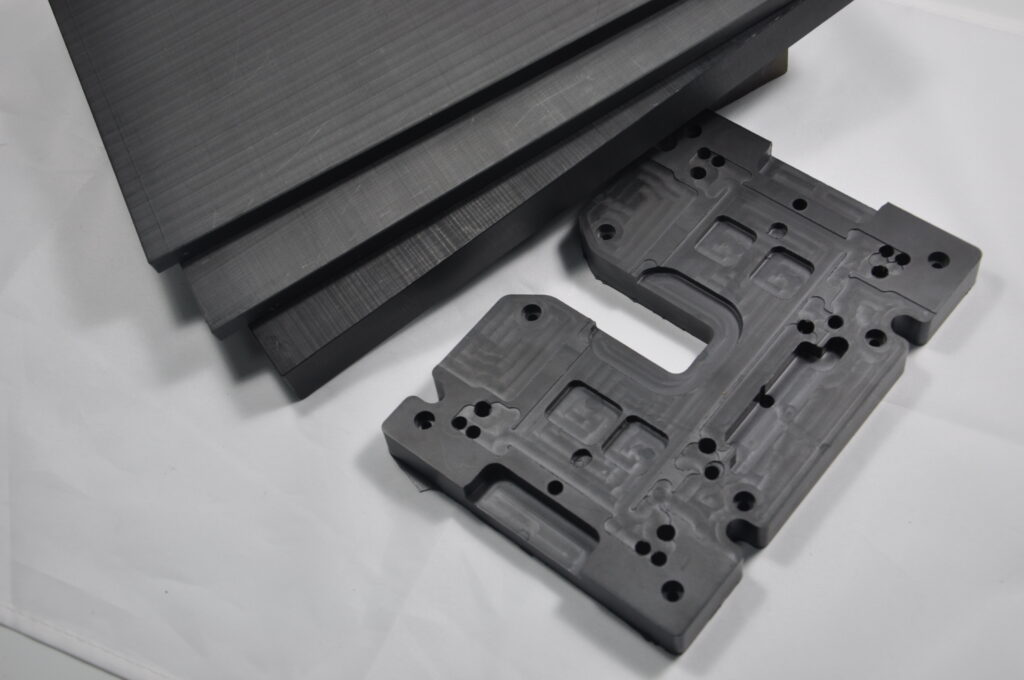
Material Profiles for Aerospace
PEEK in Aerospace
· Applications: Interior brackets, cable clamps, ducting supports, electrical connectors
· Key advantage: Highest mechanical strength and temperature resistance
· Certification: AMS 3832 (aerospace material specification)
· Continuous service: 250°C — exceeds most aircraft thermal requirements
· Weight: 51% lighter than aluminium at equivalent strength
PEI (ULTEM) in Aerospace
· Applications: Cabin interior trim, window masks, air ducting, seat components
· Key advantage: Inherent UL94 V-0 flammability rating, excellent surface finish
· Certification: Meets OSU heat release requirements (< 65/65 kW/m²)
· Continuous service: 170°C
· Transparency: Amber-transparent (optical applications)
· Cost advantage: 60–70% cheaper than PEEK
PPS in Aerospace
· Applications: Leading edge protectors, access panels, structural brackets
· Key advantage: Chemical resistance and hot/wet performance
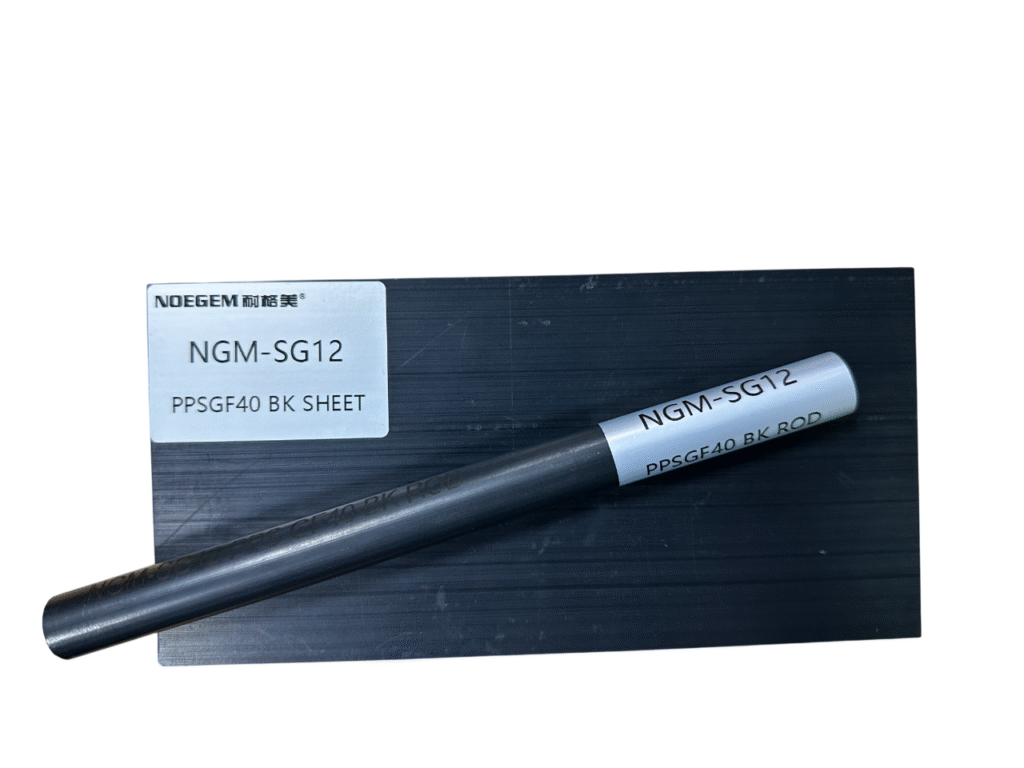
· Reinforcement: PPS GF40 (40% glass-filled) for structural applications
· Certification: AMS 4117, Lockheed Martin LAC specification
· Continuous service: 200°C
Typical Aerospace Components by Material
Component | Material | Reason |
Interior brackets & clips | PEEK | Strength + temperature |
Cabin ceiling panels | PEI | FST + surface finish |
Air conditioning ducts | PEI | Lightweight + FST |
Cable management | PEEK | Electrical insulation |
Window surrounds | PEI | Optical quality |
Access door panels | PPS GF40 | Structural + chemical |
Fuel system seals | PEEK | Chemical resistance |
Seat structural parts | PPS GF40 | Strength + weight |
Galley cart rails | PEEK | Wear resistance |
Lavatory components | PEI | Chemical + FST |
For comparison with other industries, see our Engineering Plastics Overview. For material comparisons, read PEEK vs PEI.
FAQ
Q1: What is the best engineering plastic for aircraft interiors?
PEI (ULTEM) is the most common choice for aircraft interiors due to its inherent UL94 V-0 rating, excellent surface finish, and lower cost compared to PEEK. PPS GF40 is used for structural components, while PEEK is reserved for the most demanding thermal and mechanical applications.
Q2: Do engineering plastics meet FAR 25.853 fire safety requirements?
Yes, PEEK, PEI, and PPS all meet FAR 25.853 (and equivalent EASA CS-25) requirements for flammability, smoke density, and toxic gas emission without additional flame retardant additives. Each material has been tested and certified per the applicable aerospace material specifications.
Q3: How much weight can engineering plastics save in aircraft?
Engineering plastics typically reduce component weight by 40–70% compared to aluminium and up to 80% compared to steel. Over a commercial aircraft’s 20-year service life, each kilogram saved translates to approximately 3,000 litres of fuel savings.
Q4: Are engineering plastics certified for aerospace structural applications?
Yes, glass-filled PPS (GF40) and carbon-filled PEEK are certified for primary and secondary structural applications under AMS specifications. However, structural certification requires extensive material qualification testing per the specific aircraft manufacturer’s specifications.
Supplying engineering plastics for aerospace? Contact NAGOMER for FST-compliant materials, or explore our PEEK sheets and PEI products.
NAGOMER — Professional Engineering Plastics Solutions
www.nagomer.com | info@nagomer.com