
News Centre
News Type
Send your inquiry
PEEK Medical Grade: Implants and Surgical Instruments
From Metal to Polymer: The Spinal Implant Shift
Spinal interbody fusion cages were once made exclusively from titanium. However, titanium has an elastic modulus of 110 GPa, roughly seven times that of cortical bone at 15 to 20 GPa. This stiffness mismatch causes stress shielding, where the implant carries load that should transfer to surrounding bone, leading to bone resorption and poor fusion rates. PEEK medical grade material offers a modulus of 3 to 4 GPa, much closer to bone behavior under physiological loading conditions.
The radiolucency of PEEK adds another critical advantage. Moreover, PEEK is transparent to X-rays, allowing clear imaging of bone growth and fusion progress without metal artifact reduction sequences. Consequently, PEEK spinal cages now dominate the interbody fusion market, with carbon-reinforced PEEK grades providing additional strength for load-bearing cervical and lumbar applications. Specifically, carbon-reinforced PEEK cages achieve compressive strengths exceeding 200 MPa, supporting their use in multi-level fusion constructs where mechanical demands are highest.
PEEK Medical Grade Biocompatibility Standards
PEEK medical grade material undergoes extensive biocompatibility testing under ISO 10993 standards. The test series covers cytotoxicity, sensitization, irritation, systemic toxicity, genotoxicity, and subchronic implantation studies. Implant-grade PEEK must pass all categories without adverse tissue response. Additionally, USP Class VI testing provides further assurance for materials contacting bodily tissues during surgical procedures.
The inherent biostability of PEEK contributes to its biocompatibility profile. Unlike biodegradable polymers, PEEK does not degrade or release potentially harmful byproducts in the body. In fact, long-term implantation studies show stable mechanical properties and minimal inflammatory response after years of service. For surface modification, plasma treatment and hydroxyapatite coating can enhance osseointegration without compromising bulk material properties. These surface treatments allow PEEK implants to bond with surrounding bone while maintaining the mechanical advantages of the base polymer. Furthermore, the polymer’s resistance to hydrolysis ensures that mechanical properties remain stable in the warm, saline body environment over decades of implantation.
Sterilization That Survives the Long Haul
Surgical instruments and reusable medical devices face repeated sterilization cycles throughout their service life. PEEK medical grade components withstand all common sterilization methods including autoclaving at 134 degrees Celsius, gamma irradiation at 25 to 40 kGy, ethylene oxide gas, and hydrogen peroxide plasma. Furthermore, PEEK retains its mechanical properties after 100 or more autoclave cycles, which is critical for instruments used in high-volume surgical centers.
In contrast, many engineering plastics degrade after repeated autoclave cycles. Polycarbonate yellows and embrittles, POM can release formaldehyde at elevated temperatures, and standard nylons lose strength through hydrolysis. PEEK maintains tensile strength above 90 MPa even after extended exposure to superheated steam. This durability makes it suitable for instrument handles, trial spacers, distractor tips, and arthroscopic cutting blocks. Moreover, the material machines cleanly to tight tolerances, supporting fabrication of precision surgical tools that require micron-level accuracy. Additionally, PEEK instruments withstand repeated exposure to hospital-grade disinfectants and enzymatic cleaners without surface degradation.
Beyond Spine: Dental and Craniofacial Applications
Beyond spinal implants, PEEK serves in dental and craniofacial applications. Healing abutments and temporary dental abutments made from PEEK provide a metal-free alternative for patients with titanium sensitivity. The material’s natural tooth-colored appearance also improves esthetic outcomes compared to metal abutments. In addition, PEEK frameworks for removable partial dentures offer lightweight, flexible solutions that patients find more comfortable than traditional metal frameworks.
Craniofacial reconstruction benefits from PEEK implants custom-designed from CT scan data. Patient-specific PEEK cranial plates reconstruct skull defects with precise anatomical fit, eliminating the need for intraoperative reshaping required with titanium mesh. For orthopedic trauma, PEEK radiolucent targeting guides assist surgeons in minimally invasive fracture fixation. These guides allow real-time fluoroscopic visualization of screw placement without metal obstruction, improving surgical accuracy and reducing operating time. PEEK medical grade has thus expanded from spinal applications into a broad range of surgical and dental specialties. Furthermore, ongoing research into PEEK composite grades continues to open new clinical applications, including trauma fixation plates and joint replacement components that benefit from the material’s unique combination of strength, radiolucency, and biocompatibility.
Machining PEEK for Implant-Grade Precision
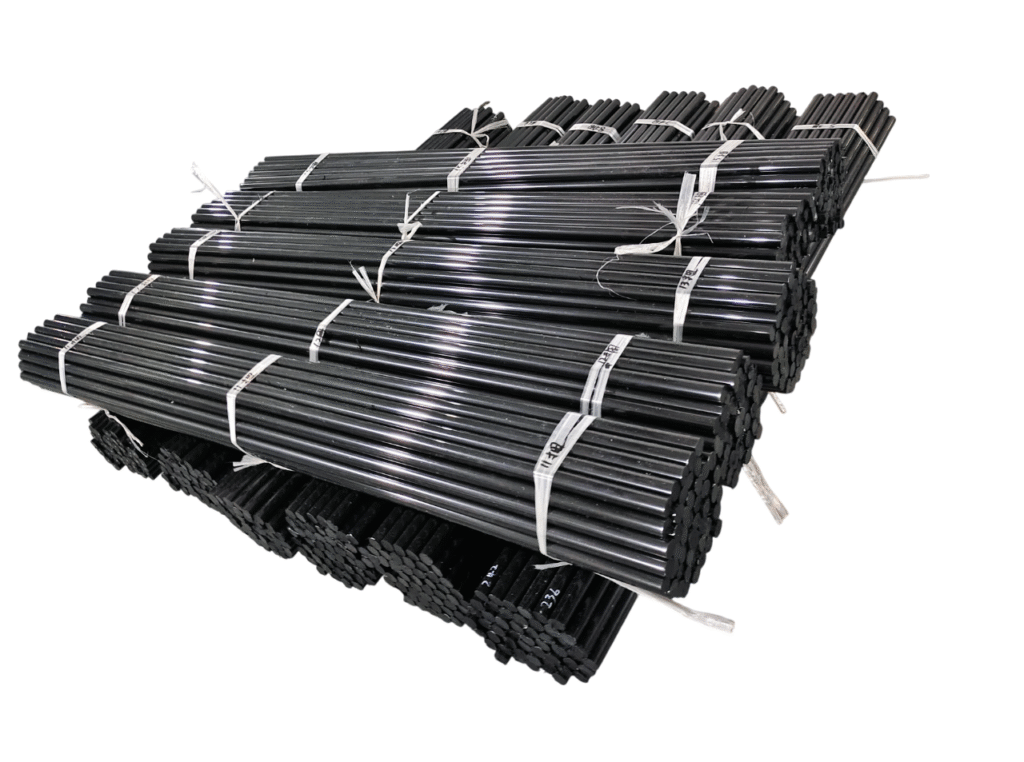
Manufacturing PEEK medical components requires attention to several process factors. Medical-grade PEEK stock shapes are produced under controlled conditions with full traceability from resin lot to finished sheet or rod. Annealing before machining relieves internal stresses and ensures dimensional stability in the final part. Carbide tooling with positive rake angles produces clean surfaces without the burring common in softer plastics. NAGOMER supplies PEEK medical grade material in sheets and rods with material certifications and biocompatibility documentation.
Post-machining processes include ultrasonic cleaning, passivation, and sterile packaging. Cleanroom manufacturing environments are standard for implant-grade components. Surface treatments such as plasma etching and titanium coating can enhance bone-to-implant contact without affecting bulk PEEK properties. Specifically, titanium-coated PEEK spinal cages combine the radiolucency and modulus of PEEK with the osseointegration properties of titanium. Therefore, manufacturers must validate each surface treatment process through mechanical testing and biocompatibility studies before clinical use.
NAGOMER supplies medical-grade PEEK sheets and rods with ISO 10993 and USP Class VI documentation for implant and instrument manufacturing. Contact info@nagomer.com for material certifications and grade specifications.