
News Centre
News Type
Send your inquiry
Plastic Valve Components: Engineering Plastics in Pump and Valve Applications
Why Plastic Valve Components Replace Metal
Plastic valve components have steadily replaced metals in fluid handling across chemical processing, water treatment, and food and beverage industries. Plastics resist corrosion where metals pit and scale, weigh significantly less, and machine to precision tolerances without galling. Many grades also offer self-lubricating behavior that extends seal and bearing life, reducing maintenance frequency in remote or hard-to-access installations.
The cost savings extend beyond material price. Plastic valve components reduce assembly weight, simplify machining operations, and eliminate the need for corrosion-resistant coatings. A typical PPS valve body costs 40 to 60% less to manufacture than an equivalent stainless steel component when total production costs are compared, including machining time, finishing, and quality control.
PEEK for High-Performance Sealing
PEEK has become the material of choice for the most demanding valve and pump sealing applications. Its continuous use temperature reaches 260C, with tensile strength of 90 to 100 MPa and broad chemical resistance that allows it to replace metal alloys in aggressive service environments. Engineers use PEEK for seat inserts, stem seals, and ball valve seats where metal-to-plastic sealing is required. PEEK‘s low creep under load ensures that sealing force is maintained over long service intervals without retorquing.
In magnetic drive pumps, PEEK wear rings and bearing sleeves operate at elevated temperatures without dimensional changes. This is a critical advantage over POM and PA components, which can soften or swell under the same conditions. NAGOMER supplies PEEK (K12N) in sheets and rods for machining into valve and pump components. Carbon fiber-reinforced PEEK (KG30B) is available for applications requiring maximum creep resistance under load.
PEEK‘s chemical resistance covers most acids, bases, and organic solvents encountered in industrial valve service. It is incompatible with concentrated sulfuric acid and halogens, but these are relatively rare in valve applications. The combination of temperature resistance, mechanical strength, and chemical stability makes PEEK the premium choice for critical sealing components.
PPS for Chemical Processing Valves
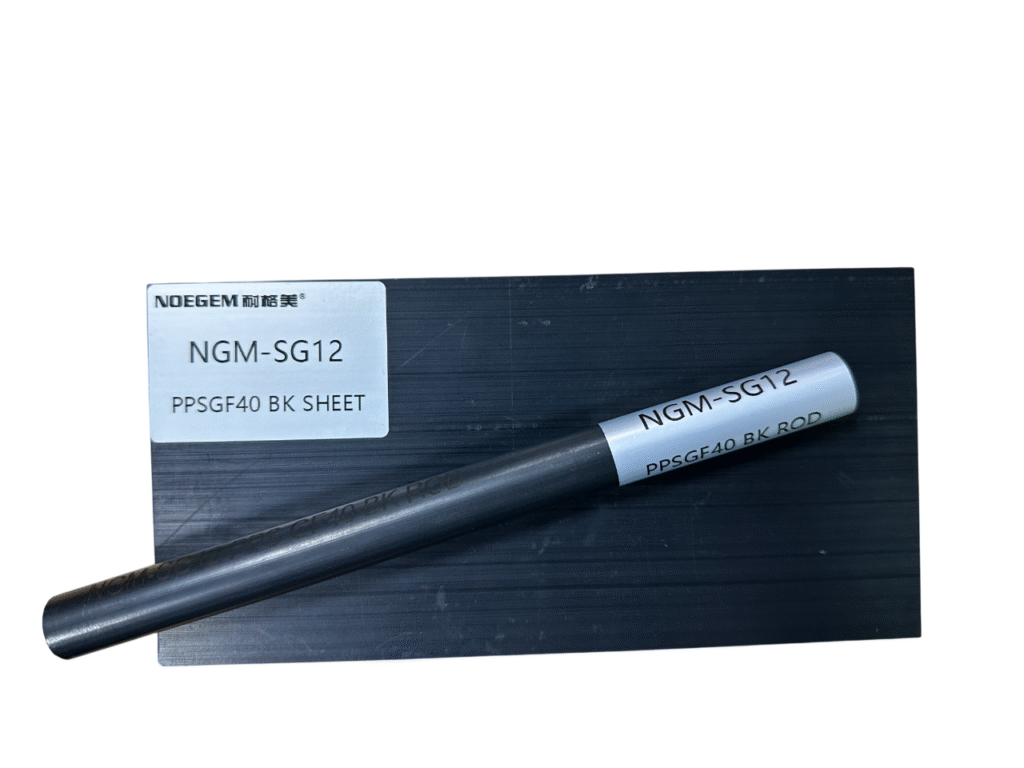
PPS is the standout material for valves and pumps handling aggressive chemicals. Its chemical resistance is virtually unmatched among engineering thermoplastics. PPS withstands acids, bases, solvents, and oxidizing agents at temperatures up to 200C with minimal property degradation. Glass-filled PPS (NAGOMER SG12B) provides the structural stiffness needed for pressure-containing components, with flexural modulus exceeding 12,000 MPa.
A key advantage of PPS over PTFE is mechanical strength. PTFE has superior chemical resistance but cold-flows under load, making it unsuitable for structural valve parts. PPS provides chemical resistance approaching PTFE with mechanical properties suitable for load-bearing components, at roughly one-third the price of PEEK. Immersion tests in 10% sulfuric acid at 80C show less than 0.1% weight change over 1,000 hours, confirming that PPS valve bodies maintain tight tolerances throughout their service life.
POM and PTFE for General-Purpose Service
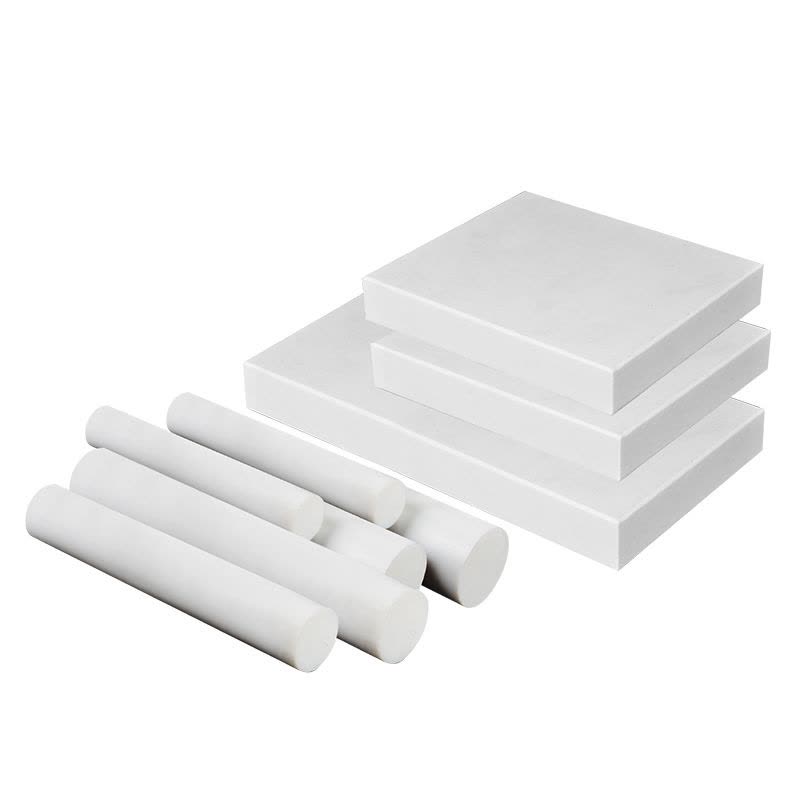
POM is the workhorse for valves and pumps in less aggressive service. Its low friction coefficient of 0.20 to 0.25, excellent wear resistance, and fatigue resistance make it ideal for valve stems, ball valve seats, and pump impellers. POM-C (NAGOMER M12N) is the standard choice for water, air, and mild chemical service, while POM-H offers slightly better mechanical properties for higher-load applications.
PTFE withstands virtually all chemicals, including hydrofluoric acid and molten alkali metals, but its primary limitation is cold flow under load. PTFE valve seats can deform under sustained pressure, requiring spring-loaded or backup ring designs. A common and effective approach pairs POM or PPS structural components with PTFE seals, combining the mechanical strength of the harder plastic with the chemical inertness of PTFE. This strategy is widely used in diaphragm valves, ball valves, and centrifugal pump seals, covering the widest range of general-purpose valve applications at the lowest cost.
Matching Materials to Service Conditions
Selecting plastic valve components comes down to four factors evaluated together rather than in isolation. The fluid itself is the starting point: its chemical composition, concentration, and pH narrow the field quickly. PTFE handles virtually everything, PPS handles most chemicals, PEEK handles most except concentrated sulfuric acid and halogens, and POM is limited to mild chemicals and water.
Temperature range includes both operating temperature and any cleaning or sterilization cycles. PEEK survives to 260C, PPS to 220C, and POM to 100C. Components exposed to steam cleaning above 120C require PEEK or PPS. Pressure and load requirements determine whether glass-filled PPS or carbon-filled PEEK are needed for structural integrity, or whether POM suffices for low to medium pressure service.
Regulatory and cost considerations round out the selection. Food and pharmaceutical applications require FDA or USP Class VI compliance documentation. For cost-sensitive applications, POM offers the best value. PEEK is justified only when its unique combination of properties is genuinely required. This systematic approach ensures that each plastic valve component is matched to its specific service conditions, maximizing performance while controlling cost.
NAGOMER supplies PEEK, PPS, POM, and PTFE stock shapes for valve and pump component machining. Contact info@nagomer.com for application-specific material recommendations, technical data sheets, and sample requests.