
News Centre
News Type
Send your inquiry
Metal to Plastic Conversion Design Guide: Engineering Plastics Replace Metals
The Case for Metal-to-Plastic Conversion
Replacing metal components with engineering plastics has become one of the most powerful strategies for reducing cost, weight, and complexity in manufactured products. Modern high-performance engineering plastics can match or exceed the mechanical performance of many metals while offering additional benefits impossible with metals.
Weight reduction is typically 40-80% compared to steel, 20-60% compared to aluminum. Part consolidation is possible through injection molding complex geometries that would require multiple machined metal parts and assembly. Chemical and corrosion resistance eliminates the need for coatings or plating. Noise and vibration damping are inherent in plastics but require additional components in metal assemblies. Electrical insulation eliminates the need for separate insulators.
The key to successful metal-to-plastic conversion is understanding both the opportunities and the limitations of engineering plastics. This design guide provides the framework for successful conversions.
Material Selection: Matching Plastic to Application
Selecting the right engineering plastic for metal replacement depends on the application requirements:
For structural applications requiring maximum strength and stiffness: PEEK with carbon fiber or glass fiber reinforcement (NAGOMER KG30B, tensile strength >150 MPa). Equivalent to aluminum in specific strength.
For high-temperature applications: PPS (NAGOMER SG12B, continuous use to 220C) or PEEK (to 260C). Suitable for under-hood automotive and industrial equipment near heat sources.
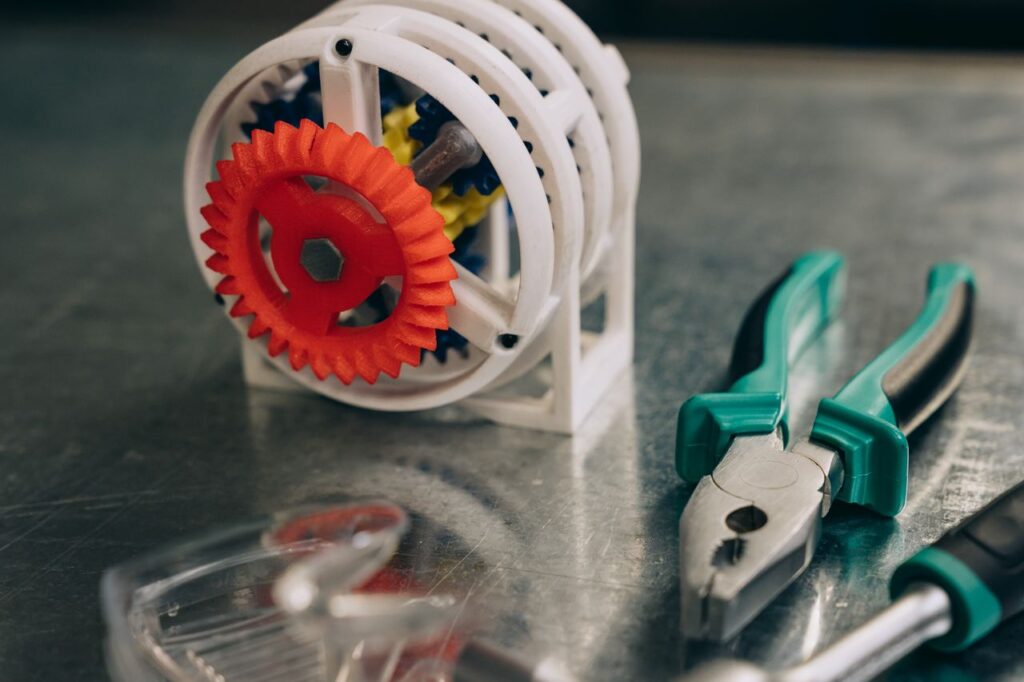
For wear and friction applications: POM (NAGOMER M12N/B) is the go-to material for gears, bearings, and sliding components. PTFE-filled grades (MF12) offer even lower friction.
For general structural applications: PA66 with glass fiber (AG12B) offers excellent strength-to-cost ratio. PC (C12N/B) for applications requiring transparency or impact resistance.
For ESD-sensitive environments: ESD grades of PEEK (K6B), PEI (I6B), PPS (S6B), or POM (M6B) replace metal components while providing static dissipation.
Design Principles for Plastic Parts
Plastics require fundamentally different design thinking than metals:
Wall thickness: Maintain uniform wall thickness (2-4mm for most engineering plastics) to ensure even cooling and minimize warpage. Transition gradually between thicknesses using 3:1 taper ratios.
Ribs for stiffness: Adding ribs increases stiffness far more efficiently than increasing wall thickness. Rib thickness should be 50-60% of nominal wall thickness. Rib height should not exceed 3x nominal wall thickness. Draft angle of 0.5-3 degrees facilitates ejection.
Radii and fillets: Sharp internal corners create stress concentrations and should be avoided. Minimum inside radius = 0.5x wall thickness.
Bosses for fasteners: Boss outer diameter = 2-2.5x screw diameter. Use gussets to reinforce tall bosses.
Tolerances: Engineering plastics typically achieve commercial tolerances of +/-0.1mm for small features and +/-0.002mm/mm for larger dimensions. Tighter tolerances require more sophisticated tooling and process control.
Joining and Assembly Considerations
Plastic parts require different joining approaches than metal:
Threaded fasteners: Thread-forming screws for thermoplastics eliminate the need for threaded inserts in many applications. For repeated assembly/disassembly, brass or stainless steel threaded inserts (heat-staked, ultrasonically inserted, or molded-in) are recommended.
Snap fits: Plastic’s flexibility enables integral snap-fit features that eliminate fasteners entirely. Design for allowable strain (typically 2-4% for unfilled grades, 1-2% for glass-filled). Include generous lead-in angles and proper retention features.
Welding: Thermoplastics can be joined by ultrasonic welding, hot plate welding, vibration welding, and laser welding. This creates strong, leak-tight joints without additional materials.
Adhesive bonding: Engineering plastics can be bonded with structural adhesives (epoxy, cyanoacrylate, polyurethane). Surface preparation (cleaning, abrasion, or plasma treatment) is critical for bond strength.
Cost Analysis and ROI Calculation
The economics of metal-to-plastic conversion typically improve with production volume:
Tooling investment: Injection mold tooling can range from $5,000-20,000 for simple parts to $100,000+ for complex multi-cavity molds. This is offset by much lower per-part costs.
Typical breakeven: For conversion of machined metal parts, breakeven typically occurs at 1,000-10,000 pieces. The higher the complexity of the metal part, the lower the breakeven volume.
Operational savings beyond part cost: Assembly labor reduction (part consolidation), finishing elimination (no painting/plating needed), freight cost reduction (lighter parts), warranty cost reduction (corrosion elimination).
A typical successful metal-to-plastic conversion delivers 30-50% total cost reduction when all factors are considered.
NAGOMER provides engineering plastics for metal replacement applications. Contact info@nagomer.com for material selection support and design consultation.